

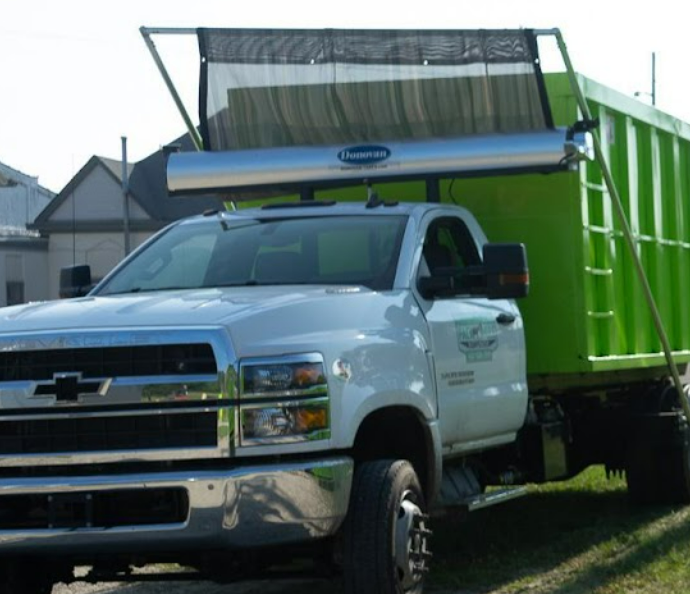
In the sleek, fluorescent-lit world of software development, you will rarely find a CEO who knows what it feels like to tarp a 40-yard dumpster in the pouring rain. The industry is saturated with platforms built by developers who deal in theory, code, and venture capital. They build what they think a business needs based on focus groups and assumptions.
Todd Atkinson, the founder of Bin Boss, is not one of those people.
Atkinson is the owner and operator of Pack Mule Dumpsters, a highly successful hauling company serving the Dayton and Cincinnati, Ohio regions. His biography isn’t a list of tech achievements; it is a blueprint for scaling a blue-collar business in a cutthroat market. When you look at the Bin Boss platform, you aren’t just seeing software; you are seeing the crystallized experience of a veteran hauler who built a tool to save his own sanity.
In this Q&A, we explore how Atkinson’s background—from military service to navigating seven-figure business growth—is the ultimate “feature” of the Bin Boss system.
From the Service to the Job Site: Disciplining the Chaos
Q: It’s often mentioned that you are a military veteran. How does that background translate to the messy reality of the dumpster rental business?
Todd Atkinson: It translates directly. In the service, discipline isn’t an option; it’s a survival requirement. You learn very quickly that if you don’t have systems, if you don’t communicate clearly, and if you don’t track your assets, the mission fails.
When I got into the dumpster game with Pack Mule, I saw an industry that was largely operating on chaos. You had guys running 20 trucks off of whiteboards and sticky notes. “Approximate” drop-off times were the standard. I couldn’t operate like that. I brought that military mindset of precision to hauling. We needed to know exactly where every can was, every minute of the day. We needed accountability. Bin Boss was initially just the digital enforcement mechanism for that required discipline. It forces you to run a tight ship because, in this business, sloppy operations bleed cash.
The Breaking Point: Why Build Instead of Buy?
Q: Before Bin Boss existed, you were running Pack Mule Dumpsters using other methods. What was the specific breaking point that made you decide you had to build your own software?
Atkinson: The breaking point was success. When we were small, we could manage with spreadsheets. But as we started scaling aggressively—growing rapidly month over month—the wheels started falling off.
I remember a specific Friday where we had lost track of inventory. Dispatch thought a 20-yarder was in the yard, but it was actually sitting in a customer’s driveway across town. We had drivers crossing paths, wasting fuel, and calling the office constantly because they didn’t have clear instructions.
I tried existing software solutions. They were either incredibly expensive enterprise platforms filled with features we’d never use, or they were cheap, clunky tools that clearly weren’t made for high-volume roll-off work. I realized that if I wanted software that actually understood “driver logic” versus “office logic,” I was going to have to build it myself. I hired a team, and we started coding based on the actual headaches I had that day.
Bridging the Gap Between the Office and the Truck
Q: One of the biggest challenges in this industry is the disconnect between dispatchers and drivers. How did your experience in the cab shape the features of Bin Boss?
Atkinson: This is huge. If you’ve never driven a truck, you don’t understand that a driver doesn’t have time to fumble through 10 confusing screens on an iPad while navigating a construction site. They need simplicity and speed.
We designed the system to empower the driver and cut down on radio chatter. We built features that allow them to easily document the job site with photos, capture digital signatures, and log tonnage right then and there. It’s about respecting their time and giving them a tool that works with them, not against them.
The result of this “operator-first” thinking is our dedicated Dumpster Rental drive app, which was designed specifically to eliminate the friction that slows down field operations and frustrates crews.
Scaling from $36k to $152k: Baking Growth Strategies into the Code
Q: You famously scaled Pack Mule Dumpsters from roughly $36,000 a month to over $152,000 a month in just six months. How does Bin Boss help other haulers replicate that kind of growth?
Atkinson: You can’t scale if you don’t know your numbers. That growth at Pack Mule came because we made strategic decisions based on data. For example, we recognized a massive demand for 30-yard dumpsters for roofing jobs and estate cleanouts, so we heavily invested in that inventory while competitors fought over smaller residential cans.
Bin Boss is designed to give you that same business intelligence. It’s not just a scheduling calendar; it’s a growth engine. It helps you see utilization rates and understand where your profit margins really are. Furthermore, we know that operations are only half the battle—you need leads.
That’s why we integrated marketing support directly into the Bin Boss ecosystem. We don’t just give you software to manage jobs; we provide professional dumpster rental website design and SEO services to ensure your phone is actually ringing with new customers to manage.
The “No Success Tax” Philosophy
Q: Finally, Bin Boss uses a flat-rate pricing model, which is rare in SaaS. Why reject the standard “per-user” fees that most tech companies use?
Atkinson: That comes straight from my experience as a business owner. I hated signing up for software that punished me for succeeding. With other platforms, if I bought two new trucks and hired two new drivers, my software bill went up. It felt like a “success tax.”
I wanted Bin Boss to be a partner in growth, not an obstacle. If you are killing it and need to add five more dispatchers, good for you—I’m not going to charge you extra for that. Our flat-rate model is a direct reflection of the integrity I try to bring to the hauling business. It’s simple, honest, and it lets you predict your costs so you can reinvest in your fleet. When you sign up with us, you’re getting technology built by someone who wants you to win, because I know exactly how hard you work for every dollar.