

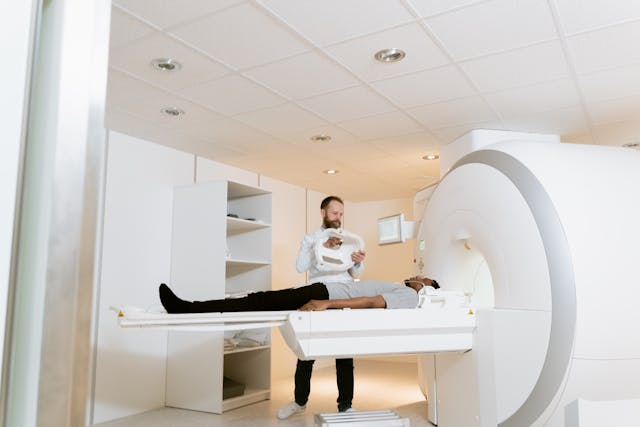
The medical technology sector’s evolution continues at a breathtaking pace, fundamentally transforming how healthcare professionals approach diagnosis, treatment, and ongoing patient management. We’re witnessing a remarkable convergence where biotechnology meets engineering and data science, creating breakthrough possibilities that would’ve seemed like pure science fiction just ten years ago. From AI-powered diagnostic tools that catch diseases earlier than ever to revolutionary therapeutic approaches that target treatments at the molecular level, these innovations aren’t just improving healthcare, they’re completely reshaping it. As we dive into these cutting-edge developments, you’ll see how today’s technological advances are literally writing tomorrow’s medical textbooks while promising to extend and enhance human life in ways we’re only beginning to understand.
Artificial Intelligence in Medical Imaging
Medical imaging has experienced nothing short of a revolution thanks to artificial intelligence algorithms that can spot abnormalities with stunning accuracy. These sophisticated systems tear through CT scans, MRIs, and X-rays, identifying potential tumors, fractures, and other pathological conditions at speeds that leave traditional methods in the dust. Radiologists now have AI assistants that work alongside them, highlighting areas of concern and dramatically reducing diagnostic errors while speeding up critical treatment decisions. The technology really shines when detecting early-stage cancers, where subtle visual cues might slip past even the most experienced human observers.
Precision Medicine and Genomic Sequencing
Being able to sequence individual genomes quickly and affordably has completely ushered in an era of truly personalized medicine. Healthcare providers can now tailor treatments based on each patient’s unique genetic blueprint, predicting which therapies will work best and which might trigger adverse reactions. This approach has absolutely revolutionized oncology, where tumor genomic profiling guides targeted therapy selection, often with dramatically improved outcomes compared to traditional chemotherapy’s one-size-fits-all approach. Pharmacogenomics has emerged as this critical field that’s helping clinicians optimize drug dosages and selections based on how individual patients actually metabolize medications.
Advanced Drug Delivery Systems
Modern pharmaceutical research has produced some truly remarkable innovations in how medications reach patients, moving way beyond traditional pills and injections. Nanoparticle, based delivery systems can now target specific cells or tissues with laser-like precision, reducing side effects while maximizing therapeutic benefits. Long-acting injectable formulations have genuinely transformed chronic condition management, allowing patients to receive medication monthly or even quarterly instead of dealing with daily doses. Transdermal patches equipped with microneedle technology deliver drugs painlessly through the skin, dramatically improving patient compliance and comfort. When developing therapeutic proteins, researchers rely on understanding antibody pharmacokinetics to design more effective treatments with extended circulation times and improved tissue penetration. These sophisticated delivery platforms represent a fundamental shift in pharmaceutical development, one where the method of administration is considered just as important as the drug molecule itself.
Robotic Surgery and Minimally Invasive Procedures
Surgical robotics have evolved from experimental curiosities into essential tools that you’ll find in operating rooms worldwide, enabling procedures with unprecedented precision and control. Surgeons manipulate robotic arms through intuitive console interfaces, performing incredibly complex operations through tiny incisions that minimize trauma and dramatically accelerate recovery times. The enhanced visualization provided by high-definition 3D cameras gives surgeons this magnified view of the surgical field, revealing anatomical details that would be impossible to see with the naked eye alone. Patients benefit from reduced pain, shorter hospital stays, and faster returns to their normal activities compared to traditional open surgery.
Wearable Health Monitoring Devices
Consumer-grade wearable technology has matured into sophisticated medical monitoring systems that provide continuous health data to patients and their healthcare teams around the clock. Modern devices track heart rhythm, blood oxygen levels, sleep patterns, and physical activity with medical-grade accuracy, alerting users to potential health issues before they escalate into serious problems. For patients managing chronic conditions like diabetes or heart disease, continuous monitoring enables proactive management and early intervention when parameters drift outside safe ranges. The massive datasets generated by these devices are powering groundbreaking research into disease patterns and treatment effectiveness, creating fresh insights into human health and physiology that we’ve never had access to before.
Regenerative Medicine and Tissue Engineering
The ability to grow replacement tissues and organs in laboratory settings represents one of medicine’s most ambitious frontiers, and we’re making significant progress across multiple approaches. Stem cell therapies are now being used to regenerate damaged heart tissue, restore vision, and potentially reverse neurodegenerative conditions that were once considered permanent. Bioprinting technology can create three-dimensional tissue structures using living cells as “ink, ” producing everything from skin grafts for burn victims to increasingly complex organ structures. Scientists have successfully grown miniature organ models called organoids that serve as invaluable testing platforms for new drugs and disease research.
Telemedicine and Remote Patient Care
Digital health platforms have fundamentally transformed access to medical care, particularly for patients living in rural areas or dealing with mobility limitations that make traditional office visits challenging. Video consultations allow patients to connect with specialists worldwide, breaking down geographic barriers that previously limited treatment options to whoever happened to practice nearby. Remote monitoring systems transmit vital signs and other health data directly to care teams, enabling management of complex conditions outside hospital settings while maintaining clinical oversight. Mobile health applications provide personalized health coaching, medication reminders, and educational resources that empower patients to take active roles in their own care journeys.
Conclusion
The innovations transforming medical technology today represent just the opening chapter of a healthcare revolution that’ll continue accelerating in the coming years. These advances aren’t merely incremental improvements, they’re fundamental reimaginings of how we approach diagnosis, treatment, and disease prevention at every level. As these technologies mature and become more widely accessible, they promise to reduce healthcare disparities and improve outcomes for patients across all demographic groups and economic backgrounds. The convergence of biology, engineering, and information technology creates unprecedented opportunities for breakthroughs that will extend both the length and quality of human life, making this an extraordinarily exciting time in medicine’s long history.