

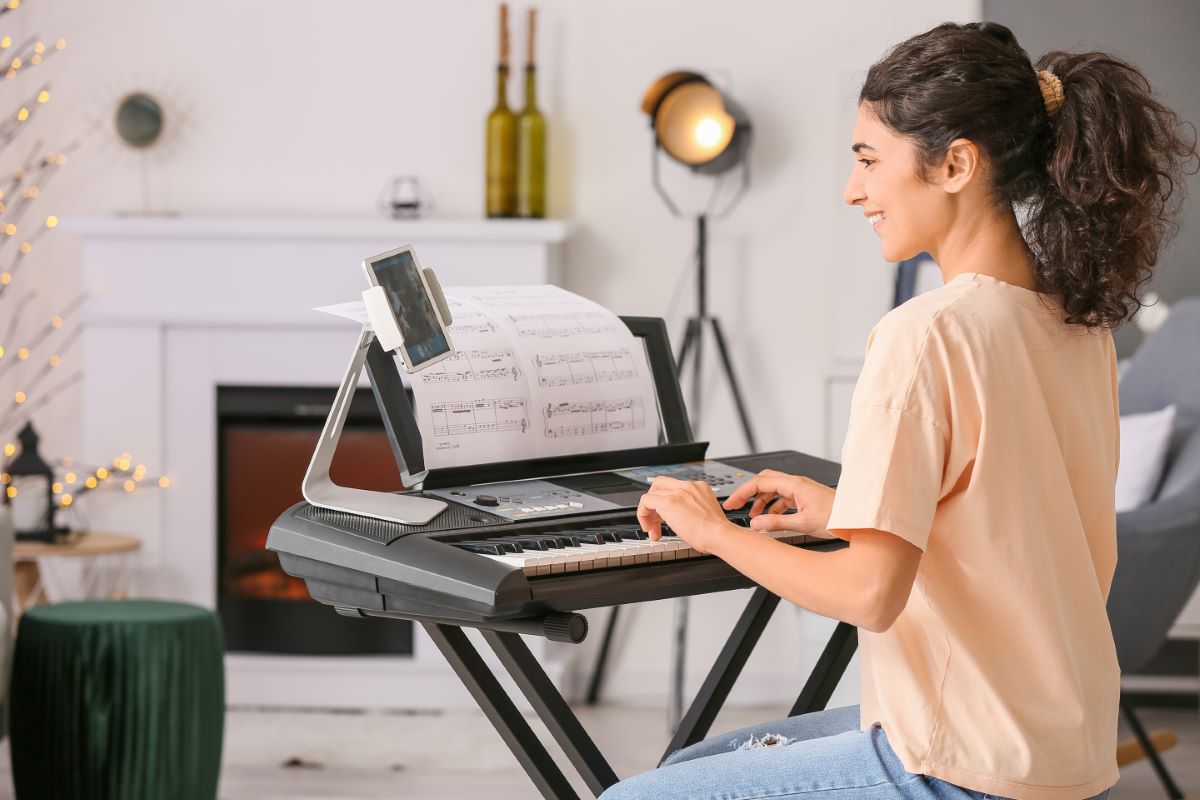
Piano is one of those instruments that almost everyone has considered learning at some point. It is visual, logical, immediately expressive, and sits at the heart of nearly every genre of music. And yet, for many beginners, the path from “I want to learn” to actually sitting down and progressing feels unclear.
That gap has narrowed significantly. Piano lessons online have transformed access to quality instruction, putting expert teachers and structured curricula within reach of anyone regardless of location, age, or schedule. But taking advantage of that access requires knowing what to look for, what to expect, and how to build habits that make the lessons actually work.
This guide covers everything a complete beginner needs to know before, during, and after their first online piano lessons.
Why Online Piano Lessons Work for Beginners
There is a persistent belief that learning an instrument requires being in the same room as your teacher. In practice, the most important elements of quality instruction demonstration, immediate feedback, real-time correction, and personalized pacing translate effectively to live video sessions.
Online piano lessons offer several advantages that in-person instruction often cannot match:
- Access to specialist teachers who may not be available locally
- Flexible scheduling that fits around work, school, and family commitments
- Learning in your own space, on your own instrument, in the environment where you will practice every day
- Session recordings that let you review what was taught between lessons
The key word in all of this is live. Recorded video courses and tutorial libraries have a role, but they cannot watch your hands, identify a tension issue in your wrist, or respond to a specific question you have at the moment. Live, one-on-one online piano lessons combine the flexibility of online learning with the quality of real teaching and that combination is what produces results for beginners.
Choosing Between Different Types of Online Piano Lessons
Not all online piano lessons are structured the same way. Before committing to a course or platform, beginners should understand the main formats available.
One-on-One Live Lessons
The most effective format for beginners. A qualified teacher delivers instruction in real time, personalizing every session to where you are in your development. Your pace, your questions, your specific challenges all of it shapes the lesson. This approach is particularly well-suited to beginners who want to build a genuine foundation rather than just learning to replicate specific songs.
Group Lessons Online
A more affordable option that still provides live interaction. Group sessions work well once a beginner has some foundation to build on, as the pace is set by the group rather than the individual, group music lessons online for beginners and intermediates explains how to decide when group learning makes sense and what to expect from the format.
Structured Course Curricula
A self-paced curriculum with defined modules and milestones. These work best alongside live lessons rather than as a replacement for them. If you want to understand the typical progression of a structured beginner path before signing up for lessons, a step-by-step online piano curriculum for beginners lays out a logical learning roadmap from day one.
Online Piano Lessons for Adults: What Makes Them Different
Adult learners bring advantages to piano study that children do not have. Better abstract reasoning, stronger motivation, clearer goals, and a more developed sense of self-discipline all contribute to faster theoretical understanding. Adults can often grasp the why behind a musical concept on first explanation, which reduces the amount of time needed for foundational theory.
The challenge for adults is usually time fitting regular practice into a genuinely busy life and the psychological weight of feeling like a beginner at something. Both of these are manageable with the right structure.
Online piano lessons for adults are specifically designed around these realities. Sessions can be scheduled at times that work around professional and family commitments. Lesson plans address not just technique but also music theory, ear training, sight-reading, and musical expression giving adults the comprehensive skill set they want rather than a narrow, song-focused approach.
Online Piano Lessons for Kids: Building Skills That Last
Children learn musical instruments in a fundamentally different way from adults through imitation, play, repetition, and pattern recognition rather than through analytical understanding. The best online piano lessons for kids are designed around this reality, using short focused activities, visual aids, engaging repertoire, and regular encouragement to build skills progressively without overwhelming young learners.
Starting piano early provides children with lasting advantages beyond music. Studies consistently show that piano instruction strengthens fine motor development, spatial reasoning, reading comprehension, and attention span. The structured nature of classical piano study, in particular, teaches children how to break a complex task into small steps and practice systematically a skill that transfers directly to academic learning.
What the First Three Months of Piano Lessons Online Look Like
Beginners often have a vague idea of what learning piano involves without a clear picture of the week-by-week progression. Here is what structured piano lessons online typically cover in the first three months.
Month One: Orientation and Foundation
The opening weeks focus entirely on foundation sitting position and posture, hand shape and finger positioning, recognizing the notes on the keyboard layout, and producing a clean, even tone from individual keys. You will learn to identify the black key groups that anchor the entire keyboard, recognize middle C, and begin reading notes on the treble clef. Simple five-finger exercises build coordination and finger independence.
Month Two: Both Hands and Basic Music Reading
With individual finger control developing, the second month introduces the left hand and begins coordinating both hands together starting with simple pieces where the hands alternate rather than play simultaneously. Basic chords enter the picture. Understanding essential piano chords for beginners at this stage turns abstract harmony into something you can hear and play immediately.
Month Three: Simple Pieces and Growing Independence
By the third month, most beginners can play short, complete pieces with both hands, maintain a steady tempo with a metronome, and read simple notation with increasing fluency. The plateau that many self-taught learners hit around this time where progress stalls without new material or guidance is largely avoided because structured lessons always have a clear next step.
Classical vs Contemporary: Choosing Your Direction Early
One of the most useful decisions a beginner can make in the first few weeks of piano lessons online is choosing a primary direction. This does not mean locking yourself into one style forever, it means giving your early learning a clear focus that shapes which skills to prioritize.
Classical piano builds the strongest technical foundation. It demands precise note reading, clean finger independence, dynamic control, and a deep understanding of phrasing and articulation. If your long-term goal is versatility being able to play any style well a classical foundation is the most efficient starting point.
Contemporary and pop piano produces recognizable results faster, which is excellent for motivation in the early weeks. Chord-based playing, lead sheets, and learning songs by ear are the primary skills. The trade-off is that technical development can be slower without the disciplined finger work that classical training demands.
Piano or Keyboard: What Beginners Actually Need
A common concern before starting online piano lessons is whether to learn on an acoustic piano or a digital keyboard. The short answer is that a quality digital keyboard is perfectly appropriate for beginners and offers practical advantages that an acoustic instrument does not.
The critical factor is weighted keys. A keyboard with weighted or semi-weighted keys simulates the resistance of real piano keys, which develops the finger strength and touch sensitivity that piano playing requires. Learning on an unweighted keyboard builds habits that do not transfer well to acoustic instruments later.
You do not need 88 keys to begin. A 61-key weighted keyboard covers everything a beginner will encounter in the first year of lessons and is significantly more affordable and compact than a full instrument.
Setting Yourself Up to Succeed
The difference between beginners who make fast, sustained progress and those who plateau after a few weeks almost always comes down to consistency, not talent.
Three habits matter above everything else:
Practice daily, even briefly. Fifteen focused minutes every day produces better results than a ninety-minute session once a week. Classical muscle memory, ear training, and note reading all rely on spaced repetition skills that are reinforced by frequency, not volume.
Practice what your teacher assigns. Beginners often spend practice time on things they already do well because it feels productive. Effective practice means working on exactly what the teacher identified as the next challenge, the thing that is slightly difficult until it becomes easy.
Ask questions in every lesson. A live teacher is your most valuable resource. If something feels unclear, uncomfortable, or stuck, the lesson is exactly the right place to address it.
Begin Your Piano Journey With the Right Foundation
There is no wrong time to start learning piano. What matters is starting with structure live instruction from a qualified teacher, a curriculum that builds logically, and a clear direction suited to your goals.
Whether you are an adult fitting lessons into a full schedule, a parent looking for online piano lessons for kids with expert guidance, or simply someone who has always wanted to play, online piano lessons connect beginners with trained, specialist instructors who build every session around where you are and where you want to go.
The foundation you build in your first few months will shape everything that follows. Start it properly.