

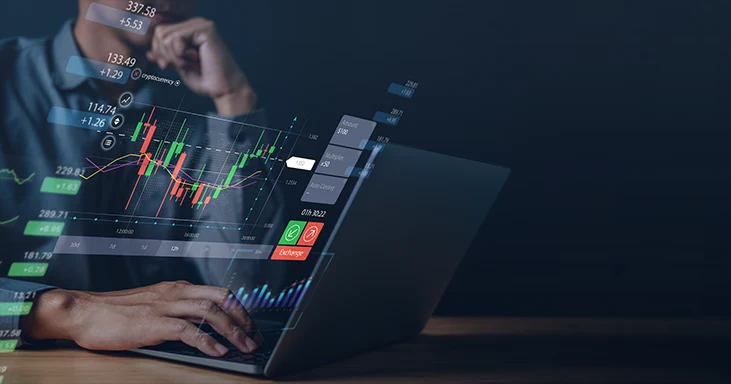
Forex trading looks complex from the outside, but the first steps are simple. You don’t need deep math skills or years of experience. You only need a clear plan, the right tools, and a calm mind. This guide will help you start trading in under 30 minutes, even if you are new.
1. Understand What Forex Trading Is
Forex trading means buying one currency and selling another at the same time. Currencies move up and down during the day, and this is why many people search for clear guides on forex trading for beginners. Traders try to catch these moves for profit.
A currency pair has two parts:
- The base currency is the first one.
- The quote currency is the second one.
For example, in EUR/USD, the euro is the base. The dollar is the quote. When you buy the pair, you think the euro will rise. When you sell the pair, you think the dollar will rise.
You don’t hold any real cash. Everything is digital. You enter a trade. You close a trade. Your profit or loss depends on how far the price moved.
2. Learn the Basic Terms (Only the Ones You Need)
You don’t need to learn everything at once. Here are the basics you must know to place your first trade.
Pip: smallest price move in most currency pairs. Spread: the small cost between the buy and sell price. Lot: the size of your trade. Leverage: lets you control a larger trade with a small amount of money. Margin: the amount you need to keep the trade open.
These terms will appear on your screen. You don’t need to memorize each one. You just need to know what they mean when you see them.
3. Pick a Reliable Forex Broker
To trade, you must open an account with a forex broker. A broker gives you access to the market, charting tools, and order screens.
Choose a broker with:
- fast trade execution
- low spreads
- good charting tools
- clear deposit and withdrawal methods
- helpful support
Avoid brokers that look confusing or hide key information. A clean and simple dashboard is easier for beginners.
4. Open Your Trading Account
Account creation takes only a few minutes. Most brokers ask for basic details and ID. Once approved, you can log in and see your dashboard.
Start with a demo account if you want zero risk. If you want to trade live right away, start with a small deposit. Many beginners fund $50 to $200. You don’t need a large account to learn the basics.
5. Choose One or Two Currency Pairs to Start
Don’t trade everything. Pick one pair that is easy to follow. The most common pair is EUR/USD. It is stable, active, and has low spreads. You can also pick GBP/USD or USD/JPY.
Trade the same pair until you understand how it moves. Each pair has its own personality. Some move slow. Others move fast. Sticking to one pair keeps things simple.
6. Use a Simple Trading Plan
A trading plan helps you avoid random trades. You don’t need a complex plan. Keep it simple.
Your plan should include:
- When you will enter a trade
- When you will exit a trade
- How much you will risk
- What setups you will use
A basic plan for beginners might look like this:
Buy when price forms a clear uptrend. Sell when price forms a clear downtrend. Risk 1% of your account per trade.
You don’t need more than this for now.
7. Learn How to Read a Forex Chart
A chart shows price movement over time. Green candles show price moving up. Red candles show price moving down.
Key things to notice:
- The trend (up, down, or sideways)
- Strong support and resistance levels
- Times of high activity
- Clean setups without noise
You don’t need fancy indicators. New traders do better with clean charts.
8. Decide Your Entry and Exit
Before you click buy or sell, know your plan.
Ask yourself:
- Where will I enter?
- Where will I place my stop-loss?
- Where will I take profit?
A stop-loss protects you from a large loss. It closes your trade if price moves against you. A take-profit locks gains at a set price.
Never skip the stop-loss. Beginners lose money fast when they avoid it.
9. Place Your First Trade (This Part Takes Less Than One Minute)
Here is how to place a trade under 30 minutes after you start:
- Log into your broker account.
- Search for your pair (for example, EUR/USD).
- Check the trend on your chart.
- Decide if you want to buy or sell.
- Enter your lot size (start small).
- Add your stop-loss and take-profit.
- Click buy or sell.
Your trade is now live. You will see your open position on your screen. Your profit or loss updates with each move.
10. Manage Your Risk From the Start
Risk control is the biggest part of trading. You can’t skip this step.
Follow these rules as a beginner:
- Risk only 1% per trade.
- Never add to a losing trade.
- Don’t trade during strong news events.
- Don’t trade when tired or upset.
- Don’t chase price after a fast move.
Small risk keeps you calm. Calm traders make better choices.
11. Review Each Trade You Take
After closing each trade, write down what happened. This is your trading journal. Keep it simple.
Record:
- Why you entered
- Why you exited
- What went well
- What went wrong
This helps you improve faster. Most beginners repeat the same mistakes. A journal helps you break bad habits.
12. Stay Patient and Keep Learning
Forex trading looks exciting. But the real key is patience. You don’t need ten trades a day. One good trade is better than many random ones.
Spend time learning:
- How trends form
- How news affects price
- How support and resistance work
- How different pairs move
No one becomes a pro in one week. Traders grow with practice and review.
Final Thoughts
You can start forex trading in under 30 minutes. You only need a broker, a simple plan, and a clear mind. Keep your trades small. Follow the trend. Protect your account with smart risk rules.
The goal is not to win fast. The goal is to learn well. If you stay calm, follow your plan, and keep notes, you will grow step by step. The first trade is only the beginning. The real progress comes from how you review, adjust, and improve with each session.