

Introduction to Local SERP Adaptation
When you expand your website into new markets, translation is just the starting point. The real challenge lies in adapting your localized content to match how Google’s local search results actually look and behave in each market. This guide focuses on aligning your SEO, UX, and localization decisions with real local search intent and the unique SERP layouts that users encounter in different cities and countries.
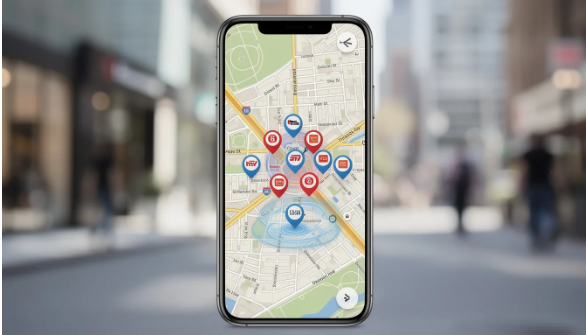
A local SERP refers to the search engine results page that Google tailors specifically to a user’s location and language. These results include distinctive features like the local map pack (also called the Local Pack), localized organic results, business listings, and various SERP features that differ dramatically from one region to another. Understanding these variations is essential for any brand operating across multiple locations.
Consider a practical example: if you search for “dentist near me” in Chicago in February 2026, you’ll see a Local Pack dominated by American dental practices with review counts in the hundreds, insurance information prominently displayed, and pricing indicators. Search for “dentista vicino a me” in Milan, and the SERP composition shifts entirely – different review platforms gain prominence, the local finder shows operating hours aligned with Italian business customs, and the organic listings below feature local healthcare directories that don’t exist in the US market. These aren’t minor differences. They fundamentally change what content you need to create and how you should structure your localized pages.
For international and multi-location brands, this reality means that simply translating your English pages into Italian won’t get you visibility in Milan. You need to study the actual local search results, understand what types of content Google surfaces for each query, and adapt your localized pages to match those patterns.
Why Local SERPs Matter for Website Localization Strategy
Local SERPs serve as the source of truth for user expectations in each country, city, and language you target. When a potential customer in Berlin searches for a plumber, the search engine results they see reflect what Google has determined German users want: specific content formats, trust signals, and information hierarchies. Your localized pages need to match those expectations or risk invisibility.
The composition of local SERPs should directly influence your localization scope, content depth, and page templates. In some markets, the Local Pack dominates with three business listings consuming most of the above-the-fold space. In others, aggregator sites and review platforms push organic results down significantly. A restaurant page targeting New York needs to acknowledge that Yelp and OpenTable listings often outrank individual restaurant websites for discovery queries. A plumber’s page targeting Berlin must compete with established German service directories that users trust more than unknown brands.
Consider three vertical examples from 2025. For restaurants in New York, local SERPs heavily feature Google Maps integration, review snippets, and reservation widgets – your localized content needs prominent booking CTAs and social proof. For plumbers in Berlin, comparison portals like MyHammer or Check24 dominate organic positions, meaning your localized pages need competitive pricing transparency and trust badges to convert users who’ve been conditioned to compare options. For SaaS tools in London, commercial intent queries show a mix of review sites like G2 and Capterra alongside brand sites, requiring localized landing pages that address UK-specific compliance concerns and pricing in GBP.
In markets where review sites dominate the search landscape, your localization strategy must acknowledge this reality. You can either optimize to appear on those platforms or create content substantial enough to compete directly. Either approach requires studying the actual localized search results before investing in content creation.
Local SEO vs. Global SEO vs. Localization
Traditional organic SEO focuses on building authority for broad, often location-agnostic queries. When someone searches for “best project management software,” they’re conducting a global informational search where geographic signals matter less than content quality, backlinks, and domain authority. This is where organic SEO focuses its energy – ranking for high-volume terms that apply across regions.
Local SEO operates in a fundamentally different space. It targets location based searches like “project management software Madrid” or “near me” queries where the searcher’s location becomes a primary ranking factor. Local SEO prioritizes signals like Google Business Profile optimization, local citations in online directories, and proximity to the searcher. The local pack rankings depend heavily on factors that traditional organic rankings don’t emphasize, including review volume, NAP consistency across the web, and geographic relevance.
Website localization adds another dimension entirely. It involves adapting language, content structure, cultural references, and UX patterns to fit each market’s expectations and user behavior. A properly localized page doesn’t just translate words – it restructures content based on what local customers expect to see, how they navigate websites, and what trust signals resonate in their culture.
Here’s the critical insight: a strong global domain with excellent organic rankings can still underperform locally if its localized content doesn’t match local SERP intent. Your English-language page might rank first globally for “project management software,” but that authority won’t automatically transfer to “software de gestión de proyectos Barcelona” if your Spanish page uses awkward translations, lacks local pricing, or doesn’t address specific Spanish business regulations that competitors mention.
To operationalize this distinction at scale, organizations need a structured page-level localization framework. For comprehensive operational guidance on structuring, translating, and testing localized pages across your website, the detailed framework for web page localization provides the foundational methodology that complements SERP-driven adaptation strategies.
Local SERP Features You Must Design Around
Your localized pages shouldn’t be designed in isolation – they must account for the dominant SERP features that users encounter when they search. The layout of local search results determines what information needs to be immediately visible on your pages and how you structure content to compete effectively.
The Local Pack shapes critical design decisions for your localized store or office pages. When users see three business listings with addresses, phone numbers, hours, and ratings directly in search results, they develop expectations for what information should appear above the fold on any page they click. Your localized landing pages need to display business location, contact information, operating hours, review indicators, and a primary CTA immediately – not buried below introductory paragraphs.
Below the Local Pack, localized organic results often include a mix of directories, comparison sites, and brand sites. In London searches for “solicitor near me” during 2025, legal directories and review platforms claimed several top positions, while individual law firm websites competed for remaining slots. In Chicago searches for “HVAC repair,” a different pattern emerged with more local businesses ranking directly. Understanding these patterns for your specific industry and target cities determines whether you should create content to compete directly or focus on presence within aggregator platforms.
Other local serp features appear frequently and deserve content attention. People Also Ask boxes surface questions that your FAQ sections should answer. Review snippets pull star ratings and comment excerpts that influence click-through rates. Local justifications – the brief text snippets Google pulls from pages to explain why a result is relevant – reward pages that contain the exact phrases users search for. Mobile devices display these features with even more prominence, making mobile-first layouts essential for capturing local search traffic.
Localized Organic Results and Content Types
Google surfaces different content types in local organic listings depending on the query and vertical. Understanding which page types rank helps you prioritize localization efforts and template development.
For legal services in major US cities during 2024-2025, city landing pages with comprehensive information about local regulations and practice areas consistently outperformed generic service pages. These successful pages included specific references to local courts, state bar requirements, and neighborhood-specific content. Similarly, for home services like plumbing or electrical work, city-plus-service combination pages (“electrician Brooklyn” or “plumber West London”) dominated local organic results when they included pricing transparency, service area details, and local licensing information.
In healthcare, practice-specific pages with individual doctor profiles, accepted insurance networks, and location-specific availability information ranked better than corporate website templates applied uniformly across locations. The winning pages addressed local regulations, mentioned nearby hospitals and referral networks, and used terminology that matched how local patients describe their needs.
Each localized template must reflect these SERP patterns. City pages need sufficient depth – often 1,500+ words with FAQs, trust signals, and location specific content. Service-in-city pages require unique value beyond simple location substitution. Store pages must surface the operational details that appear in competing Local Pack results. Generic, thin content fails because it doesn’t match what Google has learned to show for local queries.
From Translation to Adaptation: Local SERP-Driven Localization
Effective localization starts from SERP research, not from your source-language page. Word-for-word translation is rarely enough because different markets have different content expectations, trust signals, and search behaviors that your original pages weren’t designed to address.
Before localizing any page, perform SERP-focused keyword research in your target language and city. Spanish for Barcelona differs from Mexican Spanish for Monterrey – not just in vocabulary but in what types of content rank, which competitors dominate, and what user intent looks like. Use local SERP checker tools to capture actual search results from the specific location you’re targeting, not from your own location through a proxy.
The adaptation workflow follows a clear sequence: capture local SERPs for your target queries, classify whether queries are transactional, informational, or navigational, then adapt your page hierarchy and content volume based on what you observe. A query where informational content dominates requires a different localized page structure than one where commercial landing pages with booking widgets rank exclusively.
Real failures illustrate this point clearly. Companies that simply translated their English “roofing contractor” pages into French consistently failed to rank in Paris because French user searches use different terminology (“couvreur” rather than literal translations), expect different page structures (emphasis on artisan credentials and insurance documentation), and encounter different competitor patterns (local directories and trade association sites ranking prominently). The translated page was technically correct but completely misaligned with French search landscape expectations.
Success requires collaboration between SEO specialists who understand local SERP patterns, localization managers who coordinate workflows, and native-speaking copywriters who can adapt content naturally. No single role has the complete picture.
Aligning On-Page Elements with Local Intent
Title tags, H1 headings, and meta descriptions should be rewritten for each market to mirror dominant SERP patterns, not directly translated. Study the top-ranking pages for your target queries and observe how they structure their titles – keyword order, city placement, and benefit phrases often differ by language and region.
In English UK SERPs for “accountant London” during 2025, successful title patterns frequently led with the service, followed by the city and a trust qualifier: “Accountant in London | Chartered & Certified.” In German SERPs for “Steuerberater Berlin,” top results used different structures with the location first and professional credentials emphasized: “Berlin Steuerberater | [Firm Name] | Ihre Steuerkanzlei.” Copying the English pattern into German would miss the structural preferences that local users and Google’s algorithm favor.
Above-the-fold sections on localized pages must immediately answer the dominant search intent for that market. For service businesses, this often means price ranges and availability information. For retail locations, store hours and directions take priority. For professional services, credentials and booking CTAs deserve prominence. Let the SERP tell you what matters most – if every top-ranking competitor shows pricing immediately, your localized page needs pricing visibility too.
Adapt these elements systematically: headings that use local terminology, CTAs that match regional expectations (urgency levels and formality differ by culture), forms that request appropriate information for local conversion patterns, trust badges from recognized local organizations, and internal links to other relevant localized content. Each element deserves localization attention, not just the body copy.
Connecting Local SERP Adaptation with Technical SEO and Architecture
Even perfectly localized content will underperform if technical signals don’t match the targeted local SERPs. Search engines need clear signals about which content version serves which geographic and linguistic audience.
Hreflang implementation tells Google which page version to show users in different locations. For a company targeting English speakers in the US, UK, and Australia, proper hreflang tags (en-US, en-GB, en-AU) prevent the wrong country version from appearing in local search results. Misconfigurations create problems: a user in Sydney seeing your US page with American pricing damages both conversion rates and Google’s trust in your location signals.
URL structure choices carry significant weight for local rankings. Subfolders like /de-de/ keep authority consolidated on your main domain while signaling country targeting. Subdomains create more separation but dilute link equity. Country-code top-level domains (ccTLDs like .de or .fr) send the strongest geographic signals but require separate domain authority building. For most multi-location businesses, subfolders provide the best balance of clarity and efficiency.
Structured data helps local SERP features extract reliable information from your pages. LocalBusiness or Store schema markup should include accurate geo coordinates, opening hours in the correct timezone, and service area definitions. A multi-location retailer with stores across the US, Canada, and Germany needs scalable schema implementation that generates unique, accurate structured data for each physical location without manual maintenance overhead.
Site Speed, Mobile Experience, and Local SERPs
Core Web Vitals and mobile usability influence local rankings significantly, in line with Google’s Core Web Vitals standards. Emergency services, restaurants, and retail locations see particularly strong mobile traffic from local queries, making page speed a competitive differentiator.
Build fast-loading, lean localized pages with compressed media optimized for users on 4G and 5G connections in busy urban areas. Many local SERP users click directly from Google Maps or the Local Pack on mobile devices, meaning your localized landing pages must open quickly and display critical information – address, phone number, hours, and primary action – without requiring scrolling or waiting for heavy elements to load.
Target specific performance benchmarks for your key local landing pages: Largest Contentful Paint (LCP) under 2.5 seconds, Cumulative Layout Shift (CLS) below 0.1, and First Input Delay (FID) under 100 milliseconds. Test these metrics from actual mobile devices in your target locations, not just from your office connection. A page that loads quickly in your headquarters might perform poorly for users in different network conditions.

Linking Local SERP Adaptation with Web Page Localization Best Practices
Local SERP adaptation connects directly to broader best practices for localizing individual web pages. The insights you gather from studying search engine results should influence every aspect of page creation, from macro structure down to individual word choices.
SERP research should inform microcopy decisions, not just main body text. CTAs, form labels, navigation elements, and error messages all deserve localization attention. If German e-commerce pages consistently show “Jetzt kaufen” buttons and your translated page uses a less common phrase, you’ve missed an alignment opportunity that affects conversions from local customers.
Adapt visual elements to match local expectations visible in top-ranking SERP competitors. Screenshots should show localized interfaces. Photos should reflect local contexts – using images of American storefronts for German audiences creates subtle disconnects that reduce trust. Icons and symbols carry different meanings across cultures, and what works in one market might confuse users in another.
Continuous experimentation keeps localized pages optimized as local SERPs evolve. A/B test localized headlines, CTAs, and layouts based on performance data. Seasonal demand shifts – holiday periods, local events, economic changes – alter what users search for and what they expect to find. Your localized content should adapt to these patterns rather than remaining static.
Measuring Local SERP-Driven Localization Success
Track key metrics segmented by market and city to understand whether your localization efforts produce results. The right measurements connect adaptation decisions to business outcomes.
| Metric Category | What to Track | Tools |
| Visibility | Local organic traffic, local map pack impressions, local keyword rankings | Google Search Console, rank tracking tools |
| Engagement | Click-through rates from local SERPs, bounce rates by location, time on page | Google Analytics, Search Console |
| Conversion | Leads/sales by city, phone calls from local pages, store visits | CRM, call tracking, Google Analytics |
| Competitive | Position relative to local competitors, share of local SERP features | SERP tracking tools, manual audits |
Use Google Search Console to segment organic performance by country and landing page. Filter for specific zip codes and neighborhoods when analyzing local visibility for your most important cities. Google Business Profile Insights provides data on Map Pack impressions, direction requests, and calls – metrics that directly indicate local serp performance.
Track local rankings for localized keywords across at least 5-10 strategic neighborhoods per major city. This granular tracking reveals proximity bias effects and coverage gaps that city-level data obscures. Some neighborhoods might show strong performance while adjacent areas show no visibility, indicating opportunities for more targeted local content.
Conduct periodic SERP reviews monthly or quarterly to verify that localized content still matches evolving search intent. Competitors improve, Google updates algorithms, and user behavior shifts. What ranked well six months ago might need updates to maintain position against fresh competitor content.
Future Trends: How Local SERPs Will Influence Localization Beyond 2026
AI overviews and conversational search are already reshaping local SERP layouts and user expectations. By 2026 and beyond, these changes will demand even more sophisticated localization approaches.
AI-generated summaries in search results pull information from multiple sources, including local business data, reviews, and structured content. Brands that provide clear, well-structured localized information give AI systems better material to work with. This favors detailed, accurate location data over thin, templated content. Voice interfaces, which already constitute a significant portion of mobile local searches, reward conversational content that answers questions naturally.
Deeper integration between maps, inventory data, and user preferences is emerging across search platforms. Local SERPs increasingly show real-time availability, current wait times, and personalized recommendations based on search history and user behavior. This evolution demands granular localization – not just city-level but neighborhood-level content, hyperlocal offers tied to specific location data, and intent-tailored experiences that adapt based on user context.
Organizations that build processes making local SERP research and continuous localization routine – not a one-off project – will maintain competitive advantages. The search landscape shifts constantly, with Google updates and competitor improvements changing what works in each market. Winning online visibility requires treating SERP analysis as an ongoing practice integrated into your localization workflow, not a box to check during initial site translation.
The brands that succeed in local markets will blend rigorous search intent analysis with SERP-informed localization across all their target locations. Start with your highest-priority markets, study what’s actually ranking for your core queries, and let real local search results guide every localization decision you make.

Key Takeaways
- Local SERPs differ dramatically by city, language, and vertical – study actual search results before localizing content
- Proximity, relevance, and prominence combine to determine local rankings, with recent algorithm updates emphasizing genuine geographic targeting
- Design localized pages around the SERP features users encounter, not in isolation from search context
- Translation alone fails; adaptation based on local SERP patterns, terminology, and user expectations drives results
- Technical SEO elements like hreflang, schema markup, and site speed directly impact local visibility
- Build continuous SERP research into localization workflows rather than treating it as a one-time task
- Track performance at granular geographic levels and refine localized content based on what you learn.