

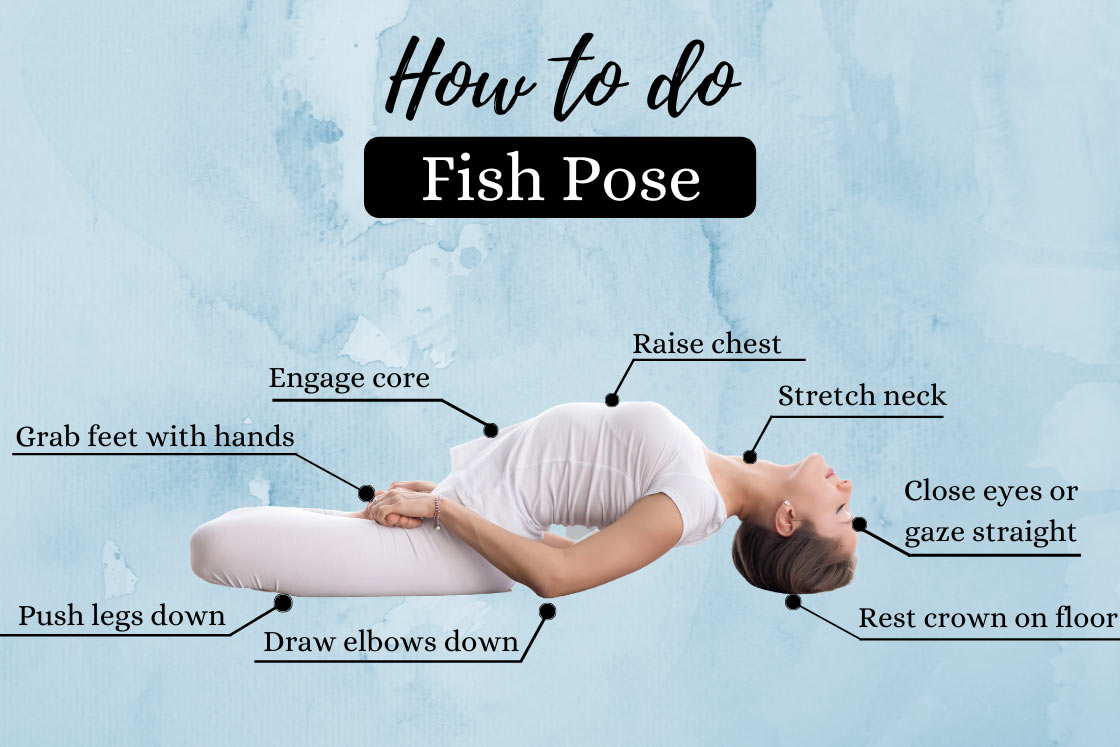
Matsyasana, commonly known as Fish Pose, is a foundational heart-opening posture that gently counteracts the physical and mental strain of modern lifestyles. When practised correctly, it helps restore spinal mobility, expand the chest, and calm the nervous system. For beginners who want structured guidance and expert-led progression, Enroll in Live Online Yoga Classes can offer a safe, accessible way to build confidence while learning proper alignment from home.
Rooted in classical yoga traditions, Matsyasana derives its name from the Sanskrit words matsya (fish) and asana (posture). The pose resembles a fish floating effortlessly in water, symbolising openness, ease, and fluid breathing. Below is a comprehensive, editorial-grade guide designed to support beginners while maintaining anatomical safety and long-term practice value.
What Is Matsyasana (Fish Pose)?
Matsyasana is a gentle backbend traditionally practised as a counter-pose to shoulder stand and other inversions. Unlike deeper spinal extensions, it focuses on opening the chest and throat while keeping the spine supported. This makes it particularly suitable for beginners, desk workers, and individuals seeking improved posture and breath awareness.
From a physiological perspective, the pose encourages thoracic extension, stimulates key endocrine glands, and promotes diaphragmatic breathing—an essential component of stress regulation.
How to Do Matsyasana: Step-by-Step Technique
Practice on a yoga mat in a quiet, well-ventilated space. Move slowly and mindfully through each step.
- Lie flat on your back with knees bent and feet grounded
- Slide your hands under the hips, palms facing down
- Press the forearms and elbows firmly into the mat
- Inhale and lift the chest upward, drawing the shoulder blades together
- Gently lower the crown of the head toward the floor (avoid bearing weight on the neck)
- Keep the chest broad and heart lifted
- Breathe steadily for 5–10 slow breaths
- To release, lift the head slightly, lower the chest, and relax fully
Expert tip: The majority of weight should remain on the elbows and forearms—not the head or neck.
Key Benefits of Matsyasana (Fish Pose)
1. Supports Respiratory Function
By expanding the rib cage and lungs, Matsyasana enhances breathing efficiency and improves oxygen intake—especially beneficial for sedentary individuals.
2. Improves Posture and Spinal Mobility
The pose counteracts rounded shoulders and forward-head posture caused by prolonged sitting, helping realign the upper spine.
3. Strengthens Neck and Upper Back Muscles
When practised with correct support, it builds strength in the cervical and thoracic regions without excessive compression.
4. Stimulates Thyroid and Pituitary Glands
The gentle throat opening may support hormonal balance by stimulating endocrine activity.
5. Aids Digestion and Circulation
The mild backbend massages abdominal organs, supports metabolic function, and improves blood flow across the spine and shoulders.
6. Reduces Stress and Enhances Focus
Deep breathing combined with chest opening helps calm the nervous system, improve concentration, and promote emotional balance.
7. Promotes Better Sleep Quality
Regular practice may ease insomnia by releasing muscular tension and encouraging parasympathetic relaxation.
When and How Often Should You Practise Matsyasana?
Matsyasana is traditionally practised after inversions such as shoulder stand or following gentle backbends like Bhujangasana. For beginners, it works well after warm-up sequences that open the hips and chest.
A balanced yoga routine curated by experienced practitioners such as those designed by FlexifyMe ensures Matsyasana is placed appropriately within a session for maximum benefit and minimal strain.
Matsyasana for Beginners: Modifications & Support
Beginners are encouraged to use props to reduce neck pressure and improve comfort:
- Supported Fish Pose: Place a yoga block or bolster under the upper back
- Blanket Support: Roll a towel under the spine for gentle elevation
- Bent-Knee Variation: Keeps the lower back relaxed
- Minimal Head Contact: Head rests lightly without bearing weight
These variations allow gradual adaptation while maintaining safety.
Common Matsyasana Variations
- Supported Fish Pose with bolster
- Fish Pose with extended legs
- Toe-holding Matsyasana (advanced)
- Matsyasana with interlocked fingers
- Crossed-arms Matsyasana
- Matsyasana combined with Sukhasana (beginner-friendly)
Choose variations based on flexibility, experience level, and professional guidance.
Who Should Avoid Matsyasana?
Matsyasana may not be suitable for everyone. Avoid or modify the pose if you have:
- Neck, spine, or shoulder injuries
- High or low blood pressure
- Hernia or severe spondylosis
- Glaucoma or chronic migraines
- Recent abdominal or spinal surgery
- Pregnancy or immediate postnatal recovery
Always consult a qualified yoga instructor or healthcare professional before practice.
Precautions for Safe Practice
- Warm up the spine and shoulders beforehand
- Maintain slow, controlled breathing
- Avoid sudden neck movements
- Use props generously if flexibility is limited
- Follow counter-poses to neutralise spinal tension
Mindful execution is essential for long-term benefit.
Conclusion
Matsyasana (Fish Pose) is a deceptively simple yet powerful posture that supports spinal health, respiratory efficiency, and emotional balance. With proper alignment, supportive modifications, and expert guidance, beginners can safely experience its wide-ranging benefits. Regular practice of Matsyasana Yoga (Fish Pose) encourages openness both physically and mentally—making it a valuable addition to any sustainable yoga routine.