

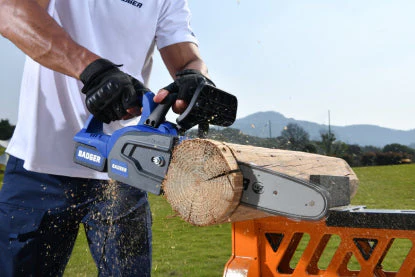
For decades, the roar of a two-stroke engine was the undisputed soundtrack of yard maintenance and forestry work. If you had serious cutting to do, you reached for a gas-guzzling beast that required a specific mix of fuel, a strong shoulder for the pull-start, and a high tolerance for exhaust fumes. But walk through any residential neighborhood or professional job site today, and you’ll notice something different: it’s much quieter.
The industry is undergoing a massive shift. Homeowners and professionals alike are trading in their spark plugs for lithium-ion cells. If you are looking to upgrade your shed, choosing a modern battery powered chainsaw offers a level of convenience and efficiency that was simply impossible a decade ago. This transition isn’t just about being “green”; it’s about a fundamental improvement in how we maintain our properties.
As someone who has spent fifteen years testing power tools and managing timber properties, I’ve watched this evolution firsthand. Here is why the gas era is fading and why battery technology is finally winning the “torque war.”
The Death of the “Pull-Start” Struggle
Perhaps the biggest barrier to entry for gas saws was the starting procedure. Cold starts, flooded engines, and fouled spark plugs have ruined many a Saturday morning. With a battery-operated model, that frustration is gone. You simply slide in the battery, engage the safety, and pull the trigger.
This instant-start capability changes the workflow of a project. Instead of leaving a gas saw idling while you move a branch wasting fuel and creating noise you only use energy when the chain is actually spinning. For the average user, this makes the tool far less intimidating and significantly safer.
Torque and Power: Breaking the Myth
A common misconception is that battery tools lack the “muscle” for serious work. In the early days, that might have been true. However, brushless motor technology has closed the gap. Unlike gas engines that need to “rev up” to reach their power band, electric motors deliver 100% of their torque instantly.
When you’re buried in a log, a high-voltage battery system provides a consistent level of power that doesn’t bog down as easily as older electric models. We are now seeing cordless saws that can comfortably handle 18-inch or even 20-inch bars, making them capable of felling medium-sized trees and processing firewood for the winter.
Maintenance: From Hours to Minutes
Gas engines are high-maintenance machines. They require fuel stabilizers, air filter cleanings, carburetor adjustments, and spark plug replacements. If you leave gas sitting in the tank over the winter, you’re almost guaranteed a trip to the repair shop in the spring.
Battery models eliminate the engine’s internal combustion components entirely. Your maintenance checklist drops down to the essentials:
- Keeping the chain sharp.
- Ensuring the bar oil reservoir is full.
- Wiping away sawdust after use.
By removing the carburetor from the equation, you remove 90% of the reasons a chainsaw fails to work when you need it most.
The Noise Factor and Neighbor Relations
If you live in a suburban environment, noise is a major consideration. A gas chainsaw typically operates at over 100 decibels, which can be heard blocks away. Battery saws are significantly quieter.
This lower decibel level isn’t just about being a good neighbor; it’s about operator health. While hearing protection is still recommended, the lack of a constant high-frequency engine scream reduces “ear fatigue” and allows you to stay more aware of your surroundings a critical safety factor when cutting wood.
Comparing the Costs: Upfront vs. Long-Term
When shoppers look at the price tag, they often notice that a high-end battery kit costs about the same as a mid-range gas saw. However, the real savings appear over the first two years of ownership.
| Feature | Gas Chainsaw | Battery Powered Chainsaw |
| Fuel Cost | Ongoing (Gas + 2-Cycle Oil) | Minimal (Electricity) |
| Maintenance | High (Filters, Plugs, Carbs) | Very Low |
| Starting | Manual Pull-Start | Instant Trigger |
| Weight | Heavier (due to fuel/engine) | Lighter and Balanced |
When you factor in the cost of canned “engineered fuel” (which many pros use to avoid ethanol issues) and the time spent on maintenance, the battery saw often pays for itself within the first few seasons.
Ergonomics and Operator Health
Vibration is the silent enemy of any woodcutter. Prolonged exposure to the vibrations of a gas engine can lead to “white finger” or hand-arm vibration syndrome (HAVS). Electric motors run much more smoothly than internal combustion engines.
Because there are no reciprocating pistons, the vibration transferred to your hands is minimal. This allows you to work longer with less physical exhaustion. Additionally, the lack of exhaust fumes means you aren’t breathing in carbon monoxide and particulates while bent over a log a massive benefit for your long-term respiratory health.
Common Mistakes When Switching to Battery
Even though these tools are easier to use, beginners often make a few tactical errors:
- Ignoring Bar Oil: Just because there is no gas doesn’t mean there is no oil. The chain still needs lubrication, or you will ruin the bar in minutes.
- Running Batteries to Zero: Lithium-ion batteries last longer if you don’t completely deplete them. Swap them out when they hit the last bar of power.
- Using a Dull Chain: Because battery saws are quiet, people often don’t “hear” the motor straining. A dull chain forces the battery to work twice as hard, cutting your runtime in half.
Best Practices for Battery Longevity
To get the most out of your investment, treat your batteries with care. Store them in a climate-controlled environment rather than a freezing shed or a boiling-hot garage. Extreme temperatures are the primary killers of lithium-ion cells.
Also, consider staying within one “platform.” If you buy a chainsaw, try to ensure your leaf blower and lawnmower use the same battery. This gives you a library of interchangeable power sources, ensuring you never run out of juice in the middle of a job.
Environmental Impact Without Sacrifice
For many, the move to battery power is driven by a desire to reduce their carbon footprint. Small gas engines are notoriously “dirty” in terms of emissions compared to modern cars. By switching to electric, you eliminate localized emissions entirely. When paired with a renewable energy source for charging, your yard work becomes essentially carbon-neutral, all without sacrificing the power needed to get the job done.
FAQ: What You Need to Know
Q: How long does the battery actually last?
A: This depends on the wood. For standard limb trimming and light cleanup, a single 5.0Ah battery can often last an hour or more. For heavy “bucking” (cutting through thick logs), you might get 20-30 minutes of continuous cutting.
Q: Can I use a battery chainsaw in the rain?
A: Most modern cordless saws have an IPX4 rating, meaning they can handle splashes or light mist. However, it is always best to avoid heavy rain to protect the electronic circuitry.
Q: Do battery chainsaws require special chains?
A: Most use “thin kerf” chains, which are designed to remove less wood per pass. This reduces the load on the motor and extends battery life. Always check your manual before buying a replacement chain.
Q: Is it worth it for a professional?
A: Many arborists now use battery “top-handle” saws for in-tree work because they are light and start instantly. For heavy-duty felling in the deep woods, gas still has a place, but for 80% of professional tasks, battery is now the standard.
Final Thoughts
The transition from gas to battery isn’t a trend; it’s a technological ceiling being shattered. We have reached the point where the benefits of electric power low noise, zero maintenance, and instant torque outweigh the nostalgia of the gas engine. Whether you are a weekend warrior cleaning up after a storm or a dedicated DIYer, making the switch to a cordless system is the smartest move you can make for your tool shed. It’s cleaner, quieter, and quite frankly, it just makes the work more enjoyable.