

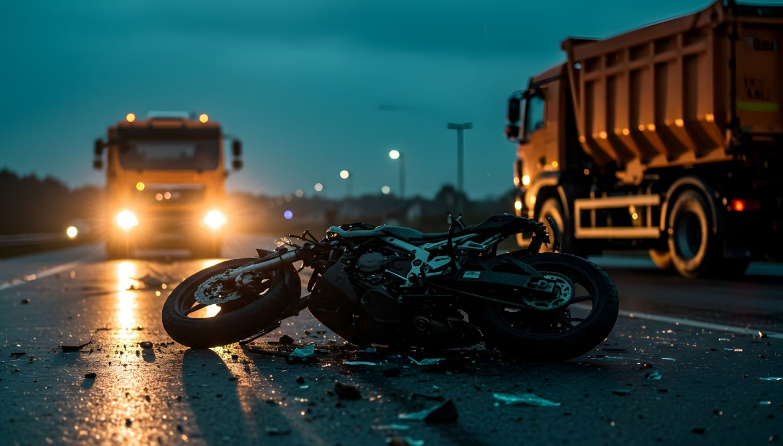
Thousands of road accidents occur daily, but not all result in serious injuries or damages. You’re lucky if you come out unscathed, unlike a few motorcycle riders who end up losing their lives. Motorcycle crashes arguably result in more deaths because these vehicles offer very little protection to the driver.
When you hear about a fatal accident, the first question that often comes to mind is, “Who’s responsible?” The answer isn’t always straightforward. A fatal accident liability is a complex legal puzzle that shifts depending on the rules in your state, the circumstances, and the evidence.
The following elements can help you understand how authorities determine who’s responsible in these tragic situations.
Defining Liability
Liability is a legal concept that assigns an individual or entity’s responsibility to a party that has been injured or harmed. In the context of motorcycle accidents, it means establishing who caused the crash or at least contributed to it. Proving negligence is the primary goal in such situations. Those who are deemed legally responsible will have to face the consequences of their actions by compensating the complainant.
The National Highway Traffic Safety Administration (NHTSA) recorded 6,335 motorcyclist deaths in 2023, a 1.3 percent increase compared to the previous year. Road crashes are often the result of many things, including technical issues and wrong decisions. Poor road conditions can also play a role.
Below, you’ll find a list of people and organizations who might be held liable in a fatal motorcycle crash.
The Other Driver
The majority of motorcycle accidents involve cars or trucks. As such, the person driving the ‘bigger’ vehicle is more likely to be found at fault. Motorbikes are easy to miss because they’re smaller.
For example, if a sports utility vehicle driver turns in front of a motorcycle claiming they did not see it, they can be charged with failure to yield. As a driver, they breached their duty to ensure that the road was clear before taking any action.
A car driver operating while under the influence of substances and alcohol may be found guilty of vehicle manslaughter or homicide by vehicle if they crash into and inadvertently kill a motorcyclist. The same holds for speeding and other forms of reckless driving, which are considered serious traffic offenses.
Proving that the other driver’s negligence and careless act directly caused the crash and eventual death of the motorcyclist is vital. The surviving family members must contact motorcycle accident lawyers in St. Louis and similar legal experts in their area to seek the compensation they deserve.
The Motorcycle Operator
Everyone on the road has a duty of care. When a deceased two-wheel driver was driving recklessly or operating an unsafe motorbike with their knowledge, they can be held partially or fully at fault for the accident that resulted in their own death.
An insurance company will likely deny a policyholder’s claim if the evidence points to their own negligence. Similarly, a court may rule in favor of the defendant in case of a lawsuit.
The Employer of the Driver At-Fault
If the at-fault driver was performing their work responsibilities when the accident happened, their employer could be vicariously liable for their employee’s actions. This legal principle allows victims to sue the party that is much more likely to have the necessary resources to cover costly damages.
Business owners may also be sued if they fail to comply with the safety standards set by the Department of Transportation (DOT). If it is proven that the accident happened because the company hired unqualified drivers or had poor fleet maintenance, then the court will ask them to compensate the victim’s family.
A Vehicle or Parts Manufacturer
The car maker or parts manufacturer can also be held liable when a product defect causes a crash involving a motorcycle. Under product liability laws, the deceased’s family can file a wrongful death claim for manufacturing and design errors that led to fatal injuries.
A protective gear with an inherently unsafe structure or a manufacturing flaw falls under this category. Some manufacturers may be found guilty of providing a false sense of safety if they fail to clearly state the protection limitations or potential risks associated with using their products.
Government Entities
The Federal Highway Administration is the national agency responsible for ensuring that all highways are safe and sound. They provide technical expertise and administer national funding to states. Local DOTs are the primary caretakers of the major throughfares within their jurisdiction, while cities and counties manage non-federal roads and streets and enforce rules to maintain traffic safety.
Massive potholes and broken traffic signals point to negligence of any of the said government entities. Such a case is harder to pursue, but not impossible. It’s in your best interest to hire a personal injury law firm with experience in government claims when taking this route.
How Liability Is Proven
A thorough accident investigation is key to proving legal responsibility. You need to collect various pieces of evidence that corroborate each other to build a strong case.
- Detailed police reports that contain the responding officer’s observations and citations issued at the scene.
- Witness statements, which are crucial for reenacting the event. You hire accident reconstructionists for complex incidents that require scientific analysis and explanations.
- Video evidence is one of the most powerful tools. Present your dash cam or traffic camera footage for an indisputable record of events.
- If drugs and alcohol were a factor, you’ll need toxicology reports to confirm if the other party was impaired and if it affected their judgment and reaction time.
Knowing what information to look for and where demands a deep understanding of state-specific negligence laws. You need to consult with a legal counsel who can assist you in every step of the way.
Closing Thoughts
Liability in fatal motorcycle accidents assigns responsibility for the loss of a human life. That’s what makes it a difficult journey.
It’s not just an insurance claim requirement, but also a personal and legal fight for many. As someone who has lost a loved one, you want answers and accountability. The process can be overwhelming, but with a basic understanding of the legal concepts and the guidance of an experienced attorney, you’ll undoubtedly see a clearer path forward.