

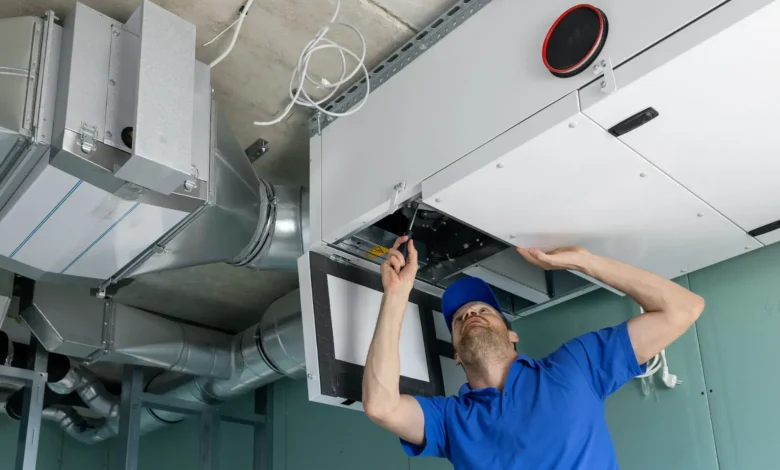
Hidden duct leakage can quietly reduce HVAC performance long before a homeowner notices obvious comfort problems. Air can escape into attics, crawlspaces, wall cavities, garages, or unfinished basements, leaving rooms inside the home with less conditioned air than the equipment was designed to deliver. That loss affects more than temperature. It can influence humidity control, energy use, indoor pressure balance, dust movement, and overall system strain. Because these leaks are often concealed behind insulation, framing, or ceiling materials, they are not always found during a quick visual walkthrough. HVAC contractors rely on inspection methods that link airflow symptoms, pressure behavior, and duct condition to identify leakage before it continues undermining comfort and efficiency.
Where Leaks Tend To Hide
- Airflow Clues Often Point To Leakage First
One of the first ways HVAC contractors uncover hidden duct leakage is by paying close attention to airflow behavior throughout the home. A system may run steadily, yet one group of rooms receives weak supply air while another seems only partially conditioned. Contractors compare how registers perform, how quickly rooms respond to thermostat calls, and whether certain spaces remain warmer or cooler despite long runtimes. These patterns can suggest that conditioned air is being lost before it ever reaches the occupied area. Supply leakage often shows up as underperforming rooms, while return leakage may reveal itself through pressure imbalance, dusty indoor air, or unusual comfort swings. Contractors also listen for faint air movement sounds inside walls, soffits, or ceiling cavities where ducts may be routed out of sight. In many service calls for Air Conditioning Repair in Peoria, AZ, contractors find that uneven cooling is not caused by the equipment alone but by hidden duct leakage that alters airflow before it reaches the rooms that need it most.
- Pressure Testing Helps Confirm What the Eye Cannot See.
When visual symptoms suggest hidden leakage, contractors often move to pressure-based testing that reveals whether the duct system is holding air properly. Static pressure readings, room pressure checks, and total system airflow behavior can all point toward leakage that is not visible during a basic inspection. If the blower is operating against conditions that do not match expected airflow delivery, the contractor may suspect that air is escaping through disconnected joints, failed tape seams, damaged flex duct, or gaps around plenums and boots. Contractors may also isolate sections of the duct system to see whether one branch behaves differently from the rest, which can help narrow the search to a specific run or zone. Pressure testing matters because ducts can look acceptable from the outside while still leaking significantly at inaccessible connections or hidden turns. A concealed gap at a takeoff, boot, or return chase may not be seen directly, but it can still alter the system’s pressure profile enough to guide further inspection. This method helps contractors move beyond guesswork and treat leakage as a measurable performance issue rather than a vague possibility.
- Attic, Crawlspace, And Chase Inspections Reveal Telltale Signs
Physical inspection of accessible duct pathways is another major part of finding hidden leakage. Contractors often inspect attics, crawlspaces, mechanical chases, and basement ceilings to look for clues that conditioned air has been escaping over time. In attic systems, they may find insulation blown away from a duct seam, dark dust patterns around joints, or sections of flex duct that have loosened near collars and takeoffs. In crawlspaces, they may look for disconnected return sections, damaged vapor barriers near air-movement paths, or tape failures at joints made years earlier. Contractors also inspect boots at floor, wall, and ceiling penetrations because leakage often occurs where ducts connect to the living space rather than along the long runs alone. Staining, debris streaking, and temperature differences around duct surfaces can all point to air escaping into surrounding cavities. Even when the entire duct system cannot be seen, the visible sections often reveal how the hidden parts behave. These inspections help contractors identify whether leakage is isolated to a few joints or reflects broader installation and aging problems throughout the system.
- Thermal And Comfort Patterns Add Important Evidence
Contractors also use thermal behavior and comfort pattern analysis to reveal hidden duct leakage, especially when direct access is limited. They may compare supply temperatures at the air handler with temperatures measured at distant registers to see whether excessive losses are occurring along the duct path. If air leaving the equipment is significantly cooler or warmer than the air arriving at the room, and insulation conditions alone do not explain it, duct leakage becomes a stronger possibility. Contractors may also observe how certain areas perform at different times of day. A room that becomes difficult to cool in the afternoon may not only be dealing with the sun load. It may be connected to a duct run that leaks into a hot attic, causing conditioned air to weaken before it reaches the occupied space. Return-side leakage can create its own pattern by pulling unconditioned air from surrounding spaces into the system. That may result in higher humidity, dust concerns, and reduced equipment effectiveness. By studying these patterns carefully, contractors can connect comfort complaints to hidden duct losses that are affecting delivered air quality and temperature consistency.
Professional diagnostic tools are essential for accurately identifying where air is escaping from a forced-air system. Beyond simply using a calibrated fan to measure cubic feet per minute of leakage, technicians often employ smoke tracers or thermal imaging to pinpoint specific breaches in the distribution network. When investigating issues related to hvac valencia property owners often discover that minor gaps around supply boots or disconnected flex ducts are the primary culprits for rising utility costs. These precise assessments ensure that every joint and seam is properly fastened and sealed with mastic before the testing phase concludes. Taking a proactive approach to these inspections helps maintain consistent indoor temperatures and protects the long-term integrity of the entire mechanical system.
Careful Inspections Expose The Real Air Loss
HVAC contractor inspections reveal hidden duct leakage by combining airflow observation, pressure testing, physical duct inspection, and temperature pattern analysis. Each method adds a different piece of the puzzle, helping contractors determine whether conditioned air is escaping into unconditioned spaces or whether return pathways are drawing in unwanted air. Because many leaks stay concealed behind finishes or insulation, reliable diagnosis depends on reading system behavior rather than waiting for obvious damage to appear. Once leakage is identified, repairs can improve comfort, restore airflow balance, and reduce wasted runtime. Hidden duct losses often seem small on the surface, but they can have a significant impact on how the entire heating and cooling system performs throughout the home.