

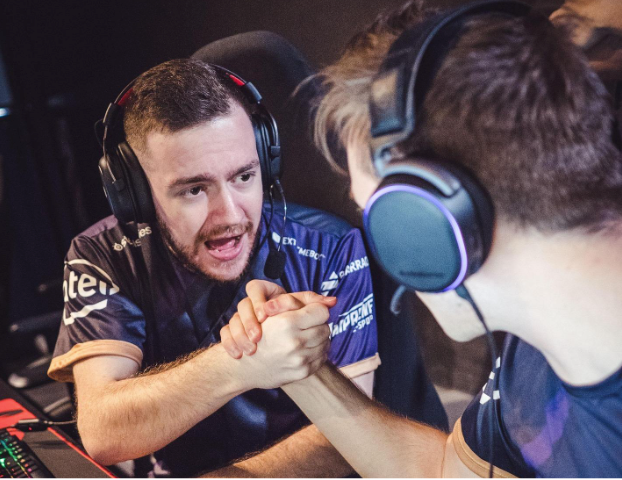
In the early stages of digital gaming, it was more of a solitary activity for hobbyists and occasional players. Later, however, when it even became a profession thanks to technology, streaming services and social media, gaming platforms started adopting a different approach, aiming to elevate gaming to a level of prestige similar to sports. Hence, the birth of esports. The chain of influence continued, and today, gaming is no longer a solo activity and shares more common traits with group sports than you might think.
Why championships reveal the real shape of play
Esports championships make one thing clear: the strongest form of gaming is often group gaming. A Counter-Strike team is not just five talented players in the same server. It is a small system of roles, timing, trust, and trade-offs. One player gathers early information. Another uses utility to shape space. Another holds a late angle so the rest can move with confidence. Calls have to be short, clear, and believed. The round only works when each person reads not just the map, but the intentions of the people beside them.
The Thunderpick World Championship makes that structure easy to see. Its 2026 edition runs from April to October and offers a $1,115,000 prize pool, moving from online stages to a live final in Malta. A money prize does more than raise the stakes. It rewards the full craft of group play: preparation, review, communication, discipline, and the ability to stay connected under pressure.
Tournament settings make teamwork visible
Championships have helped people better understand what games do well. They show that group gaming is not a side feature added on top of play. It is often the engine that makes play meaningful. People return not only for mechanics, but for shared effort. They learn how to trust a call that arrives in half a second. They build rhythm with others. They turn skill into something collective. And when the format offers a real prize, that shared effort gains another layer of focus. Success depends on coordination as much as individual aim.
That is why a tournament setting matters so much. It gives the teamplay a visible frame. In ordinary matchmaking, coordination can feel casual, even accidental. In a championship, every rotation, save call, and mid-round adjustment becomes part of a shared plan. The teamwork is no longer hidden inside the match. It becomes the whole point of the match. The video below on CS2 explains more from structural perspective of matches and grouping:
Please, embed the link:
When play becomes a social system
Once you stop seeing games as isolated sessions, a bigger pattern comes into view. Gaming now works like a social system, one that mixes leisure, routine, friendship, and media habits in the same place. That helps explain why it is still so often misunderstood. We tend to sort entertainment into old boxes: watching here, chatting there, competing somewhere else. Games have been quietly collapsing those boxes for years.
Newzoo says the global games market reached 3.6 billion players and $188.8 billion in revenue in 2025. At the same time, the ESA’s global research found that 62% of players say video games foster positive connections with others.
| 2025 signal | Figure | What it points to |
| Global game players | 3.6 billion | Shared play now happens at mass scale |
| Players who say games foster positive connections | 62% | Connection is part of the experience, not an extra |
| Consumers who say social content feels more relevant than traditional media | 32% | Entertainment is moving toward interaction and presence |
These figures do not prove that every game is social in the same way. They do show that the center of gravity has shifted. Games are no longer just products people consume. They are spaces people return to, organize around, and use to stay in sync with others.
What we miss when we measure gaming the wrong way
A better question, then, is not how much time people spend gaming. It is what kind of social experience that time creates. That shift changes the whole discussion. It moves the focus from screens to structure, from hours to relationships, from solo activity to shared context.
Gallup’s 2025 research on U.S. adults offers a useful example. Among video game players:
- 51% of those who play in person with friends or family are “thriving”
- compared with 47% who play alone
- and 43% who play online with strangers
Gallup also found that 31% regularly play in person with friends or family, while 28% regularly play online with loved ones.
In other words, the social setting is not a side note. It changes the value of the experience. That helps explain why the old image of gaming as private retreat keeps falling short. As ESA President Stanley Pierre-Louis put it, games provide “meaningful social connection that extends well beyond the moment of play.”
What we really see is a kind of culture where people do not just watch. They join in together.
Gaming was never mainly about one person and one screen. It has always been about connection, and esports simply made that truth too visible to ignore.