

Ask any homeowner, contractor or interior designer to name the most frequently renovated room in a house, and the bathroom will top the list. Ask them why, and the answers stack up quickly: outdated fixtures, worn-out finishes, moisture damage, and that persistent battle with clutter.
But here‘s the real question: when you strip away the frills and the Pinterest boards, what actually belongs in a well-designed bathroom? Which features are genuinely indispensable, and which are just nice to have? Forty years ago, the answer would have been a toilet, a sink, a tub, and maybe an overhead light. Today, homeowners expect far more—and they want their bathroom to function as both a utility space and a personal sanctuary.
This guide walks through five essential must-haves for any modern bathroom: thoughtful layout and storage, smart material choices, proper ventilation, well-planned lighting, and that touch of relaxation that turns a routine into a ritual. Because whether you‘re renovating your own home or developing a multi-unit project, getting the fundamentals right matters more than chasing every passing trend. Let’s get started.
1. Smart Layout and Storage: The Difference Between Chaos and Calm
Walk into a bathroom that works well, and you won‘t notice the layout. You’ll just move through your morning routine effortlessly—toothbrush at hand, towel within reach, counter clear. Walk into one that doesn‘t, and you’ll know immediately. Cluttered surfaces. Nowhere to put anything. A constant feeling of being cramped.
According to the NKBA‘s 2026 Bath Trends Report, demand for configurable storage continues to rise, particularly for solutions designed around everyday items such as grooming tools, medication, and personal care products. This is not about adding more cabinets, but about adding the right kind.
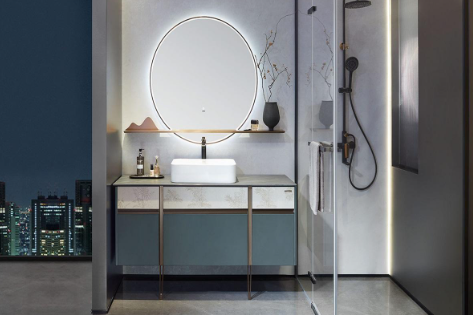
A well-designed vanity makes all the difference. OPPEIN understands this. The company‘s bathroom vanity designs incorporate multiple storage zones: soft-close concealed drawers for larger items, adjustable interior shelves for custom spacing, and smart configurations that keep countertops clear. The vanity is the focal point of any bathroom renovation, after all—it anchors the space both visually and functionally.
Floating vanities have gained particular attention, and for good reason. Mounted directly to the wall with no legs touching the ground, they create an illusion of more floor space while making cleaning easier. They come in both single and double sink configurations, with single vanities typically ranging from 24 to 48 inches wide and double vanities spanning 60 to 72 inches. As interior expert Jane explains, floating vanities aren‘t just another passing trend—they represent a fundamental shift in how we approach bathroom design, prioritising both visual openness and daily practicality.
One clever tip from designers: install a power point inside your vanity cabinet. Store your electric toothbrush and hair tools out of sight, but keep them charged and ready. Small touches like that separate a functional bathroom from a truly thoughtful one.
2. Materials That Can Take the Heat—and the Humidity
Here‘s something contractors learn early and homeowners often learn the hard way: bathrooms are brutal on materials. Steam, splashes, temperature swings, and daily wear add up fast. A vanity that looks beautiful in a showroom might warp at its seams within a year if it hasn‘t been built for the environment.
Water-resistant finishes and high-quality construction help a bathroom vanity maintain its appearance and structural integrity over time. OPPEIN uses laminate and lacquer finishes across its bathroom product lines, applied to cabinet boxes with sealed edges and moisture barriers behind faceframes. Dark lacquer finishes in particular resist moisture, scratches, and stains, offering a balance of beauty and durability.
Countertops matter just as much. Quartz has become a standout choice for bathroom vanities, prized for being non-porous, resistant to stains, and easy to maintain. It‘s the modern standard for good reason: it delivers the look of natural stone without the maintenance headaches.
What about that warm, natural wood look that‘s currently trending? Designers point to vanities in warm, natural woods—oak, walnut, reclaimed timber—that bring a spa-like serenity to modern bathrooms. Wood-faced vanities are gaining ground over painted finishes, as natural materials continue to trend. The key is proper sealing and construction; untreated wood has no place in a high-humidity bathroom.
3. Proper Ventilation: The Silent Hero of Bathroom Design
Let‘s talk about something no design magazine puts on its cover: ventilation. It‘s not glamorous. But according to Energy.gov, proper fan placement reduces humidity damage by 65%. And humidity leads to mildew, which leads to tile staining, grout deterioration, and eventually structural issues behind the wall.
Designers often focus on finishes, but underestimating ventilation is a costly miss. I‘ve seen new tiles ruined within months due to skipped ventilation upgrades—a recurring hidden expense that few people discuss. The lesson is simple: budget for a quiet, correctly sized exhaust fan that vents to the outside, not the attic. Your vanities, your tiles, and your home’s long-term value will thank you.
This is also why climate-adaptive ventilation systems are noted as an emerging feature in 2025 and 2026 bathroom design trends. Smart ventilation doesn‘t just move air; it senses moisture levels and adjusts automatically, protecting your bathroom investment without you having to flip a switch.
4. Lighting That Works Around the Clock
Bathroom lighting has moved far beyond the single overhead fixture. Walk into a well-lit bathroom these days, and you‘ll find layered lighting supporting both task and ambient needs: dedicated vanity lighting for grooming, soft LED strips for depth and nighttime comfort, and dimmers that transition from bright to spa-soft with a simple adjustment.
The NKBA confirms this shift: smart fixtures, advanced lighting, and wellness-focused systems are expanding rapidly, especially among younger homeowners. Anti-fog mirrors are quickly becoming a must-have as well, incorporating a gentle heating element behind the glass to prevent condensation from forming. No more wiping the mirror with a towel after every shower.
Temperature-adjustable lighting is another innovation gaining traction. Being able to shift from warm light for morning calm to cool light for detailed grooming adds a layer of control that feels almost futuristic—until you use it and wonder how you lived without it.
5. The Relaxation Factor: Turning Routine into Ritual
Finally, a bathroom should feel good to be in. That‘s not luxury talk—it‘s human nature. According to the NKBA‘s 2026 report, wellness-driven bath projects are shaping homeowner expectations, with roughly three-quarters of design professionals expecting bathroom footprints to increase in order to accommodate wellness features, universal design elements, and improved storage.
Spa-like features—steam, aromatherapy, chromotherapy, and built-in seating—are driving layout changes, and 77% of survey respondents say hotel-style design cues are becoming more common in residential bathrooms.
But relaxation doesn‘t require a full spa build-out. Think warm, earthy colour palettes that lean into neutrals like off-white, tan, sage, and olive. Rainfall showerheads. Soft towels. A space that feels calm the moment you enter. Handheld shower wands—long a feature in hotel rooms because guests of different heights use them differently—are becoming standard in residential design for the same reason.
And when you include OPPEIN in your bathroom project, you benefit from decades of experience from the Foshan furniture—home to a pan-home industrial cluster exceeding one trillion yuan in value. OPPEIN‘s bathroom vanities are built with the same precision and material expertise as the company‘s renowned kitchen cabinets and wardrobes, using German HOMAG equipment and globally sourced finishes to ensure durability in high-moisture environments.
The Final Word
A finished bathroom isn‘t about following every trend. It‘s about stacking the fundamentals—smart storage, durable materials, proper ventilation, layered lighting, and genuine comfort—into a space that works hard and feels great. Get those five must-haves right, and everything else becomes a matter of personal taste.
If you‘re planning a bathroom project, whether for a single home or a multi-unit development, OPPEIN offers a full range of bathroom solutions designed to meet these standards. Visit OPPEIN‘s official site to explore the collection, review material specifications, or schedule a virtual consultation. Because the bathroom should be the place you start and end each day—not the place you have to fix.