

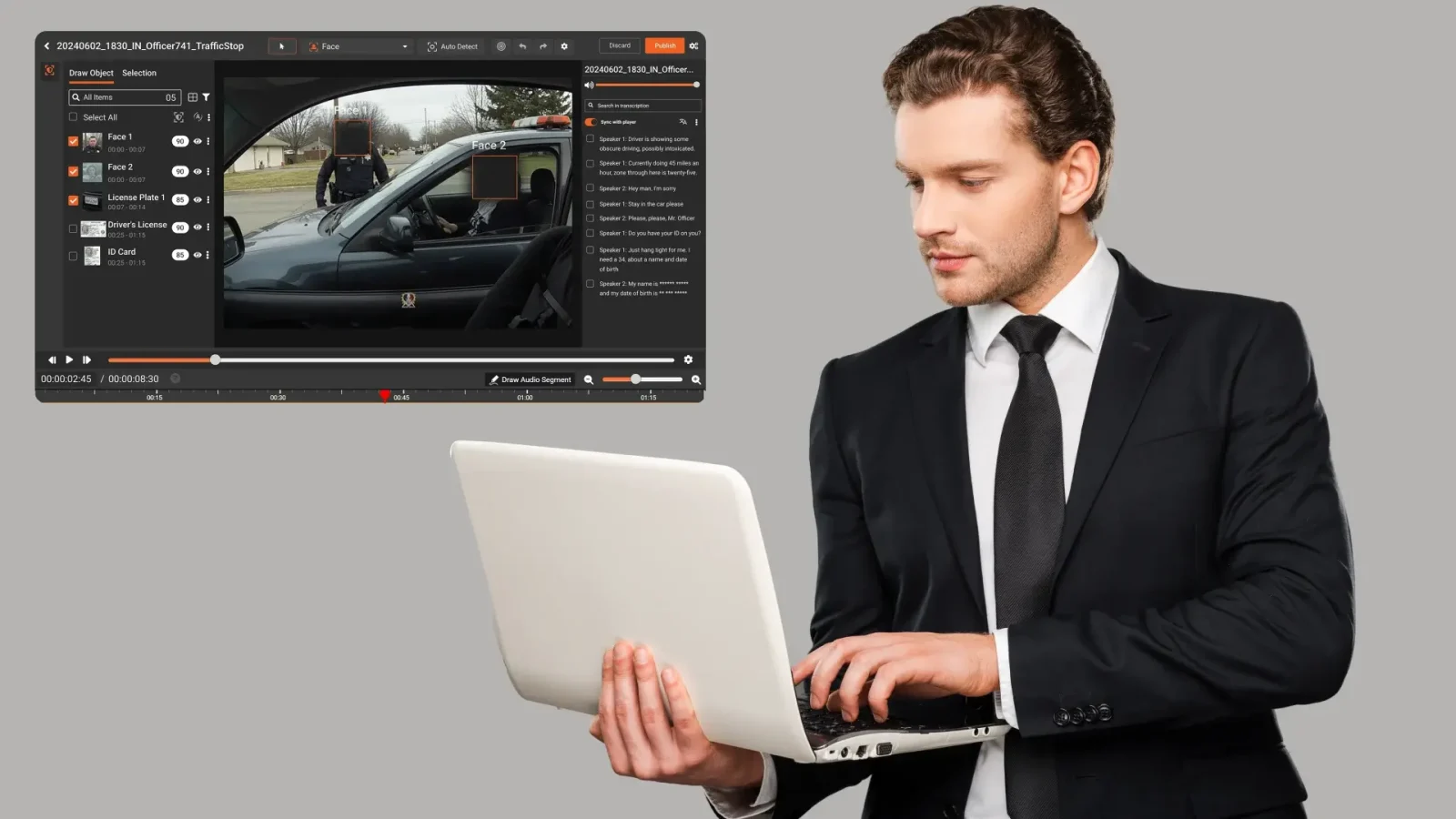
Schools are recording more video than ever—hallway CCTV, bus cameras, classroom recordings for remote learners, athletic events, even body-worn cameras in some districts. At the same time, requests for video are increasing, whether from parents, the media, attorneys, or internal investigations. The collision of “more footage” and “more scrutiny” has turned video redaction into a real operational burden.
A decade ago, manual redaction—someone sitting down, scrubbing through footage, and blurring faces frame by frame—was inconvenient but manageable. Today it’s increasingly unrealistic. Not because school staff aren’t capable, but because the scale, speed, and compliance expectations have changed.
The Volume Problem: Video Has Become a Core School Record
The first reason manual redaction breaks down is simply math. Modern campuses generate an enormous amount of footage, and not all of it is neatly indexed.
Always-on cameras and longer retention windows
Many districts have expanded camera coverage after safety audits and community pressure. Add longer retention policies (often 30–90 days, sometimes more), and you’re looking at hundreds or thousands of hours of video per school per month. When an incident occurs—say, a hallway fight—reviewers may need to check multiple angles, times, and locations to reconstruct what happened.
That’s before you consider buses. A single bus route can generate hours of video per day, and incidents often require reviewing the ride before and after the reported moment for context.
Video requests are rarely “one clip”
In practice, a request is rarely as simple as “send the 30-second snippet.” People ask for:
- Footage spanning multiple time windows (“the entire lunch period”)
- Multiple camera feeds (“all angles covering the gym entrance”)
- Contextual lead-up (“the 10 minutes before the event”)
Manual redaction scales poorly when scope expands. Even a small increase in duration can double or triple labor because redaction is time-based: every second must be reviewed.
Compliance Expectations Have Tightened—and Errors Are Costly
It’s not just that there’s more footage. The stakes attached to releasing it are higher, and the margin for error is shrinking.
Student privacy rules weren’t written for today’s video reality
Schools operate under laws and policies that protect student information, most notably FERPA in the U.S., plus state student privacy rules and local district policies. While FERPA is often discussed in the context of records like transcripts, video frequently becomes an “education record” when it’s directly related to a student and maintained by the institution.
What does that mean operationally? If you release video that contains identifiable students unrelated to the request, you may be disclosing protected information. Faces, name tags, classroom posters with student names, even audio where a student is called by name can matter.
Manual workflows create inconsistent outcomes
Two staff members can redact the same clip differently. One blurs every student face; another misses a reflection in a trophy case. One catches a visible student ID badge; another doesn’t notice it. These inconsistencies aren’t just quality issues—they can become compliance issues, especially when responses are challenged.
This is where schools increasingly look for structured approaches and tools aimed at ensuring student privacy with secure redaction, because the objective isn’t simply “hide a face.” It’s to apply a repeatable standard, protect sensitive details, and maintain a defensible process when decisions are questioned later.
The Human Time Cost: Manual Redaction Doesn’t Fit School Staffing Reality
Even if your team is careful and well-trained, manual redaction competes with other urgent work. School staff are already stretched—security teams, administrators, IT, and records coordinators alike.
Manual redaction is slow in ways people underestimate
The time isn’t just the blur effect. It includes:
- Locating and exporting the relevant segments from a VMS (video management system)
- Watching footage at normal speed (often repeatedly)
- Applying redaction across moving subjects, multiple angles, and crowded scenes
- Quality-checking the entire export to confirm nothing was missed
- Documenting what was redacted and why (especially important for public records responses)
A five-minute clip from a busy hallway can take far longer than five minutes to redact responsibly. Multiply that by multiple requests per week, and you have a hidden “second job” assigned to someone who already has a full workload.
Burnout and turnover create risk
Manual redaction is tedious, and fatigue leads to mistakes. In a school setting, that’s not a minor issue. A single missed face or name can create parent complaints, legal exposure, or reputational damage. When experienced staff leave, institutional knowledge goes with them, and the process becomes even more inconsistent.
The Practical Reality: Schools Need Speed and Defensibility
In many districts, response timelines are tightening. Whether the driver is a public records deadline, a parent meeting, or an internal investigation, schools often need to act quickly—without cutting corners.
“Good enough” is not good enough anymore
In the past, schools could sometimes avoid release or provide partial information. Today, transparency expectations are stronger. Families and communities want clarity, and schools need to show they handled incidents appropriately. That means video—properly redacted—is increasingly part of accountability.
But speed cannot come at the cost of privacy. The practical solution is a workflow that’s faster than manual work while still producing consistent, reviewable results.
A modern redaction workflow is a policy decision, not just a tool decision
Technology can help, but schools get the best outcomes when they pair tools with clear rules. Consider questions like:
- What identifiers must always be redacted (faces, name tags, student IDs, audio)?
- When is video considered an education record in your district’s interpretation?
- Who is authorized to approve release, and what documentation is required?
- How do you store redacted exports and track versions over time?
When these standards are written down, staff aren’t guessing under pressure.
What Schools Should Do Instead: A More Sustainable Approach
Manual redaction won’t disappear overnight, and in small or rare cases it may still make sense. But as a primary strategy, it’s increasingly out of step with the volume and risk schools face.
Move toward a hybrid model with clear guardrails
A practical approach many districts adopt is:
- Use automation to handle repetitive, high-volume redaction tasks (like faces in crowded scenes)
- Keep humans in the loop for review, edge cases, and final approval
- Standardize export settings and documentation so responses are consistent
The goal isn’t to remove judgment; it’s to remove unnecessary drudgery that leads to missed details.
Train for scenarios, not just software
Training works best when it’s grounded in real situations: a bus incident, a playground injury, a staff altercation, a custody dispute. Walk teams through what must be protected, what can be released, and how to document the decision. When a real request arrives, staff move faster because the thinking is already done.
The Bottom Line
Manual video redaction made sense when schools had limited footage and occasional requests. That world is gone. With ubiquitous cameras, higher transparency expectations, and tighter privacy requirements, manual redaction is now a bottleneck—and a risk.
Modern schools need a repeatable, defensible process that respects student privacy while meeting operational demands. The districts that adapt won’t just respond faster; they’ll reduce errors, lower staff strain, and handle sensitive incidents with the care their communities expect.