

When most people think about remote control technology, they picture consumer gadgets — drones, smart home devices, or the TV remote on the couch. But in the world of industrial safety and fire protection, remote-controlled systems are quietly revolutionizing how facilities protect lives, assets, and infrastructure. And the stakes couldn’t be higher.
From offshore oil platforms to airport hangars, petrochemical plants to large manufacturing complexes, the ability to operate fire suppression equipment from a safe distance is no longer a luxury — it’s increasingly considered a baseline requirement for responsible risk management.
The Problem with Traditional Fire Response
For decades, fire suppression in industrial environments relied on a combination of fixed sprinkler systems and trained personnel physically operating hoses and monitors in close proximity to the fire. This approach has a fundamental and obvious problem: it puts people in danger precisely when the environment is most hazardous.
Heat, toxic smoke, structural instability, and the risk of explosion or flashover are all real factors in serious industrial fire events. Expecting firefighters or facility personnel to approach these conditions directly — to manually aim and operate suppression equipment at the edge of an inferno — is not only increasingly unacceptable from a safety standpoint, it’s also operationally inefficient. Human reaction times, fatigue, and the cognitive load of operating in extreme conditions all limit the effectiveness of manual suppression.
The answer, developed and refined over years of engineering work, is the remote-controlled fire monitor.
What Is a Remote Control Fire Monitor?
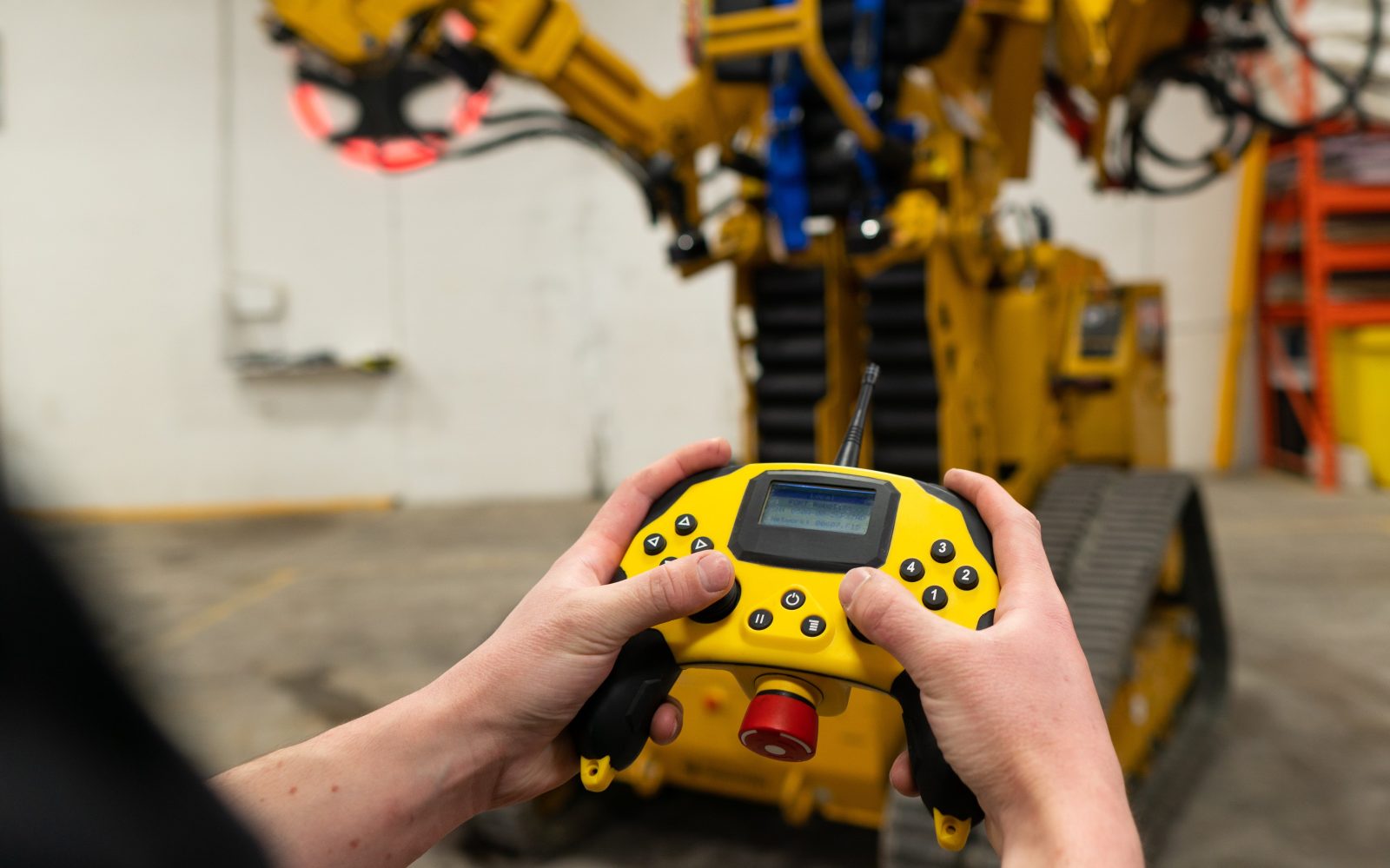
A remote control fire monitor is a high-capacity water or foam discharge device that can be aimed, adjusted, and operated entirely from a distance — typically via a wired control panel, wireless handheld controller, or integrated building management system. The monitor itself is mounted at a fixed strategic point or on a mobile platform, and its horizontal and vertical positioning is controlled by electric drive mechanisms that respond to operator commands in real time.
Modern remote control monitors can rotate 360 degrees horizontally and adjust vertically across a wide arc, giving operators full coverage of the protected area without stepping foot near it. Flow rates can be adjusted remotely, and many systems integrate with smoke and heat detection networks to enable automatic or semi-automatic activation when sensors detect a developing fire.
The technology draws on the same principles behind industrial robotics and remote-operated vehicles used in deep-sea and hazardous-environment applications — proven engineering disciplines applied to one of the most consequential challenges in facility management.
Where Remote Fire Monitors Are Making the Biggest Difference
Petrochemical and Refining Facilities
No industrial environment presents a more complex fire risk profile than a petroleum refinery or chemical processing plant. Flammable liquids and gases, high-pressure processes, and the potential for cascading failures make fire events in these facilities particularly dangerous and difficult to control.
Remote fire monitors are now considered essential components of fire protection design in these environments. Positioned at strategic points around tank farms, loading areas, and process units, they allow emergency response teams to attack fires from control rooms or safe muster points — maintaining suppression capacity without exposing personnel to the hazard zone.
Aviation and Aerospace
Airport fire services have been early adopters of remote fire monitor technology, particularly for aircraft rescue and firefighting (ARFF) applications. Fires involving jet fuel are extraordinarily intense, and the ability to deliver large volumes of foam concentrate at the seat of a fire rapidly — without positioning personnel at immediate risk — is critical to both aircraft salvage and passenger survival outcomes.
Remote monitors mounted on ARFF vehicles or fixed at key runway and apron positions complement crewed response and provide suppression capability in the initial critical minutes before full emergency teams are in position.
Power Generation
Power plants — whether conventional thermal, nuclear, or renewable — contain high-value equipment whose failure has cascading consequences for the broader grid. Transformer fires, in particular, can involve large volumes of dielectric oil and are notoriously difficult to suppress with conventional methods.
Remote fire monitors positioned near transformer bays and switchgear areas allow operators to initiate suppression immediately upon detection, limiting the spread of fire to adjacent equipment and dramatically reducing recovery time and repair costs.
Marine and Offshore
Shipboard and offshore platform fire protection presents unique challenges: confined spaces, complex structural layouts, and the absence of external emergency services for extended periods. Remote fire monitors on offshore platforms and large vessels provide a reliable suppression capability that doesn’t depend on the availability of trained personnel in every location at every moment.
The Business Case for Remote Fire Suppression
Beyond the obvious life-safety arguments, there is a compelling business case for investing in remote-controlled fire protection systems.
Asset preservation is the most direct financial argument. Industrial fires are among the most costly events a facility can experience — not just in terms of direct property damage, but in lost production, regulatory penalties, environmental remediation, and reputational harm. Faster, more effective suppression directly reduces the magnitude of these losses.
Insurance implications are increasingly significant. Risk assessors and underwriters now scrutinize fire protection systems in detail, and facilities with advanced remote suppression capabilities may qualify for lower premiums and more favorable coverage terms.
Regulatory compliance is a growing factor as well. Safety regulations in many industries and jurisdictions are evolving to reflect the capabilities of modern fire protection technology, and facilities that fall behind the curve face both compliance risk and competitive disadvantage.
Workforce protection has both ethical and financial dimensions. Reducing personnel exposure to fire hazards protects employees and limits liability — and increasingly, it is a factor in attracting and retaining skilled workers who reasonably expect safe working conditions.
The Technology Continues to Evolve
The most advanced remote fire monitor systems today incorporate thermal imaging cameras that give operators a clear view of the fire and suppression effectiveness even through heavy smoke. AI-assisted targeting systems can identify the seat of a fire automatically and adjust monitor position to maximize suppression impact. Integration with facility-wide safety management platforms allows fire monitors to be coordinated with other emergency systems — ventilation shutdown, emergency lighting, evacuation alerts — in a unified response.
The trajectory is clear: remote-controlled fire suppression is moving from a specialized solution for the highest-risk environments to a standard expectation across a much broader range of industrial and commercial facilities.
Final Thoughts
The evolution of remote fire monitor technology reflects a broader shift in how industry thinks about safety — from reactive to proactive, from personnel-dependent to systems-integrated, from acceptable risk to engineered risk reduction. For facility managers, safety officers, and business leaders responsible for high-value assets and the people who work alongside them, understanding and investing in this technology is no longer optional.
The best fire response is always the one that puts out the fire without putting people in harm’s way. Remote-controlled fire monitors are making that possible at scale.