

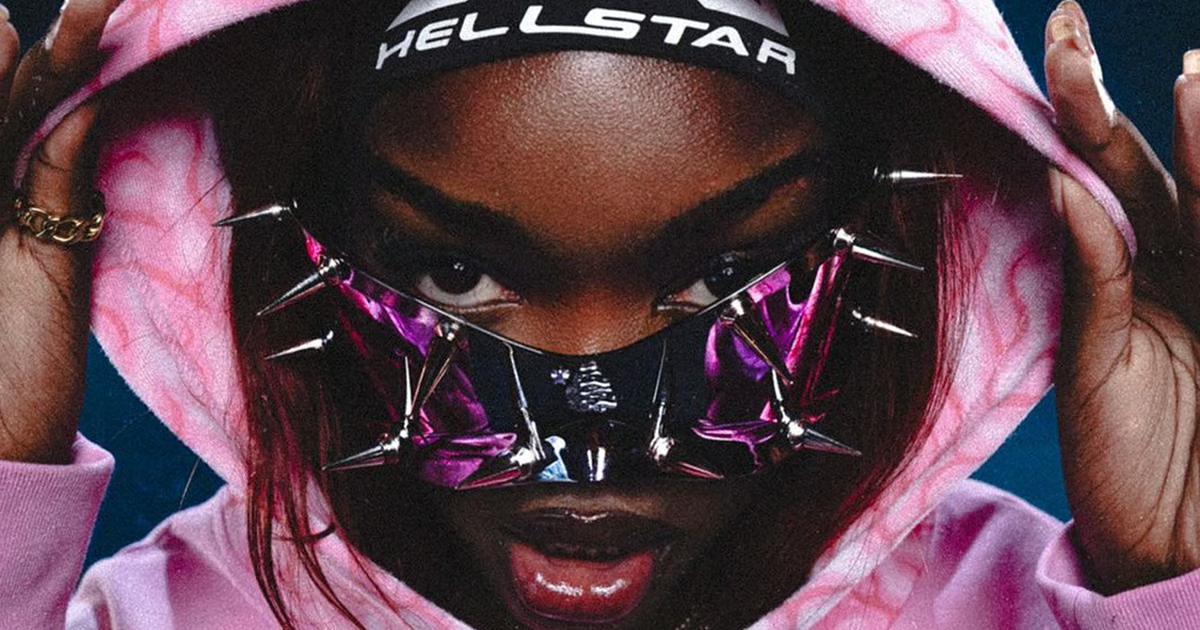
Most clothing brands spend years begging for attention. Hellstar did the opposite – it acted like it already had yours, and somehow the internet agreed. In barely five years it went from a few friends pooling pocket money during a global shutdown to a name spoken in the same breath as some of music’s biggest artists. So what’s actually behind the flame graphics and the sold-out drops? Let’s get into it.
The Origin Nobody Plans For:
Back in 2020, while most of the world was stuck indoors doom-scrolling, a graphic designer named Sean Holland – known to fans as “Seanie” – was sketching. He wasn’t sitting on investor money or a fashion-school network. The story that keeps surfacing across interviews and brand write-ups is almost stubbornly humble: a modest amount of money scraped together with a tight circle of high school friends, including names that come up again and again – Jaden, Dylan, and Evan.
That detail matters. It tells you Hellstar was never engineered in a boardroom. It grew out of a kid who could draw, a few people who believed him, and a city – Los Angeles – that rewards anyone willing to be loud and specific at the same time.
Holland is the son of a pastor, and that isn’t trivia. It’s the entire creative engine.
What Does the Name Actually Mean?
Here’s where Hellstar gets interesting, because the name is doing more work than people assume. The brand runs on a single, slightly unsettling idea: picture Earth as a kind of hell, and the people living on it as the stars trying to shine through it. Even when the world feels like the worst version of itself, you still have the option to burn bright. Stars in hell.
That’s why the graphics lean into religious imagery, biblical references, and a heaven-versus-hell tension – then twist them through a streetwear lens that feels rebellious instead of preachy. Coming from a pastor’s kid, it reads less like edgy shock value and more like someone genuinely wrestling with faith out loud, on a hoodie. The contradiction is the point. It’s what makes the work stick.
The Look: Loud on Purpose
You can usually spot a Hellstar piece across a room, and that’s by design. The brand’s whole visual language is maximalist – it does not whisper.
The signatures that show up across collections:
- Oversized everything. Tees and hoodies sit big and relaxed; the silhouette is part of the statement.
- Screen-printed graphics that take over the garment. Large front-and-back prints give pieces that “rockstar” presence rather than a tiny chest logo.
- Flame motifs, star iconography, and graffiti-style energy running through the catalog.
- Range across styles – from Y2K-tinged designs that feel ripped out of early-2000s internet culture to tie-dye experiments and explosive typefaces.
It pulls from a messy, honest mix of influences: skate and punk attitude, sports references, fine-art instincts, and street culture – blended instead of borrowed.
Why Artists Made It Explode?
Plenty of brands have good graphics. Hellstar got something money can’t reliably buy: organic cosigns from the right people. Major names in music were spotted wearing it – and in streetwear, that’s the difference between a brand and a movement.
But the part worth studying – especially if you care about how brands grow – is Holland himself. He never played the mysterious, behind-the-curtain founder. He showed up on podcasts, posted process and sketches, ran the social accounts like a person rather than a logo, and talked directly to the people buying in. That kind of visible, hands-on presence built a feedback loop most brands never get: fans felt like they were watching the thing get built, not just buying the finished product.
The Drop Model: Scarcity as Strategy
Hellstar doesn’t flood the market, and that restraint is doing heavy lifting. The brand works in limited capsule collections and periodic drops – some pieces get restocked, others are tied to a specific capsule and never come back. When something sells out, it’s gone, and that finality is exactly what keeps demand boiling.
It’s a simple lesson dressed up in flames: people want what they might not get a second shot at.
Where It’s Headed:
The brand isn’t slowing down. Talk of bigger collaborations keeps circulating, suggesting Hellstar is edging from hyped indie label toward genuine mainstream territory. Whether or not any specific rumor lands, the direction is obvious: this is no longer a quiet experiment.
The Takeaway:
Hellstar’s real product was never just the hoodie. It was a worldview – find the light in the dark, shine anyway – printed onto clothing people actually wanted to wear. A pastor’s-kid philosophy, a small starting fund, a handful of friends, and a founder who refused to hide turned into one of streetwear’s most magnetic names in under five years.
In a market drowning in safe, forgettable basics, Hellstar bet everything on meaning something. That bet is still paying off.