

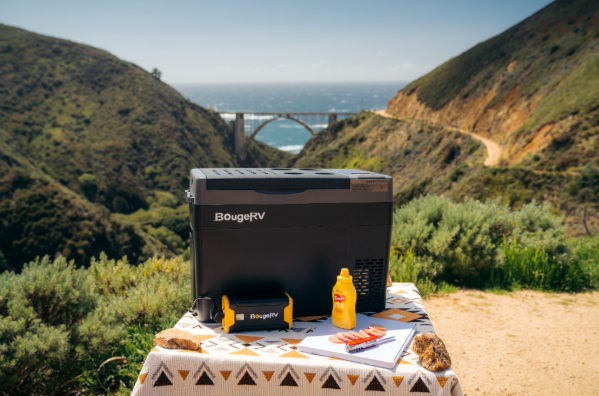
If you’ve ever watched a bag of ice melt into a soup of lukewarm water halfway through a weekend camping trip, you already understand why electric coolers have become one of the fastest-growing categories in outdoor gear. They solve the oldest problem in camping and road-tripping — keeping food and drinks genuinely cold — without the soggy mess, the constant ice runs, or the guesswork of a traditional cooler.
This guide breaks down what electric coolers actually are, how they differ from the coolers you grew up with, what features actually matter, and how to pick the right one for your lifestyle.
What Is an Electric Cooler, Exactly?
An electric cooler (sometimes called a portable car fridge, 12V cooler, or compressor cooler) is a powered refrigeration unit you can plug into a car’s 12V outlet, a wall outlet, or a portable power station. Unlike a passive cooler that relies entirely on ice to fight off rising temperatures, an electric cooler uses either a compressor or a thermoelectric system to actively pull heat out of the box and hold a set temperature — often anywhere from -4°F (deep freeze) up to 68°F, depending on the model.
That active cooling is the whole point. A good ice chest might keep things cold for two or three days before the ice gives out. A compressor-based electric cooler can run continuously for as long as it has power, holding a rock-steady temperature regardless of how hot it is outside.
Compressor vs. Thermoelectric: The Real Difference
Most of the buzz around “electric coolers” right now is specifically about compressor models, and for good reason. Here’s the quick breakdown:
Thermoelectric coolers use a Peltier device to move heat. They’re lightweight and cheap, but they can typically only cool about 20–40°F below the outside air temperature. On a 95°F day at the beach, that means your “cold” drinks might still be sitting around 60°F. They work fine for short trips in mild weather, but they struggle in real heat.
Compressor coolers use the same basic refrigeration technology as your kitchen fridge, just miniaturized. They can hit true refrigerator and even freezer temperatures regardless of how hot it is outside, they recover quickly after the lid is opened, and they’re efficient enough to run for days on a single battery charge. This is the technology behind most of the modern 12V fridges marketed as “electric coolers,” including BougeRV’s compressor-based lineup, which spans compact single-zone units up to 80-quart dual-zone models built for long overlanding trips.
If you’re cooling drinks for an afternoon, thermoelectric is fine. If you’re keeping meat, dairy, or medication cold for days at a time — or you just want it to actually work in summer heat — a compressor is the only real answer.
Single Zone vs. Dual Zone
This is one of the most practical decisions you’ll make. A single-zone electric cooler holds one temperature throughout the entire interior — great for a simple drinks-and-snacks setup. A dual-zone cooler has two independently controlled compartments, so you can run one side as a fridge for produce and dairy while the other runs as a freezer for meat or ice packs. For weekend warriors, a single zone usually does the job. For extended van life, overlanding, or fishing trips where you need to store a freezer’s worth of food for a week or more, a dual zone is worth the extra cost.

How Much Capacity Do You Actually Need?
Electric coolers are usually measured in quarts or liters, and it’s easy to either underbuy or overbuy:
- 9–20 quarts: Good for solo travelers, day trips, or as a secondary “drinks only” cooler in the front seat.
- 21–43 quarts: The sweet spot for couples, weekend campers, and small families on multi-day trips.
- 45–60 quarts: Ideal for families, longer road trips, or anyone who wants a real grocery run’s worth of cold storage.
- 60–80+ quarts: Built for extended overlanding, hunting trips, or anyone replacing a built-in RV fridge with something portable.
A useful rule of thumb: estimate how many days you’ll be off-grid, then size up slightly. Running a cooler half-empty is far less efficient than running it close to full, since the cold mass inside helps maintain temperature when the lid opens.
Power: The Question That Actually Determines Your Trip
An electric cooler is only as useful as its power source. Most run on 12V/24V DC (plugging straight into a car, truck, or RV outlet) as well as standard AC wall power at home. The real planning question is what happens when you’re away from an outlet for days at a time.
This is where the broader ecosystem matters. A compressor cooler drawing 40–60 watts can run for a surprisingly long time on a portable power station, and pairing that station with a folding solar panel means you can keep food cold indefinitely at a campsite with no hookups at all. Many current cooler models — including several in BougeRV’s range — now ship with optional detachable batteries or are designed to integrate directly with solar-and-battery kits, which has quietly become the biggest trend in the category: electric coolers aren’t just appliances anymore, they’re part of a small off-grid power system.
When comparing options, check the rated wattage, look for an actual battery percentage or runtime estimate (not just “low power”), and confirm the unit has low-voltage protection so it won’t drain your car battery dead in the parking lot.
Features Worth Paying Attention To
- App or digital control: Bluetooth and app connectivity let you adjust temperature, check battery life, or get alerts without opening the lid, which itself helps preserve cold air.
- Quiet operation: Compressor noise varies a lot between brands. If the cooler will run overnight near your tent or in a small van, check the decibel rating.
- Build and portability: Look for sturdy handles, wheels on larger units, and baskets that keep food organized instead of floating around.
- Temperature range: Some models can hit true freezer temperatures (down to -4°F), which matters if you’re storing meat or fish for multiple days.
- Energy efficiency rating: Lower wattage draw at a given temperature means longer battery runtime — important for anyone running off solar or a power station.
Who Actually Needs One?
Electric coolers have moved well beyond hardcore overlanders. They show up in driveways before a tailgate, in the back of SUVs on summer road trips, on boats, at job sites, and increasingly as a second fridge in garages and home offices. If your current routine involves buying ice more than once during a trip, that’s usually the clearest sign it’s time to upgrade.
Final Thoughts
The electric cooler category has matured fast — what used to be a niche overlanding accessory is now a genuinely better way to keep things cold almost anywhere. The right pick comes down to three questions: How long will you be off-grid? How much food do you need to store? And how will you keep it powered when you’re away from a wall outlet? Answer those honestly, and the rest of the decision — compressor type, capacity, single vs. dual zone — falls into place pretty quickly.
If you’re shopping around, browsing the BougeRV electric cooler collection is a good way to compare capacity, power options, and zone configurations before you commit.