

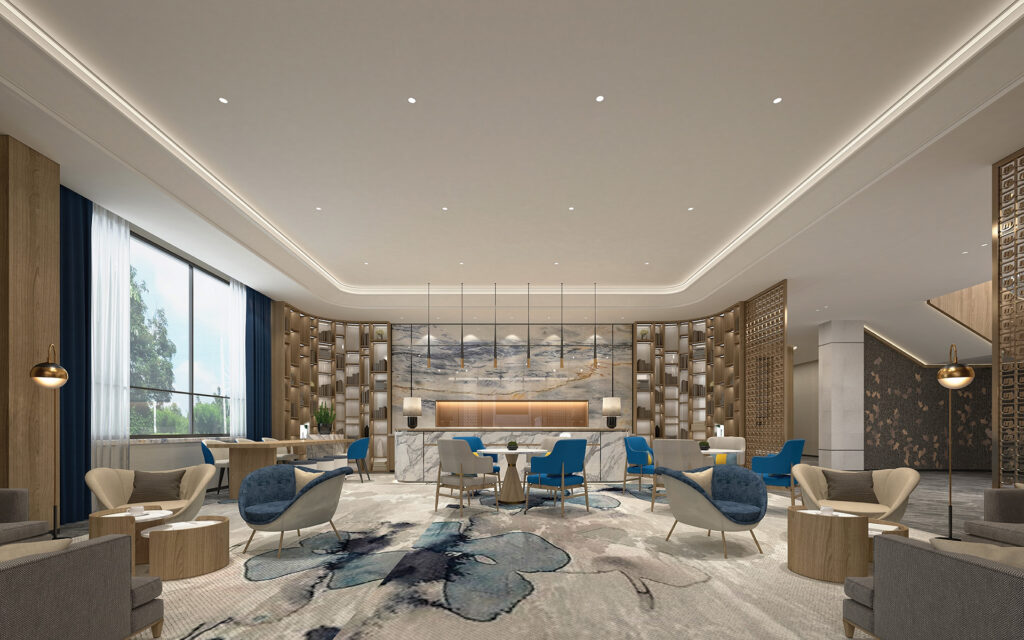
Interior design is often discussed in terms of color, material, and furniture, yet light is what gives those decisions their full meaning. A room with carefully chosen finishes can still feel flat if the illumination is harsh, uneven, or poorly directed. By contrast, a well-lit space appears more composed, more useful, and more expensive, even when the furnishings themselves are restrained. Lighting shapes how people read textures, judge scale, and move through a room. It also affects mood in ways that are subtle enough to be overlooked but strong enough to determine whether a space feels inviting or fatiguing. That is why lighting has become less of a finishing touch and more of a central design decision.
Nora Lighting fits into that shift by offering products that support visual clarity and aesthetic control at the same time. The brand is often associated with architectural and residential lighting solutions that help interiors look polished without calling too much attention to the fixture itself. That balance matters because the best lighting rarely competes with the room. Instead, it sharpens edges, reveals depth, and creates visual hierarchy. In practice, that can mean a kitchen that feels cleaner, a living room that appears warmer, or a hallway that seems more intentional. The improvement is not merely technical. It is deeply experiential.
What makes interior lighting effective today is not just brightness, but precision. Homeowners and designers increasingly want to decide where light falls, how it interacts with surfaces, and how it changes over the course of the day. A lighting system that can support those needs does more than illuminate. It helps a room communicate its purpose and character. Nora Lighting stands out because it gives designers tools to create that level of control. When used thoughtfully, it enhances not just visibility, but the entire visual experience of a home or commercial interior.
Layered Illumination Creates Depth and Order
One of the most significant ways Nora Lighting enhances an interior is by supporting layered illumination. Good rooms typically rely on more than one source of light, because a single ceiling fixture rarely produces comfort or nuance. Layered lighting combines ambient, task, and accent light to make a room feel complete. Ambient light establishes the overall brightness, task light supports functional activity, and accent light draws attention to specific architectural or decorative features. When these layers are balanced, a room gains visual depth instead of appearing uniformly washed out. That depth is what often separates a professionally lit interior from one that feels accidental.
Nora Lighting products are especially useful in this context because many are designed to work within a broader lighting scheme rather than as isolated elements. Recessed lighting can provide a clean ambient base without cluttering the ceiling line. Adjustable fixtures can be aimed toward artwork, shelving, or textured walls to create emphasis where the eye should naturally go. Under-cabinet and specialty solutions can strengthen work zones without overwhelming the rest of the room. The result is a space that feels both brighter and calmer. Light is distributed with purpose, which helps the eye move comfortably across the room.
This kind of organization matters because people respond instinctively to visual order. A room where every corner is equally bright can feel flat and exposed, while one with deliberate contrast appears more sophisticated. By helping designers modulate intensity and placement, Nora Lighting makes it easier to establish focal points and soften secondary zones. That improves not only appearance but also usability. Reading, cooking, entertaining, and relaxing all benefit from different lighting conditions, and layered illumination makes those transitions possible. In that sense, the visual experience becomes more refined because the room begins to support how people actually live.
Architectural Fixtures Let the Room Lead
A major strength of well-designed architectural lighting is its ability to integrate into a space rather than dominate it. Among manufacturers known for this approach, Nora Lighting stands out for producing fixtures that are intentionally unobtrusive and architecturally minded. This is especially important in contemporary interiors, where clean sightlines and uncluttered ceilings are central to the design language. Recessed downlights, trims, and discreet directional fixtures allow lighting to become part of the architecture rather than an interruption. The restraint creates a strong visual effect, making rooms feel more open as the light itself becomes the feature, not the mechanism behind it.
In practice, sourcing the right lighting requires more than a quick selection. Designers and homeowners often begin by exploring established suppliers that offer a range of architectural and decorative solutions for easier comparison. A destination such as BuyRite Electric serves as a good starting point for dependable Nora Lighting inventory and consistent service.
The aesthetic payoff is substantial. Minimal fixtures can make a room feel more tailored and less cluttered, especially in kitchens, bathrooms, and open-plan living areas where ceilings are already busy with vents, speakers, or beams. They also help smaller spaces feel less compressed by reducing visual competition. As interiors continue to favor simplicity without sacrificing warmth, this approach becomes increasingly valuable. In this context, Nora Lighting supports that goal with fixtures that recede into the background while still delivering high performance, resulting in spaces that feel more composed, balanced, and visually cohesive.
Better Color Rendering Improves How Interiors Are Perceived
Light does not simply reveal a room. It changes how the room is perceived. One of the most overlooked aspects of interior lighting is color rendering, which determines how accurately colors appear under artificial light. Poor color rendering can make wood floors look dull, white paint look gray, and skin tones look tired. Even expensive materials can seem underwhelming if the light source distorts their hue. This is why the quality of light matters as much as the quantity. A well-designed lighting plan should make finishes appear truthful and appealing.
Nora Lighting contributes to visual enhancement by supporting more faithful presentation of interior materials. When colors are rendered accurately, the undertones in fabrics, tile, cabinetry, and wall coverings become easier to appreciate. That can be especially important in rooms with layered neutrals, where small shifts in tone carry much of the design interest. It also matters in retail, hospitality, and gallery-like residential settings where presentation is central to the experience. A room that looks balanced during the day should not collapse into visual muddiness at night. Better light quality helps maintain continuity between natural and artificial conditions.
The effect is not only technical, but emotional. People tend to trust rooms that look coherent and natural. Food appears more appetizing, artwork feels more vivid, and everyday routines become less visually tiring. Accurate color rendering also reduces the disappointment that can occur when a carefully designed room looks different after sunset. Nora Lighting helps address that problem by making interiors feel closer to how the designer intended them to be seen. The visual experience improves because materials retain their richness, rather than being flattened or distorted by inferior illumination.
Directed Light Enhances Function Without Sacrificing Comfort
A strong interior is not just attractive. It works well. That is where directed light becomes essential, especially in kitchens, bathrooms, offices, and reading areas. General ambient lighting may make a room visible, but it often leaves work surfaces underlit or creates shadows where precision is needed. Directed lighting solves that problem by placing illumination exactly where tasks happen. This creates a more efficient room while also reducing visual strain. The key is achieving that function without making the space feel clinical.
Nora Lighting is well suited to this balance because many of its fixtures are designed for targeted performance. Adjustable downlights, under-cabinet systems, and specialized task-oriented fixtures give designers the ability to sharpen utility in the areas that need it most. In a kitchen, that can mean brighter counters without turning the whole room into a glare-filled zone. In a bathroom, it can mean more flattering and even illumination around the mirror. In a home office, it can support focus without creating the fatigue that comes from overly intense overhead light. The practical advantages are immediate, but the visual result is equally important.
When task lighting is handled properly, a room feels more competent and more comfortable at the same time. That is because good directed light removes friction from daily routines. People do not have to lean into shadows, squint at details, or compensate for poor visibility. At the same time, well-placed illumination makes the surrounding room feel more intentional, since each activity area is clearly defined. Nora Lighting helps make that possible by turning functional illumination into part of the design language. The visual experience becomes smoother because the room supports both appearance and performance.
Contrast and Accent Lighting Bring Interiors to Life
Many interiors fail not because they are too dark, but because they are too visually uniform. When every plane receives the same level of brightness, the result can feel lifeless. Accent lighting introduces contrast, which is one of the essential ingredients of visual drama. It allows certain objects or surfaces to stand forward while others recede. This could involve highlighting a textured backsplash, a piece of art, open shelving, or a stone fireplace wall. Once contrast is introduced, the room gains rhythm and dimension.
Nora Lighting helps create this effect through fixtures that can direct attention with control rather than excess. Accent lighting is most successful when it feels precise and deliberate. A beam that is too broad can dilute the point of focus, while one that is too harsh can feel theatrical in the wrong way. The goal is not spectacle for its own sake. The goal is to give the eye a destination and make the room feel layered. Nora’s fixture range allows designers to build this kind of hierarchy without overwhelming the broader space.
That hierarchy changes how people experience an interior over time. Instead of taking in the room all at once, they notice moments within it. A wall texture becomes more noticeable in the evening. A shelf display feels curated rather than cluttered. A dining area takes on more intimacy because the surrounding zone is slightly quieter. These are not trivial improvements. They are the difference between a room that merely functions and one that leaves an impression. Nora Lighting supports that transformation by giving interiors a stronger sense of focus, atmosphere, and visual memory.
Consistency Across Rooms Strengthens the Whole Home
A home rarely feels cohesive if each room appears to belong to a different lighting philosophy. One room may be overly cool and bright, while another is dim and yellow, and a third has no clear focal lighting at all. The result is fragmentation. Even when the furniture and finishes are thoughtfully selected, inconsistent illumination can make the home feel unsettled. Consistency does not require sameness, but it does require coordination. The visual experience improves when light quality, color temperature, and fixture style move in a coherent direction from one room to the next.
Nora Lighting can help achieve this continuity because it offers enough breadth to support multiple applications while maintaining a unified look and performance standard. Designers can use related fixtures across kitchens, corridors, living spaces, and bathrooms without making every room feel repetitive. This matters because different rooms have different demands, yet the home should still read as a whole. A coordinated lighting approach keeps transitions smooth. It reduces the sense of visual interruption that occurs when moving from one space to another. That smoothness often registers subconsciously, but it has a strong effect on comfort.
The benefit becomes even more apparent in open-plan homes, where several functional zones are visible at once. In such layouts, lighting inconsistency is immediately obvious because the eye can compare areas in real time. Nora Lighting enables variation in function while preserving overall harmony. A brighter kitchen, a softer lounge area, and a more dramatic dining space can coexist without seeming disconnected. That kind of cohesion makes the home feel more finished and more expensive. The visual experience is enhanced not only by what each fixture does individually, but by how the entire system works together.
Modern Lighting Control Extends the Visual Experience
Lighting is no longer static, and that has changed what people expect from an interior. A room used for breakfast, work, entertaining, and late-night reading should not be locked into one lighting condition. Visual comfort depends on adaptability. Morning light levels may need to be energizing and clear, while evening settings should feel softer and more restorative. The ability to adjust intensity and mood has become central to how people experience their homes. In that respect, lighting control is not just a convenience feature. It is part of the visual design itself.
Nora Lighting enhances that experience by supporting systems that can respond to changing needs and times of day. Dimming capability is especially important because it allows a room’s character to evolve without changing the underlying fixtures. A bright, functional kitchen can become a warm social space with the lowering of output. A living room can shift from active family use to quieter evening relaxation. This flexibility helps interiors feel more dynamic and more humane. It also allows designers to preserve a clean visual scheme while still offering multiple experiential outcomes.
The broader significance is that people increasingly judge interiors by how they feel over time, not just by how they look in a still photograph. Adaptable lighting helps a room remain visually satisfying across different hours and uses. It supports wellness, reduces glare, and prevents spaces from feeling monotonous. Nora Lighting fits well into this expectation because it enables an interior to be both stable and responsive. The room keeps its design identity while adjusting to real life. That combination of consistency and flexibility is a major reason lighting has become such a decisive element in interior visual experience.
Why Nora Lighting Matters in a Visually Demanding Era
Interior spaces today are under more visual scrutiny than ever. People notice how rooms appear in person, on screens, and across different times of day. They expect homes and commercial interiors to be both functional and aesthetically controlled. That puts greater pressure on lighting to do more than simply make things visible. It must reveal texture, support mood, improve usability, and maintain coherence. Nora Lighting matters because it helps meet those demands with solutions that are both practical and refined. It enhances the visual experience by treating illumination as a design material in its own right.
The brand’s impact is strongest when viewed as part of a larger design strategy. It supports layered lighting, architectural discretion, better color presentation, focused task performance, stronger contrast, and whole-home cohesion. Each of those qualities affects how an interior is perceived. Together, they determine whether a room feels balanced, expressive, and comfortable. Nora Lighting does not improve interiors through spectacle alone. It improves them through control, precision, and consistency. Those are qualities that often define the most memorable spaces.
For homeowners, designers, and specifiers, the lesson is straightforward. Better interiors depend on better light, and better light depends on more thoughtful products. Nora Lighting offers tools that can elevate everyday environments by making them clearer, warmer, and more intentional. That can change how a kitchen functions, how a hallway guides movement, or how a living room settles into the evening. In a field where small details often shape the strongest impressions, lighting remains one of the most consequential choices. Nora Lighting enhances interior visual experience because it helps rooms look the way people hope to feel inside them.