

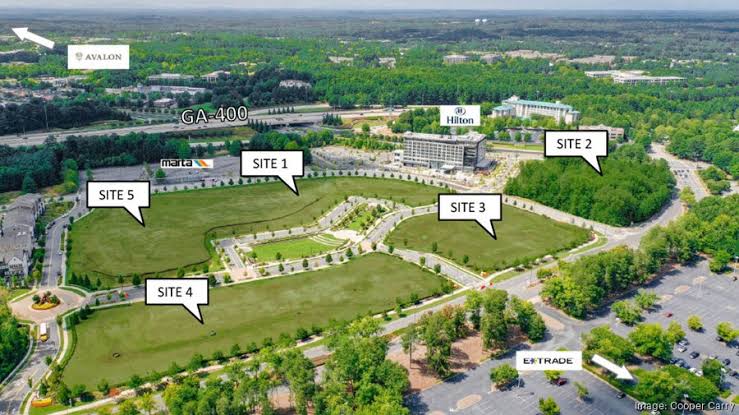
A growing company signs a lease in an Alpharetta office park, moves in over a weekend, and plugs in the first workstation on Monday. The internet is slow. The conference room jack does not work. The only carrier in the building offers a plan that does not match what the business needs. None of these problems came from the tenant’s choices. They came from decisions the landlord, or a previous tenant, made years earlier.
Most lease negotiations focus on rent, square footage, and build-out allowances. The network gets treated as something that will sort itself out after move-in.
What a tenant actually inherits
A suite in a multi-tenant building comes with infrastructure that the tenant did not design and often cannot fully see.
- Cabling of unknown age and quality. Older buildings may contain cable that cannot carry current speeds reliably, or cable runs that were extended and spliced by earlier occupants.
- Carrier availability. The buildings and parks that have fiber from multiple providers give tenants leverage. Those with a single carrier give tenants a take-it-or-leave-it price.
- Shared demarcation points. The location where the carrier’s service enters the building, often in a shared telecom room, may be locked, labeled poorly, or controlled by property management.
- Shared wireless and common areas. Neighboring tenants’ Wi-Fi networks compete for the same airwaves, and some parks provide a shared network that sits outside the tenant’s control.
Questions worth asking before signing
Most of these can be answered by property management or by walking the building with someone who has done it before.
- Which internet carriers have service to the building today, and which have fiber to the suite itself?
- What is the installation lead time for a new circuit? Fiber builds can take weeks or months, and a move-in date does not wait for them.
- Does the lease restrict which carriers may enter the building or require landlord approval?
- Who owns the cabling in the suite, and what category is it?
- Where is the telecom room, who holds the key, and is the space cooled and protected from water?
The lead-time question matters most. A company that signs in October and needs service by January should place the circuit order at the same time as the lease, not after the keys are in hand.
Cabling standards are worth a quick check
Network cabling in commercial buildings generally follows standards published by the Telecommunications Industry Association, known as the ANSI/TIA-568 family. A cabling contractor can test existing runs against those specifications and report which ones meet current requirements. That test is inexpensive compared with discovering after move-in that half the wall jacks fall short, and the results give the tenant a basis for asking the landlord to fix or credit the problem.
Security in a shared building
Sharing a building changes the security picture in small ways that add up. Anyone who can reach a telecom closet can reach network equipment. Shared Wi-Fi can expose traffic to neighbors if it is not properly separated from business systems. A guest or visitor network that is not isolated from internal systems creates the same exposure inside the suite.
The U.S. Small Business Administration recommends a firewall, encrypted and password-protected Wi-Fi, and keeping software updated as baseline protections in its small business cybersecurity guide. In a multi-tenant building those basics matter more, because the tenant cannot assume the physical environment is private.
Negotiating what can be negotiated
Tenants often have more leverage than they use, especially at renewal or when a building has vacancies. Reasonable requests include permission to bring in a second carrier, access to the telecom room under escort, a cabling upgrade as part of the build-out, and a clause that lets the business install its own wireless equipment without penalty.
Those items cost the landlord little and cost the tenant a great deal if left unsettled. Companies that want an outside opinion before committing to a space often bring in a provider of managed IT services in Alpharetta to walk the suite, test the cabling, and confirm carrier availability before the lease is signed.
Treating the network as part of the lease
The practical shift is small. Add the network to the checklist that already includes parking, signage, and HVAC. Ask for the answers in writing, test what can be tested, and order the circuit early.
The decisions made years ago by someone else will still shape the suite. The difference is whether the tenant learns about them during the lease negotiation, when there is room to adjust, or on the first Monday morning, when there is not.