

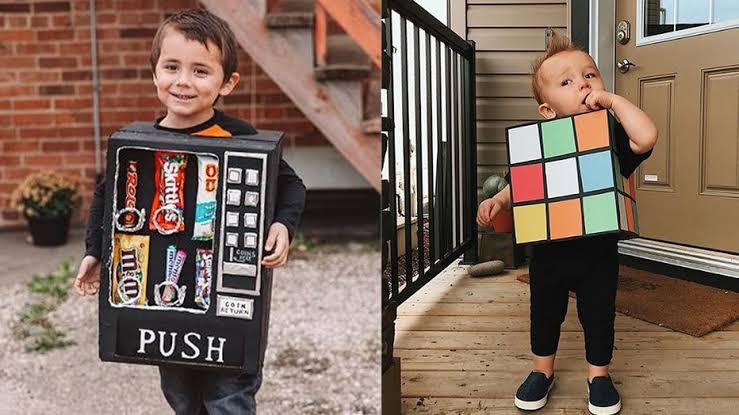
Some of the most cherished costumes were never purchased. They were built from whatever materials were available at home, most commonly a cardboard box, transformed through imagination into something far more meaningful than store-bought alternatives could ever achieve.
Why Homemade Often Beats Store Bought
Store-bought costumes offer polish and convenience, arriving complete and ready to wear without extra effort. Yet many people recall a homemade costume, often something as simple as a decorated box, with far more genuine fondness than any purchased alternative worn that same year.
This affection likely stems from the process itself rather than the finished product. Building a costume from raw materials involves creative decisions and personal touches that a store-bought item cannot replicate, regardless of how elaborate that purchased option might be.
The Ingenuity Behind a Simple Box
Turning a cardboard box into a convincing costume requires genuine creative thinking. Cutting armholes in the right places, deciding how to represent details using paint, figuring out how the box should be worn- each decision demands problem-solving that a finished, purchased costume never requires.
This creative process often becomes part of the memory itself, arguably more vivid than memories of the event the costume was ultimately worn to. Parents and children working together to transform a plain box into something recognizable frequently recall that collaborative effort more clearly than whatever party or gathering followed, sometimes even more fondly than a matching set of couple costumes bought specifically for the same occasion.
Why Imperfection Adds Rather Than Detracts
Homemade costumes rarely achieve the polished precision of manufactured alternatives, yet this imperfection seems to add charm rather than diminish it. A slightly crooked cut line or an imperfectly painted detail becomes part of the costume’s character, a visible reminder of the effort and creativity that went into its creation rather than a flaw worth hiding.
This tolerance for imperfection stands in sharp contrast to how people typically evaluate purchased items, where flaws are usually seen as problems rather than charming details. Something about the personal investment involved in building a costume seems to shift how imperfections get perceived, transforming them into evidence of genuine effort instead.
What This Reveals About Meaningful Costumes
Understanding why homemade costumes often become favorites offers a useful insight for anyone planning costumes for children. Rather than assuming a purchased option will automatically create the most memorable experience, considering a simple homemade alternative, even something as basic as a decorated cardboard box, might produce a more cherished memory than any store-bought costume could manage.
What This Means for Future Costume Choices
None of this means store-bought costumes lack value. They offer polish and reliability a homemade option cannot match, particularly for elaborate characters difficult to recreate at home. The point is not to abandon purchased costumes, but to recognize that a simple, imperfect homemade option deserves consideration alongside them.
The next time a costume decision feels overly complicated, it may be worth remembering that some of the most treasured costumes ever worn started as nothing more than an empty box and a bit of imagination applied with enthusiasm.