

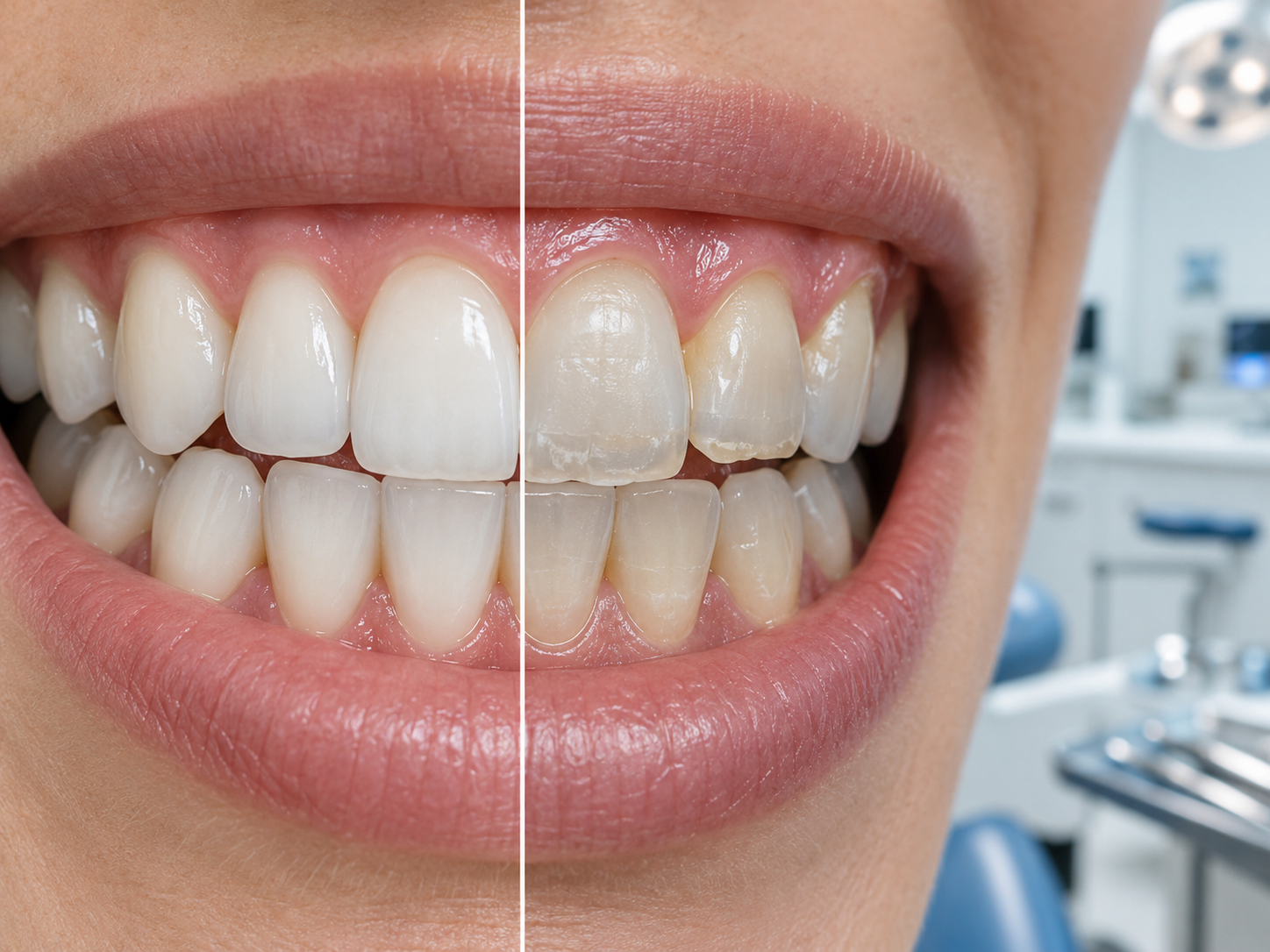
Enamel is the hardest substance in the human body, yet it has one serious weakness: acid. A glass of orange juice with breakfast, a sports drink at the gym, or a bout of nighttime reflux can each soften its surface a little. Repeated over months and years, those small losses add up, and once enamel is gone, it does not grow back. That permanence is why patients at practices like Dublin Dental Care are increasingly screened for erosion during routine exams, long before they notice anything wrong.
How Acid Wears Enamel Away
Erosion is often confused with tooth decay, but the two work differently. Cavities start when plaque bacteria feed on sugar and release acid in one small spot. Erosion involves no bacteria. Acid from food, drink, or the stomach washes over the teeth and dissolves the mineral surface across a broad area.
Enamel begins to dissolve when the pH in the mouth drops below roughly 5.5. Colas sit around 2.5, sports drinks and citrus juices around 3, and wine between 3 and 4. Saliva normally neutralizes that acid and helps the surface recover, but frequent exposure leaves too little recovery time. Because the damage is spread thin rather than concentrated in one place, a careful exam at a general practice such as Dublin Dental Care often reveals early wear patterns that a patient would never spot in the mirror.
Three Patterns Dentists See Most Often
Erosion rarely has a single cause, but most cases fall into a few recognizable patterns.
The Frequent Sipper
This is the office worker with a soda on the desk, the student with an energy drink, or the athlete with a sports bottle that never leaves their hand. The total amount consumed matters less than the timing. Sipping one drink over two hours keeps the mouth acidic for most of that time. Wear usually shows first on the biting edges and front surfaces of the upper teeth. The fix is simple: finish acidic drinks within a meal or a short window, then switch to water.
The Hidden Reflux Patient
Stomach acid is far stronger than anything on a menu. Nighttime reflux, chronic heartburn, and frequent vomiting from conditions such as pregnancy sickness or eating disorders wear down the inner surfaces of the upper teeth, the side facing the tongue. Many people with silent reflux feel no heartburn at all, so a dentist may be the first to notice the problem. Treating the reflux medically protects the teeth as much as the throat.
The Health-Conscious Snacker
Lemon water first thing in the morning, fruit smoothies, apple cider vinegar shots, kombucha, and grazing on citrus fruit throughout the day all sound healthy. For enamel, they add up to repeated acid attacks. Natural acids affect teeth exactly as added ones do. Enjoying these foods with meals rather than between them reduces the number of acid episodes each day.
A fourth factor often amplifies all three: dry mouth. Medications, dehydration, and mouth breathing reduce saliva, which removes the body’s main defense against acid.
How Common Erosion Has Become
Erosion is no longer a rare finding. A worldwide review of studies in children and adolescents estimated that about 30 percent show erosion in their permanent teeth. In a European study of more than 3,000 adults aged 18 to 35, roughly 29 percent had moderate to significant wear, with reflux and repeated vomiting among the strongest risk factors.
Early Signs Compared With Advanced Damage
| Stage | What You Might Notice | What a Dentist Sees |
| Early | Mild sensitivity to cold or sweet foods | Smooth, glassy, or dull enamel surfaces |
| Moderate | Teeth look slightly yellow as dentin shows through | Rounded edges, translucent tips on front teeth |
| Advanced | Sharp sensitivity, chipping, shorter teeth | Cup-shaped dips on chewing surfaces, fillings that sit higher than the tooth |
Prevention Methods Backed by Research
- Wait before brushing: Acid softens the enamel surface for a short time. Rinsing with water and waiting at least 30 minutes before brushing prevents extra abrasion.
- Choose the right toothpaste: Stannous fluoride toothpastes have shown stronger protection against erosion in laboratory and clinical studies. Highly abrasive whitening pastes are best avoided on worn teeth.
- Limit how often acid reaches the teeth: Keep acidic drinks and snacks to mealtimes, and use a straw positioned toward the back of the mouth.
- Neutralize after acidic foods: Milk, cheese, plain water, or sugar-free gum help restore a neutral pH and encourage saliva flow.
- Ask about professional fluoride: High-concentration fluoride varnish or prescription toothpaste can strengthen enamel for people at higher risk.
Frequently Asked Questions
Can eroded enamel grow back?
No. Enamel contains no living cells, so lost enamel cannot regenerate. Fluoride can harden softened surfaces, and a dentist can protect worn areas with bonding, veneers, or crowns.
Is sparkling water bad for teeth?
Plain sparkling water is only mildly acidic and carries a low risk. Flavored versions, especially those with citric acid, are more erosive and are best enjoyed with meals.
How is enamel erosion diagnosed?
Dentists look for changes in shape, shine, and color during a visual exam, often using a scoring system to track wear over time. Photos taken at regular visits make progression easier to monitor.
Conclusion
Enamel erosion develops quietly, but it follows clear patterns: frequent sipping, hidden reflux, and acidic “healthy” habits, often made worse by dry mouth. Small changes, such as keeping acidic foods to mealtimes, waiting before brushing, and choosing the right toothpaste, can slow or stop further loss. Because early signs are easy to miss, a professional evaluation at Dublin Dental Care offers the best chance to catch erosion before it affects comfort or appearance. Booking a checkup is a simple step toward keeping your enamel strong and your smile healthy for decades.