

Introduction
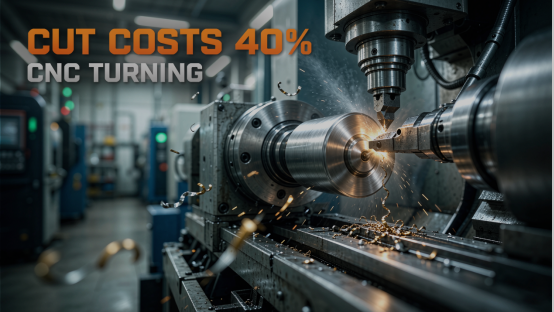
Hardware startups wanting to cut prototyping costs by 40% should wisely choose the right method. Compared to high-cost 5-axis milling, CNC turning streamlines clamping procedures and significantly lowers custom fixture expenses. DFM review before tooling will help avoid issues like thin-wall deformation and thereby reduce the supply chain costs arising from repeated retests.
Why Do Hardware Startups Face Massive Budget Waste in Precision Prototyping?
Many startups end up spending more than they should simply because they get fixated on unit prices and neglect toolpath complexity and setup counts. A vendor pricing comparison would identify factories with complete resources, and so help you sidestep risks of sub-contracting. When it is a matter of rapid prototyping for startups, look beyond the price and study the total production cost. Outsourcing manufacturing to specialized precision turning shops has proven highly effective in reducing both lead times and scrap rates.
- Hidden Charges: Disregarding multiple clamping operations increases total machining hours and fixture costs.
- Suppliers Evaluation: make sure to conduct in-house cutting and checking in the first place so that there is no variation in the product quality and the time is not extended
- DFM Advantage: Designing reviews at early stages help in removing features which are not needed so saving you the hassle of doing prototyping
What is a CNC Lathe and How Does it Optimize Cylindrical Part Fabrication?
CNC lathe machines work by using the tool feed in a straight path while the workpiece is spinning at the same time to achieve continuous and symmetrically shaped cuts. Leveraging these mechanical principles, CNC turning naturally provides high coaxiality, minimal runout, and fine surface finishes (Ra 0.4). In comparison with milling, turning operations excel at producing cylindrical housings and bushings by drastically reducing cycle times.
The Physics of CNC Turning
In how does a CNC lathe work, the workpiece rotates while a stationary tool traverses, minimizing deflection and ensuring superior dimensional accuracy for round components.
Surface Finish and Tolerances
If one uses a precision CNC lathe, then they are able to maintain very close tolerances and also sometimes even skip the second finishing process, which saves the overall cost of the prototype of the highly precise part.
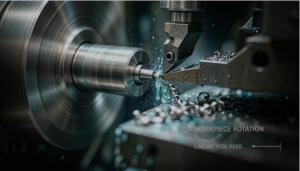
Figure 2: By selecting the optimal CNC turning processes early in the design phase, hardware startups can successfully cut prototyping costs by 40% and avoid production pitfalls.
Which Types of CNC Lathes Best Match Your Product Development Lifecycle?
The appropriate type of CNC lathes must be carefully selected to fit the production stage. Horizontal lathes are used for machining shaft components, vertical lathes are ideal for machining large discs, and Swiss-type machines achieve the highest precision. To prevent idle equipment costs, the production of prototypes and mass production should be assigned to different CNC turning machine setups.Reputable manufacturers adhere to ISO 9001 for daily accuracy checks. Engineers evaluate the working principles and types of CNC lathes to balance lead times and unit cost.
- Horizontal Lathes: Cost-effective for small-batch shafts and sleeves.
- Swiss-Type Lathes: Ideal for high-precision, small-diameter complex parts.
- Vertical Lathes: Stable clamping for heavy, large-diameter components.
How Do Real-World CNC Lathe Applications Drive Down Unit Production Costs?
Real-world CNC turning applications consistently drive down production costs. In automotive manufacturing, for example, compliance with IATF 16949 prevents whole-batch defects and expensive recalls. LS Manufacturing CNC machines keep the rate of rejection within very narrow ranges, so the changeover from product design to manufacturing goes on smoothly.
Case Studies in Cost Reduction
A medical rotary valve switched from milling to turning, cutting costs by 25%. A drone shaft optimized toolpath and material, saving 35% cycle time while meeting delivery schedules.
Quality Assurance in Volume
Integrated in-process inspection catches deviations early, avoiding rework. Design optimizations reduce secondary finishing, directly lowering per-unit expenses for consumer electronics and industrial parts.
How Can Teams Safely Scale from Small Batches to Full Production Runs?
Scaling production from 100 to 10,000+ units requires robust quality control systems and process standardization. Joining forces on designing high-spec custom CNC turning parts helps track the consistency of part features. Material Test Certificates (MTC) and CMM First Article Inspection (FAI) prevent batch scrap. Aerospace and industrial sectors require AS9100D and ISO 14001 compliance. LS Manufacturing supports the whole engineering process through design and offers cost-effective equipment procurement solutions for the teams working with physical components from different locations.
- Documentation: MTC and CMM FAI offer complete visibility so that any risk of material mix-up can be eliminated.
- Process Ramp-Up:small scale test runs act as checks before the tooling fully produces so that there are no problems during switch over.
- Global Delivery:End-to-end logistics management minimizes lead-time volatility and ensures seamless factory-to-door delivery.
Conclusion
Cost control doesn’t mean sacrificing quality. By understanding CNC turning, avoiding over-tolerance, and engaging certified factories early, teams shorten time-to-market. Ready to evaluate your project? Submit STEP drawings for a free DFM review and quotation to lock in the optimal cost-reduction path before prototyping.
FAQs
What are the main benefits of using a CNC lathe for cylindrical hardware?
CNC lathes, through continuous, symmetrical cutting during workpiece rotation, can increase productivity by 30% over milling for like parts with the added benefits of better coaxiality and surface finish. This essentially lowers per-piece times and tool wear costs.
How does proper material selection reduce precision turning expenses?
By machining with materials with good machinability like 6061-T6 aluminum and 303 stainless steel, you get reduced spindle load and fewer situations with chip entanglement. It results in longer tool life and shorter cutting time which in turn leads to suppressing part processing costs at the source.
When should a product design switch from CNC turning to milling processes?
Geometries with off-axis features, unbalanced shapes, or cross-drilled holes may require transitioning production to a mill-turn center or vertical machining center (VMC).
Why are quality standards like ISO 9001 and IATF 16949 critical for buyers?
Standards such as ISO 9001 and IATF 16949 help buyers by defining requirements that manufacturers must meet if they are going operate in line with an international set of rules, from the sourcing of raw materials through to monitoring of the process capability, the identification of deviations and the prevention of defects, all the way through to the avoidance of product recall and massive losses associated therewith.
What is the most effective way to optimize drawings for lower turning quotes?
Relaxing non-critical surface roughness and dimensional tolerances, reducing micro deep holes, and standardizing chamfers allow tools to run smoothly in single operations, greatly reducing setup time and scrap rates.
About the Author
Gloria Wu has dedicated over a decade to precision CNC machining, mold development, and complex hardware mass production. She specializes in assisting global startups and industrial brands with DFM reviews and fine-tuning machining workflows to achieve optimal manufacturability and cost efficiency.