

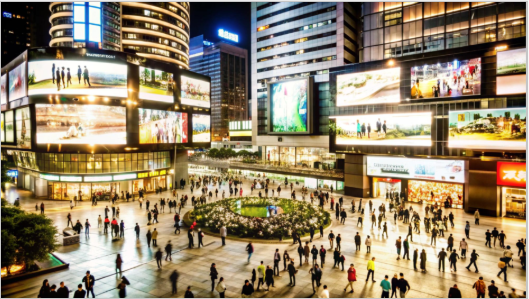
Businesses have relied on traditional posters, printed banners, and static display boards for decades. They provide crucial information, advertise products, and help customers navigate in different areas. But these displays have one major drawback: they only change when someone physically replaces them.
But now, businesses need faster ways to connect with customers, employees, and visitors. Promotions change often, materials need constant updates, and consumers want increasingly interesting visual experiences. Static displays are still useful, but they can’t always keep up with these evolving communication needs.
That’s why so many firms are moving to digital alternatives that offer more flexibility and control. Digital signage is becoming a viable communication tool in everything from retail stores and restaurants to hospitals and business offices.
Here are seven reasons digital signage is increasingly replacing traditional static displays.
- Content Can Be Updated Instantly
The main drawback of traditional static displays is the time and effort necessary to alter their information. Businesses must design new materials, order printing, and physically replace posters every time they update the information.
Digital signage reduces this by letting companies change content electronically. With a content management system, approved staff can change text, graphics, videos, and announcements without replacing the physical screen.
For example, a retail business can update special deals throughout the day, while a restaurant can change menu items as particular meals sell out. These changes can be made quickly, without waiting for new printed materials.
This flexibility is especially helpful for companies that often send time-sensitive information. It also reduces the likelihood that buyers will see outdated prices, expired discounts, or irrelevant announcements.
- Moving Visuals Attract More Attention
Static posters convey messages through printed text, colors, and graphics. Well-designed posters can be successful, but they offer little opportunity to add movement or change what the audience sees.
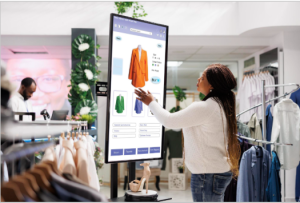
Digital displays offer more creative alternatives, including animation, video, transitions, and rotating content. Businesses can use this to showcase products, services, or key announcements.
For example, a clothing store can display videos of how a certain outfit looks when worn. A gym can also offer brief demonstrations of available lessons, not just printed material.
Movement can help grab attention in hectic surroundings, especially when the message is important and easy to understand. Too much animation can be distracting; therefore, firms should focus on concise information rather than needless visual effects.
- Businesses Can Reduce Recurring Printing Costs
Printed advertising materials often have continuing production costs. You might need new posters, banners, or display boards for every new promotion, seasonal campaign, or price change. These costs can add up quickly for organizations with many locations or that constantly change their marketing materials.
Digital displays typically require a larger initial investment because companies must purchase screens, compatible equipment, and even content management software. But they can reduce ongoing printing and installation costs over time. They don’t have to create new materials for each campaign; they can use the same screens and only change the content.
The actual savings depend on factors like display cost, power usage, maintenance, software subscriptions, and how often printed materials would otherwise need replacement. These recurring costs are another consideration for businesses deciding whether digital displays offer greater long-term value.
- Multiple Messages Can Share One Screen
Traditional static displays often convey one primary message at a time. If a business has various products, services, or announcements to market, it may need to put up several posters throughout its premises. This can look cluttered, especially in smaller settings with less wall space.
Digital displays let companies arrange material or rotate slides to display multiple messages on one screen. For example, a supermarket may display breakfast specials in the morning, lunch specials in the afternoon, and nighttime specials later in the day. Hotels may do the same to communicate restaurant hours, conference schedules, forthcoming events, and available amenities.
Many digital signage systems also feature split-screen layouts, so that businesses can display different types of information at the same time. By organizing content smartly, businesses can share more information without covering their walls with extra printed materials.
- Content Can Be Tailored To Different Audiences
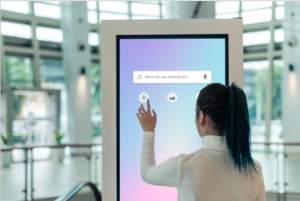
Traditional printed displays usually deliver the same message to everyone who sees them. To tailor the message for different client groups, locations, or times of day, you need more printed materials. Digital displays are more flexible, as organizations can plan materials around specific communication needs.
For example, a shopping mall might run family-oriented promos during weekend shopping hours and advertise lunch specials during working hours. A company with multiple branches can also maintain consistent branding while customizing messaging to suit local promotions, operating hours, or available services.
This method helps companies provide more relevant information to audiences. But effective content targeting does not have to mean collecting personal client information. Businesses can choose the most appropriate communications based on general factors such as location, time, season, and retail activity.
- Centralized Management Simplifies Operations
Managing printed displays across multiple business locations can be daunting. Employees must receive updated materials, remove old posters, and ensure that each branch provides accurate information. For a firm with dozens of stores, offices, or service locations, these duties can be very time-consuming.
Centralized administration features in digital signage systems let authorized personnel operate many screens from one platform. For example, a restaurant chain can deploy new menu designs to its outlets without printing and delivering them individually. Organizations can also use it to share company announcements, workplace safety warnings, and internal communications between offices.
With centralized control, companies can use approved templates, uniform branding, and periodic updates for greater consistency. However, the networks still depend on reliable internet access, security controls, and system maintenance to keep working.
- Digital Displays Support More Interactive Experiences
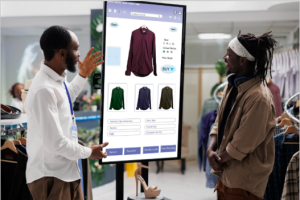
Traditional static displays mostly provide information in one direction. Customers can see the message, but they can’t interact with the print itself. Some digital signage solutions offer interactive directories, product catalogs, self-service capabilities, and touchscreens.
Say, for example, a visitor arrives at a major hospital and uses an interactive directory to get a sense of where they need to go. Retail customers can view product information on suitable touchscreen displays, while museum visitors can learn more about exhibitions.
These features can make it easier for customers to find information and reduce employees’ burden of answering repetitive inquiries. However, not all digital displays need to be interactive. Select features based on the audience, budget, and the business’s communication goals.
Conclusion
Digital signage is slowly replacing traditional static displays because it gives businesses greater control over how they communicate. Digital screens are ideal for situations with ever-changing information, offering instant updates, flexible scheduling, captivating images, and centralized management.
But traditional printed displays still have an edge. They require no electricity, are often cheap to install, and remain useful for permanent messages that don’t change often.
So the decision should be based on each organization’s needs, not the assumption that newer technology is always better. For companies that often change promotions, have many locations, or need flexible communication tools, digital signage can be more flexible than static displays.