

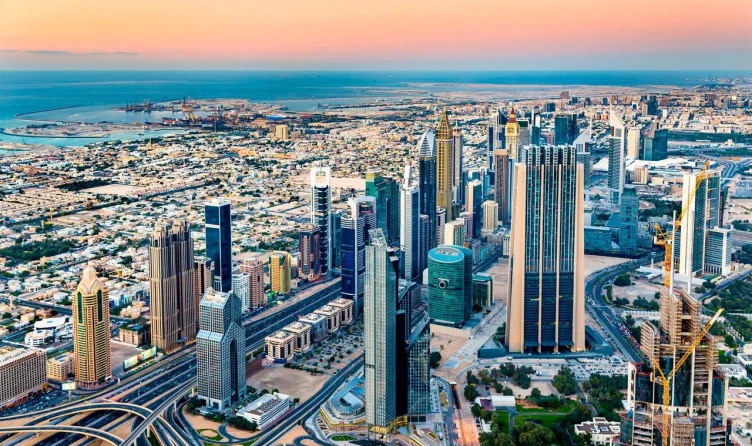
The commercial property sector in Dubai has settled into a steadier and more mature phase in recent years. Most of the buyers are looking for the numbers as the existing developers plan for the long term, which drives the real demand for this property category in Dubai. The stats from the Dubai Land Department reflect the demand and supply, with a record transaction of AED 252 billion in the first quarter of 2026, which is higher than 31% of last year’s Q1. So, the commercial land buyers are at times where they are not supposed to think about the busiest districts, but the areas with upcoming infrastructure.
These are the locations that will not just deliver the capital appreciation, but also the higher rental yield than investors are expecting from the existing business hubs. This post presents a precise list of areas for land for sale in Dubai, along with the market overview, tips, and strategies to integrate into their buying decisions.
What’s Shaping the Market Right Now?
Two things stand out in early 2026: a wave of new business registrations, and a clear “flight to quality” among corporate tenants. Commercial land sales reflect this shift, too.
- February alone saw 717 commercial sales worth AED 9.54 billion, up from just 443 sales worth AED 1.2 billion a year earlier.
- The Dubai Economic Agenda (D33) aims to double the economy by 2033, keeping pressure on land supply.
- The Dubai 2040 Urban Master Plan is being built for a population expected to reach 5.8 million.
- Vacancy in core corridors often sits below 5%, pushing investors toward buying land outright.
Where the Smart Investors Are Buying Land in Dubai
Four districts keep coming up in conversations with developers this year, each serving a different type of investor.
Business Bay: the Vertical Powerhouse
Although the district is already developed to the situatration point, there are a few commercial plots for sale left, but this comes with the advantage of a commercial micro-market in the Emirate, which accounts for almost 43% of the central office transactions in Dubai. With the times, it is not just a business district anymore but features remarkable residential projects such as the Bayz series by Danube and luxury developments from Binghatti. Therefore, owning a piece of commercial land in this district comes with guaranteed capital appreciation and higher rental returns for future developments.
- Land here carries permissions for commercial, residential, or mixed-use towers.
- Recent prime deals traded at around AED 808 per square foot of Gross Floor Area.
- The district sits on Sheikh Zayed Road and has its own Metro station.
- It suits international developers and funds chasing scale and skyline presence.
Al Jaddaf
This location is not just a symbol of the heritage, but is evolving in current times with the connectivity it brings for the businesses. It is a few minutes drive away from Business Bay, Sheikh Zayed Road, Dubai Healthcare City, and the cherry on top is the metro connectivity through Al Jaddaf Metro Station.
- Stock is mostly office space and retail.
- Entry prices are low, with a median of AED 579 per square foot.
- The independent legal framework and private ownership register in the freehold zones are the real draw.
- It suits financial institutions, law firms, and retail businesses.
Dubai South and Jebel Ali
These two districts are not just the logistics and industrial hubs of Dubai’s southern corridor but the future of the real estate market in the Emirate. The proximity to Al Maktoum International Airport and Jebel Ali Port makes it an ideal choice for commercial land investment, as the specified freehold areas here allow foreign investors to have 100% ownership of the land they buy.
- Expect logistics parks, cold storage facilities, and industrial plots, not office towers.
- Land is priced for horizontal development, with median rates around AED 382 per square foot.
- Net rental yields on industrial plots range from 8.0% to 10.0%.
- Long-term value is tied to the airport’s expansion into the world’s largest.
Jumeirah Lake Towers (JLT)
Jumeirah Lake Towers spans over 26 clusters, offering genuine liquidity for real estate investments as the area is managed by the Dubai Multi Commodities Centre (DMCC). The proximity to the nearby business and residential districts like Dubai Marina, Dubai Media City, and Dubai Internet City further drives the demand for commercial land in the area.
- The mix is high-rise commercial floors and retail units.
- Prices run 30% to 40% below Dubai Marina, with land rates near AED 850 per square foot.
- Gross rental yields for land consistently range between 7.0% and 9.0%.
- SMEs, trading firms, and service businesses tend to gravitate here.
Infrastructure that will Move Prices
Connectivity has always shaped Dubai property values, and the next catalyst is already on the calendar.
- The Dubai Metro Blue Line starts running in September 2029, adding 30 kilometres of track.
- The RTA estimates values within 800 metres of a Blue Line station could rise 10% to 25%.
- The line finally connects car-dependent areas like Dubai Silicon Oasis and International City.
- The “20-minute city” concept in the 2040 plan aims to put 80% of daily needs within a 20-minute reach.
What Investors Need to Check Before Buying
Buying commercial land in Dubai means buying a set of development rights, not just a plot of dirt, and that distinction matters more than most buyers expect.
- A “commercial” zoning label doesn’t automatically permit every kind of business structure.
- Districts like Business Bay have strict rules on height, parking ratios, and utility capacity.
- Verify GFA permissions and parking allowances through Dubai REST or the master developer’s documents.
- Secondary transfers carry a 4% fee to the Dubai Land Department, plus a mandatory 5% VAT.
- Investments above AED 2 million qualify buyers for a renewable 10-year Golden Visa.
Closing In!
Dubai’s goal to become a global trade hub has not slowed down with the recent geopolitical situations; it has made more ties with the international market giants, such as China, with 26 agreements and memoranda. Moreover, the UAE’s ties with other countries to play a central corridor role through the southern logistics belt are set to focus on serious foreign capital investment. As the city is moving forward to its 2040 goals, lands integrating sustainability, mixed-use flexibility, and transit access would outperform in the commercial real estate market of Dubai. It reflects that investors looking for commercial land in Dubai are at the right time of the market, as 2026 is a stable entry point where the market is moving towards the mature point.