

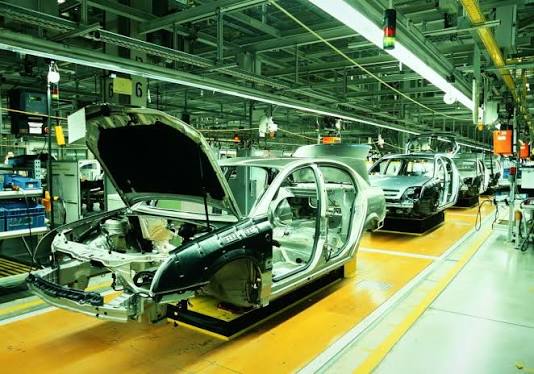
The automotive industry is under constant pressure to improve production efficiency, product quality, and manufacturing consistency. At the same time, manufacturers are working with more complex materials and tighter production requirements. These changes have increased interest in laser technology for different stages of automotive production and maintenance.
Laser systems are now used for tasks such as surface cleaning, welding, marking, and cutting. Unlike traditional mechanical processes, laser-based methods can offer precise and controlled processing. This makes them useful for both large-scale manufacturing and specialized automotive applications.
Laser Cleaning for Automotive Parts
Surface preparation is an important part of automotive manufacturing. Metal components may have oil, rust, oxidation, paint, or other contaminants on their surfaces. These materials can affect later processes such as welding, coating, or assembly.
Laser cleaning provides a non-contact method for removing unwanted surface materials. The laser energy interacts with the contaminants and removes them from the surface without requiring physical contact between a cleaning tool and the workpiece.
For example, automotive components such as engine parts, chassis components, brake parts, and wheel hubs can require cleaning during production or maintenance. HANTENCNC notes that laser cleaning systems can be used for applications including rust removal, oil removal, paint stripping, and surface preparation.
This approach can also reduce the need for consumable cleaning materials. Depending on the application, manufacturers may use laser cleaning as an alternative or supplement to abrasive or chemical cleaning methods.
Improving Welding Processes
Welding is another important area where laser technology can support automotive manufacturing. Vehicle bodies and components often require strong and consistent joints. Traditional welding methods remain widely used, but laser welding provides another option for applications that require controlled heat input and precise processing.
Laser welding uses a concentrated beam of energy to join metal components. The focused heat source can help create narrow weld areas and reduce unnecessary heat exposure around the joint.
This can be useful when working with materials or components that require careful heat management. Laser welding can also support automated production lines where repeatability is important.
The technology is not limited to vehicle body production. It can also be applied to metal components and other automotive parts. As automotive designs continue to evolve, manufacturers can evaluate laser welding alongside other joining methods according to material, thickness, production volume, and required weld quality.
More Reliable Product Identification
Modern vehicles contain a large number of components, and manufacturers need reliable ways to identify parts during production and throughout their service life. Laser marking can provide permanent identification directly on many metal components.
Manufacturers can use laser marking to add serial numbers, barcodes, model information, logos, or other identification codes. Because the marking process does not require traditional labels or physical printing plates, it can be adapted to different production requirements.
This is especially useful for traceability. A marked component can carry information that helps manufacturers track production batches, components, or quality-control records. Laser marking can therefore support both manufacturing processes and after-sales management.
Supporting More Efficient Production
One of the main reasons manufacturers consider laser technology is process efficiency. A single laser system can be designed for specific production requirements, while some equipment can combine multiple functions.
For example, certain handheld laser systems combine welding, cleaning, and cutting functions. This type of equipment can help workshops handle different metal-processing tasks without requiring separate machines for every operation.
However, the right solution depends on the application. Automotive manufacturers should consider the material, surface condition, required processing speed, production volume, and desired result before selecting equipment.
Laser Technology and Traditional Methods
Laser technology does not necessarily replace every traditional automotive manufacturing process. Different methods have different strengths. Abrasive cleaning, chemical cleaning, conventional welding, and mechanical processing can all remain useful depending on the application.
The advantage of laser processing is that it provides another option when manufacturers need controlled, repeatable, and contact-free processing. For example, laser cleaning can be useful when removing contaminants from metal surfaces before another manufacturing step.
Manufacturers should therefore compare technologies based on the actual production requirement rather than selecting equipment simply because it uses a newer technology.
What Manufacturers Should Consider
Before introducing laser equipment into an automotive production environment, several factors should be evaluated.
First, identify the material and processing target. Steel, stainless steel, and aluminum may require different settings and equipment configurations. Second, consider the type of contamination or processing task. Rust removal and paint stripping may require different parameters from pre-welding cleaning.
Production volume is another important factor. A small workshop may have different requirements from an automated automotive production line. Equipment size, operator training, maintenance, safety requirements, and available workspace should also be considered.
Sample testing can be useful before purchasing equipment. It allows manufacturers to evaluate the actual processing result on their own materials and parts. HANTENCNC, for example, states that it provides sample testing and customized machining solutions for cleaning, marking, and welding applications.
Looking Ahead
As automotive manufacturing becomes more focused on precision, automation, and process control, laser technology is likely to remain an important tool for manufacturers. Its applications already extend across surface preparation, welding, marking, and other metal-processing tasks.
The key is not simply adopting the newest equipment. Manufacturers need to identify specific production challenges and then determine whether laser processing can provide a practical solution. With the right application, equipment, and process settings, laser technology can become a useful part of a modern automotive manufacturing workflow.
For manufacturers exploring different industrial laser solutions, HANTENCNC provides laser cleaning, welding, marking, and cutting equipment for a range of industrial applications.