

The textile printing industry has changed significantly with the development of digital printing technologies. Businesses that once relied mainly on screen printing, heat transfer vinyl, or direct-to-garment printing now have more options for producing custom apparel. Among these technologies, direct-to-film (DTF) printing has gained attention for its flexible workflow, detailed output, and ability to work with a wide range of fabrics.
But what makes DTF printing different from traditional methods? The answer lies in how the image is created and transferred to the final product.
How DTF Printing Works
DTF printing uses a relatively straightforward digital workflow. Instead of printing the design directly onto a garment, a DTF printer first prints the image onto a special PET transfer film.
The printing process normally uses CMYK inks along with white ink. The white ink creates a base layer that helps the colors remain visible when the transfer is applied to dark or colored fabrics.
After printing, a layer of hot-melt adhesive powder is applied to the wet ink. The film is then heated to cure the powder and create an adhesive layer. Once the transfer is ready, it can be placed on the garment and applied with a heat press.
This separation between printing and application is one of the key differences between DTF and direct printing technologies.
DTF Printing vs. Screen Printing
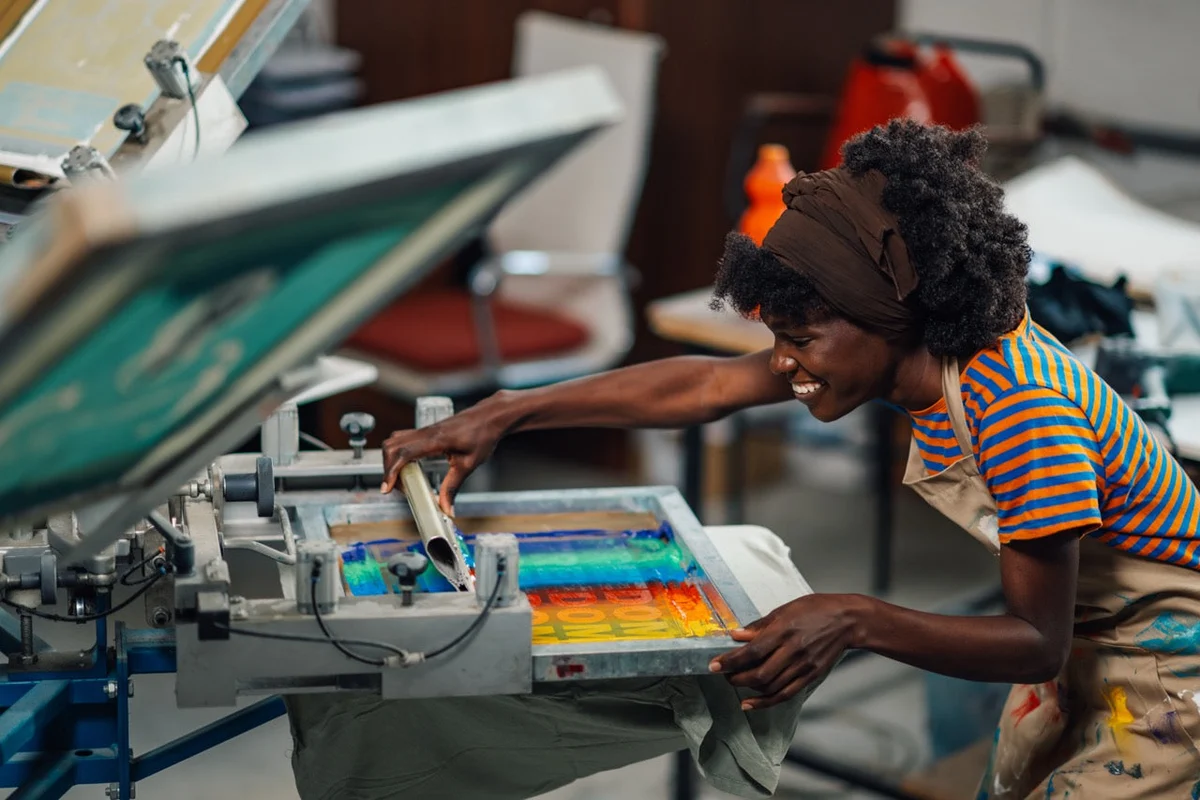
Screen printing has been widely used for decades and remains useful for large-volume production. It can produce durable prints and is particularly efficient when the same design needs to be reproduced many times.
However, screen printing generally requires separate screens for different colors. Preparing these screens can take additional time and resources, especially when a design contains multiple colors or fine details.
DTF printing uses a digital workflow instead. A new design can be prepared and printed without creating separate screens. This makes it easier to handle small orders, personalized designs, and products with complex graphics.
For businesses that frequently produce short runs or customized garments, this flexibility can be a major advantage.
DTF Printing vs. Heat Transfer Vinyl
Heat transfer vinyl is another common decoration method. It works well for simple lettering, numbers, logos, and solid shapes. However, cutting and weeding the vinyl can become time-consuming when designs contain small details or complex patterns.
DTF printing does not require the same cutting and weeding process. The complete graphic can be printed onto transfer film before being transferred to the fabric.
This allows DTF to handle photographs, gradients, detailed illustrations, and multi-color artwork more efficiently. The technology is therefore well suited to businesses that need more freedom in graphic design.
DTF Printing vs. Direct-to-Garment
Direct-to-garment (DTG) printing also uses digital technology, but the printing process is different. DTG printers apply ink directly to the garment. This can produce excellent results on suitable fabrics, particularly cotton.
DTF printing separates the image creation process from the garment itself. Because the design is printed onto film first, the transfer can be stored and applied later.
This can make production planning more flexible. A business can prepare popular designs in advance and apply them to different garments when an order arrives.
Why DTF Works Across Different Fabrics
Another reason DTF has become popular is its compatibility with many common textile materials. Depending on the transfer formulation and application settings, DTF can be used with cotton, polyester, blends, and several other suitable fabrics.
This gives apparel businesses more freedom when choosing products. They can work with T-shirts, hoodies, uniforms, sportswear, bags, and other textile items without having to use a completely different printing process for every product.
Material testing is still important. Fabric composition, surface treatment, heat resistance, temperature, pressure, and pressing time can all influence the final result.
The Role of Digital Workflow
The technology behind DTF is not limited to the printer itself. Software, ink management, film quality, adhesive powder, curing equipment, and heat presses all contribute to the final result.
A digital workflow also makes artwork preparation easier. Designs can be edited, resized, or reproduced without the physical setup required by some traditional printing methods.
For businesses, this can reduce preparation time and make it easier to respond to changing customer demands.
What Makes DTF Attractive for Modern Printing Businesses?
The main advantage of DTF is not that it completely replaces every traditional printing method. Different technologies still have different strengths.
Instead, DTF provides a practical middle ground for businesses that need flexibility. It can support detailed graphics, smaller production runs, multiple fabric types, and customized orders without requiring extensive setup for each design.
It also allows transfers to be produced separately from the final application. This can help businesses organize production around demand rather than printing every design directly onto a finished garment.
For companies evaluating equipment and digital textile printing solutions, dtflinko.com provides more information about DTF printing technology and equipment.
The Future of Direct-to-Film Printing
As customization continues to influence the apparel and promotional products market, printing businesses need technologies that can handle shorter runs and more varied designs. DTF printing fits this trend because its digital workflow makes design changes and customized production relatively straightforward.
The technology is also continuing to develop. Improvements in printheads, inks, transfer films, curing systems, and software can further improve production speed and consistency.
DTF printing may not eliminate traditional printing methods, but it is changing how businesses think about textile decoration. By combining digital image production with a separate transfer process, it offers a flexible solution for modern apparel printing.
For businesses looking to balance design freedom, material compatibility, and production flexibility, direct-to-film technology is becoming an increasingly important part of the textile printing landscape.