

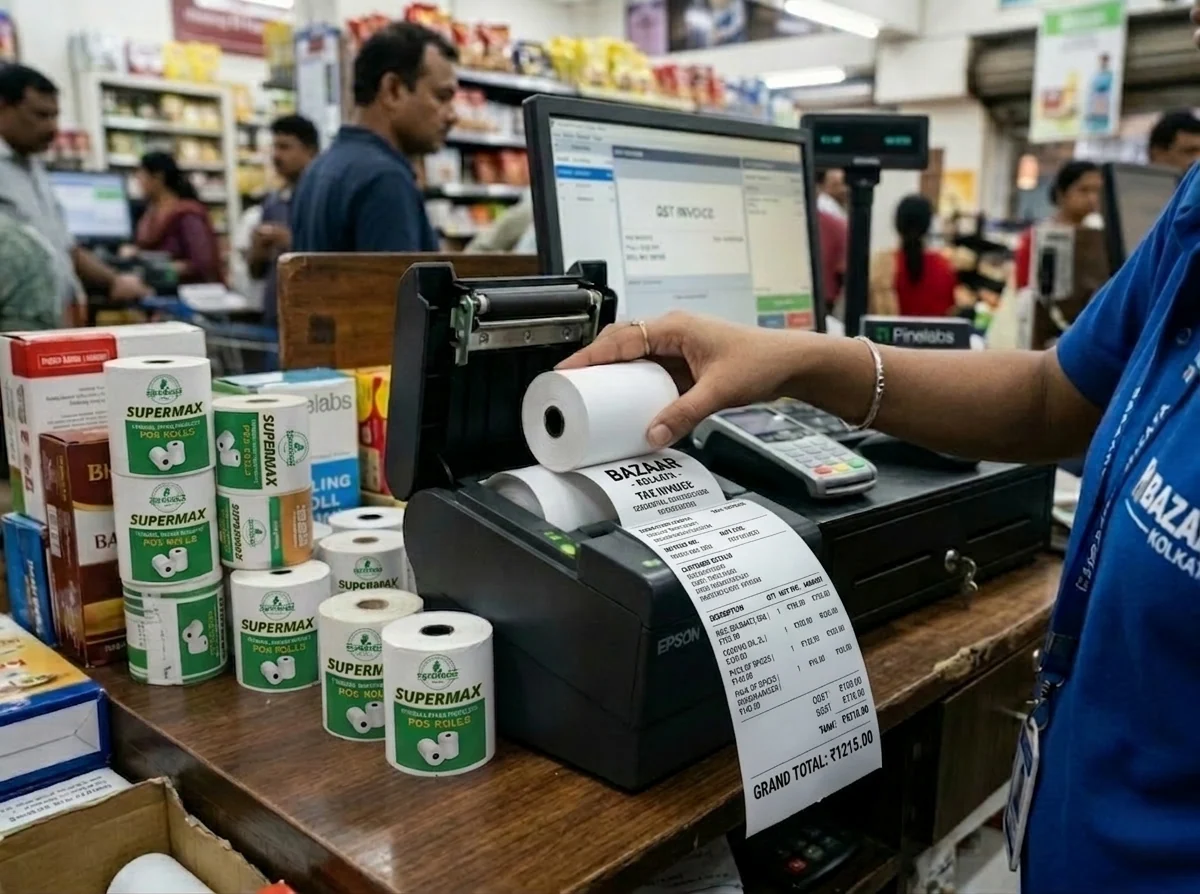
Everyday business transactions often depend on small consumables that rarely receive much attention until something goes wrong. Thermal paper is one of them. From receipts printed at checkout counters to tickets produced at service desks, it supports countless routine processes. For companies that rely heavily on thermal printing, working with dependable thermal paper manufacturers can help ensure that the paper being used is compatible, consistent, and suitable for the demands of daily operations.
The right paper can make a difference in print quality, printer performance, storage, and overall workflow. Understanding the characteristics of thermal paper can help businesses make more informed purchasing decisions.
A Closer Look at Thermal Printing
Thermal printing is different from conventional printing because it does not necessarily require ink or toner. In direct thermal printing, a specially treated surface reacts to heat generated by the printer’s printhead.
This process allows information to be printed rapidly. It also reduces the number of consumable components required by the printer.
The technology is particularly useful in environments where speed matters. Retail checkout counters, restaurants, transportation facilities, pharmacies, and service businesses may need to produce printed information continuously throughout the day.
Because the paper is an active part of the printing process, its characteristics matter.
The Paper and Printer Need to Work Together
A common purchasing mistake is selecting paper without considering the printer.
Thermal printers can have specific requirements relating to roll width, diameter, core size, thickness, and coating. A roll that looks suitable at first glance may not feed correctly if its dimensions do not match the equipment.
Businesses should identify the specifications of their existing printers before ordering large quantities. Keeping these specifications documented can also make future purchasing easier, especially when multiple employees are responsible for procurement.
For companies operating multiple locations, standardizing compatible paper sizes can simplify inventory management.
Print Quality Is More Than Appearance
Clear printing is essential when a document contains information that customers or employees need to read.
A receipt may include product names, prices, taxes, transaction numbers, dates, and totals. A restaurant ticket may contain menu items and special instructions. A service ticket may include customer or order information.
If printed characters are faint or inconsistent, the document becomes less useful.
Thermal paper is designed to respond to heat in a controlled way. The quality and characteristics of its coating can influence how clearly the printer produces the final image.
Businesses that print at high volumes should pay attention to consistency because even minor print-quality problems can become noticeable across thousands of documents.
Roll Size Can Affect Productivity
The dimensions of a thermal roll are not just a technical specification. They can influence how frequently employees need to replace paper.
Smaller rolls may be appropriate for compact mobile printers or applications where portability is important. Larger rolls can be useful in high-volume environments because they may require fewer replacements during a working shift.
However, a larger roll is not automatically better. The printer must be capable of accommodating the roll’s dimensions and weight.
The ideal choice is therefore the size that balances printer compatibility, usage volume, storage requirements, and operational convenience.
Different Industries Have Different Needs
Thermal paper is used across many sectors, and each environment can have different requirements.
Retail
Retail stores often use thermal paper for receipts and transaction records. High-volume locations may prioritize consistent printing and larger roll capacities.
Hospitality
Restaurants and cafés may use thermal printing for receipts, kitchen orders, customer tickets, and other operational documents. Compact printers can be particularly useful where counter or kitchen space is limited.
Healthcare
Medical and healthcare environments can use thermal printing for certain transaction records, tickets, labels, and other documentation. Application-specific requirements should be considered when selecting paper.
Transportation
Thermal technology is frequently used for tickets and transaction records in transportation environments. Fast printing can be useful when large numbers of customers need service within a short period.
Service Businesses
Salons, repair shops, entertainment venues, and other service providers may use thermal printers for receipts, appointment-related documents, tickets, or internal records.
Consider the Expected Life of Printed Information
Not every thermal printout needs to be preserved for the same length of time.
Some documents are used for immediate reference and discarded shortly afterward. Others may need to remain readable for longer periods.
Businesses should therefore consider how printed information will be used and stored.
Exposure to heat, light, humidity, and certain substances can affect thermal printing over time. Where longer-term record retention is important, companies should investigate paper specifications appropriate for that purpose and follow suitable storage practices.
Storage of Unused Rolls Matters Too
Thermal paper can be affected by its surrounding environment even before it enters the printer.
Businesses purchasing large quantities should store rolls in suitable conditions and protect them from unnecessary exposure to heat, moisture, and direct sunlight.
Good inventory rotation can also help. Instead of allowing older stock to remain unused while newer supplies are opened, businesses can organize their inventory so that available products are consumed systematically.
This is particularly important for companies that purchase thermal paper in bulk.
Testing Before a Large Purchase
A sample can reveal information that a product description cannot.
Before committing to a large order, businesses can test thermal paper in the actual printers used during daily operations. This provides an opportunity to check whether the rolls feed correctly and whether printed text and graphics appear as expected.
Businesses can also evaluate how easily the paper tears, how the roll behaves during continuous printing, and whether the printed information meets their practical requirements.
Testing is especially valuable when changing suppliers or switching to a different paper specification.
Building a Better Purchasing Process
A well-organized purchasing process can reduce the chance of running out of essential supplies.
Companies can begin by calculating average monthly usage. Seasonal demand should be considered if the business experiences significant fluctuations.
A minimum inventory level can then be established. When stock reaches that level, a new order can be placed before supplies become critically low.
Larger organizations can also standardize specifications across branches. This can make purchasing more efficient and reduce the number of different products that need to be stored.
Questions to Ask Before Choosing a Manufacturer
Businesses evaluating potential suppliers can consider several practical questions:
- Can the supplier provide the required roll sizes?
- Is the paper compatible with the existing printers?
- Are samples available for testing?
- Can the supplier maintain consistent product quality?
- What packaging options are available?
- Can large-volume orders be handled reliably?
- Are custom specifications possible?
- What are the expected production and delivery times?
These questions help businesses look beyond the immediate purchase and consider the supplier’s ability to support ongoing requirements.
The Value of Consistency
For a business that prints hundreds or thousands of documents every day, consistency matters.
Employees become familiar with how rolls fit into printers and how printed documents should look. Purchasing teams become familiar with product specifications. Inventory systems become easier to manage when the same products are used repeatedly.
This consistency can reduce unnecessary complications and make routine operations more predictable.
For growing businesses, establishing a dependable relationship with experienced thermal paper manufacturers can also provide a foundation for handling increased demand and changing product requirements.
Final Thoughts
Thermal paper may be a simple consumable, but it plays an important role in many everyday business processes. Choosing suitable paper involves more than finding a roll at the lowest price. Businesses need to consider printer compatibility, dimensions, coating quality, print clarity, storage conditions, usage volume, and supply reliability.
Testing products before large purchases and establishing clear inventory procedures can further improve the purchasing process. As operations grow, a dependable supply relationship can help businesses maintain consistent access to the thermal paper they need.
With the right product specifications and a reliable manufacturing partner, businesses can keep their thermal printing systems running smoothly while supporting efficient day-to-day operations.