

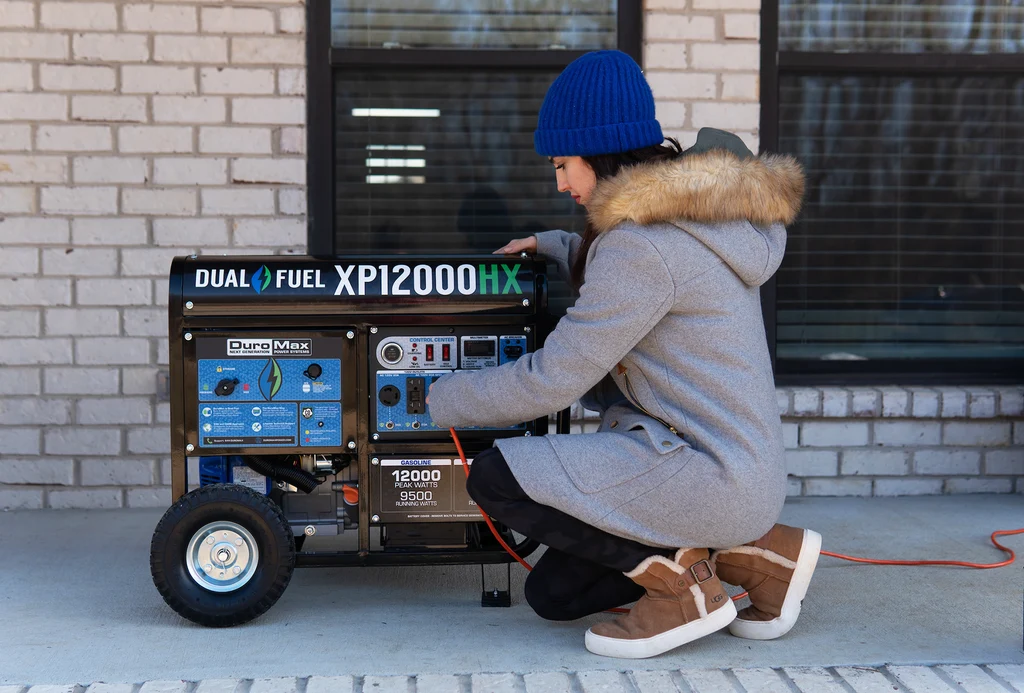
When a winter storm knocks out the power, the fuel in the shed suddenly matters a great deal. A dual fuel portable generator can run on either gasoline or propane, which gives a household two sources of fuel instead of one, and a hybrid portable generator of this kind is a common choice for home backup. Understanding how the two fuels behave, and how the machine switches between them, makes it easier to plan for an outage.
Two Fuels in One Machine
A dual fuel generator has a carburetor or fuel system that can draw from a gasoline tank or from a propane cylinder, usually through a switch or a valve. Gasoline is easy to buy and carries a lot of energy, but it spoils in storage and must be refilled by hand. Propane stores for years in a sealed cylinder, burns cleanly, and does not gum up the engine, but a cylinder holds a limited amount. Having both lets the owner use whichever is on hand, which is the main appeal of a dual fuel portable generator for homes that face long winter outages.
How the Fuels Differ in Output
Propane carries a little less energy by volume than gasoline, so the same engine produces somewhat less power on it. A machine rated for a certain number of watts on gasoline will have a lower rating on propane, often by a modest margin. A buyer comparing a 7000 watt generator with another should read both numbers and plan for the lower one.
Cold Weather and Starting
Cold air is hard on gasoline engines because the fuel evaporates slowly and the oil thickens. Propane vaporizes at much lower temperatures than gasoline, so many owners find propane starts more easily on a freezing morning. Even so, propane pressure in the cylinder drops as the temperature falls, and a nearly empty cylinder can struggle in deep cold. Keep the cylinders in a sheltered place and test the machine before the first storm.
Storing and Handling Fuel
Gasoline should be kept in approved containers in a ventilated space away from the house, and stabilizer added if it will sit for months. Propane cylinders should stand upright, be kept out of direct sun and heat, and be stored outdoors, never in a basement or garage. Both fuels are flammable, so keep sources of ignition away and know where the fire extinguisher is.
Switching Fuels Safely
Changing from one fuel to the other is simple, but it should be done with the engine stopped or as the manual describes. To use propane, connect the hose to the cylinder and the inlet on the generator, open the valve slowly, and check the joints for leaks with soapy water, which bubbles if gas escapes. To return to gasoline, close the propane valve and let the carburetor use the fuel that remains. Never smoke or create sparks near either fuel, and keep the cylinder upright.
How Long a Cylinder Lasts
Runtime on propane depends on the load, not just the cylinder size. A machine under a light load, such as a refrigerator and a few lights, sips fuel and may run through a night on one cylinder, while a heavy load drains it far faster. A larger cylinder holds more fuel, and a second cylinder gives a spare. Keeping a spare and a means of checking how full each one is, such as a gauge or a weight scale, avoids surprises at midnight.
The Inverter Advantage
Many modern machines use inverter technology, which converts the engine’s output into clean electricity electronically. Because the engine speed rises and falls with demand, an inverter model runs quieter and uses less fuel at partial load. Clean output matters for laptops, televisions, and modern furnace controls, which can be sensitive to rough power.
Exhaust Fumes and Where to Place the Unit
Whatever the fuel, a generator produces carbon monoxide, a colorless, odorless gas that can be fatal in an enclosed space. Run it outdoors, well away from doors, windows, and vents, and never in a garage, basement, or shed. Install carbon monoxide alarms in the home and test them. A canopy with open sides protects the generator from rain and snow while letting exhaust escape.
Sizing the Load
List the devices that must run, such as the furnace blower, refrigerator, a few lights, and phone chargers, and add their running watts. Remember that motors need a brief surge to start, so the largest surge must be added on top. A propane generator may carry less than its gasoline rating, so size the load with that in mind. Leaving a margin of fifteen to twenty percent below the limit keeps the engine from running at full strain for hours, which reduces wear and fuel use. Heavy loads such as electric heaters and dryers are better left off.
Connecting Safely
Never plug a generator into a wall outlet through a double-ended cable, because that sends power back onto the grid and can injure utility workers. Use heavy extension cords rated for outdoor use, or have a licensed electrician install a transfer switch or interlock that isolates the house from the grid.
Maintenance and Readiness
A few habits keep the machine ready:
- Run it under load for fifteen minutes each month
- Check the oil level before every start
- Replace the air filter and spark plug yearly
- Rotate stored gasoline and inspect hoses
A routine like this takes little time, and keeping a log of runtime and service dates makes it easier to know when the next task is due, so a dual fuel portable generator is ready on the day the lights go out.
Sound, Neighbors, and Fuel Supply
Even a quiet unit makes noise over many hours, so place it where the sound will not disturb sleep. Know how long a full tank or cylinder lasts, and plan refueling trips ahead of time. Running the generator for a few hours at a time to keep the refrigerator cold and the heat on, rather than all day, stretches the fuel.
A Plan for the Next Outage
The households that cope well with long outages decide in advance what matters, test the machine in cold weather, and keep fuel on hand in both forms. A propane generator that runs when needed is worth more than a bigger machine that will not start, and a short rehearsal each fall is the cheapest way to find out. During the rehearsal, switch between the two fuels once so the steps are familiar, and write the sequence on a card kept with the generator, because instructions are hard to remember in the dark.