

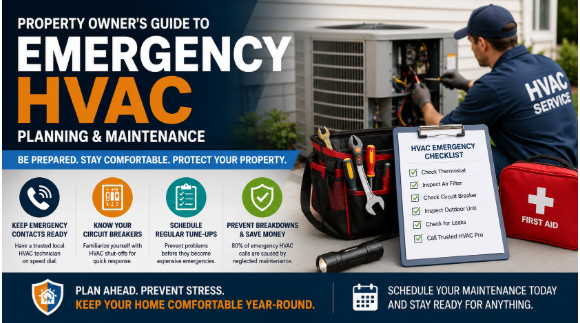
Property Owner’s Guide to Emergency HVAC Planning & Maintenance
An air conditioner that suddenly starts blowing warm air on a hot summer afternoon or a furnace that stops working on a freezing winter night can quickly turn into a major inconvenience. While it isn’t possible to prevent every equipment failure, emergency HVAC planning and preventive maintenance can make unexpected problems much easier to handle.
Property owners who know what to do when their heating or cooling system fails can respond faster, avoid potentially unsafe DIY repairs, and give an HVAC technician better information about the problem. Even more importantly, routine maintenance can help identify certain developing issues before they become emergency breakdowns.
This guide explains how homeowners and property managers can prepare for HVAC emergencies and keep their heating and cooling equipment operating reliably.
What Is Considered an HVAC Emergency?
Not every HVAC problem requires immediate service. A system making a slightly different sound, for example, may warrant an inspection without necessarily being an emergency.
Other situations deserve much faster attention.
Potential HVAC emergencies include:
- Complete heating failure during dangerously cold weather
- Air-conditioning failure during extreme heat, particularly when vulnerable occupants are present
- Burning or strong electrical odors
- Smoke coming from HVAC equipment
- Repeatedly tripping electrical breakers
- Suspected gas or carbon monoxide problems
- Significant water leaking around HVAC equipment
- Loud grinding, banging, or other severe mechanical noises
Safety should always come first. If you smell gas or a carbon monoxide alarm activates, leave the property and follow local emergency and utility-provider guidance rather than attempting to troubleshoot the equipment yourself.
Create an Emergency HVAC Plan Before You Need One
The worst time to start looking for information about your HVAC equipment is after it stops working.
A simple HVAC emergency plan gives everyone in the household or property-management team a clear idea of what to do.
1. Keep Important HVAC Contacts Available
Identify a qualified HVAC company before an emergency occurs and save its contact information somewhere easily accessible.
Don’t rely exclusively on a phone contact list. Property managers may also want emergency information stored with building documentation so another employee can access it when necessary.
When selecting an HVAC provider, consider whether the company services your equipment type and offers the heating, cooling, or related services your property may require. Property owners researching professional service options can visit Nespolo HVAC for additional information about residential HVAC and plumbing services.
Having a provider identified ahead of time eliminates one step when you’re dealing with an urgent breakdown.
Know Where Your HVAC Shutoffs and Breakers Are Located
Property owners should have a basic understanding of how power reaches their HVAC equipment.
Locate your electrical panel and identify the breakers associated with components such as the:
- Air conditioner
- Furnace
- Heat pump
- Air handler
- Outdoor condenser
Some equipment may also have dedicated disconnects near the unit.
Knowing where these controls are located can be useful, but avoid opening equipment panels or working on internal electrical components yourself. HVAC systems can contain high-voltage components, and some electrical parts can remain hazardous even after power has been disconnected.
When in doubt, wait for a qualified technician.
Prevent HVAC Emergencies With Routine Maintenance
One of the most effective approaches to preventing HVAC breakdowns is paying attention to the system before something goes wrong.
Heating and cooling equipment experiences normal wear. Filters become dirty, electrical and mechanical components age, outdoor equipment collects debris, and performance can gradually decline.
Regular maintenance gives technicians an opportunity to inspect equipment and identify certain problems while they are still manageable.
A typical preventive HVAC strategy may include:
- Checking or replacing filters as recommended
- Testing heating before winter
- Testing cooling before summer
- Inspecting accessible ductwork
- Keeping outdoor units clear of debris
- Monitoring thermostat performance
- Scheduling professional inspections and tune-ups
- Addressing unusual noises or odors promptly
Preventive maintenance cannot guarantee that a system will never fail, but it can reduce avoidable strain and help uncover developing issues.
Pay Attention to HVAC Warning Signs
Many HVAC systems provide clues before they stop operating entirely.
Don’t ignore changes such as weak airflow, inconsistent temperatures, frequent cycling, strange noises, unusual odors, or unexplained increases in energy consumption.
For example, an air conditioner that takes progressively longer to cool the house may be experiencing an airflow, equipment, thermostat, ductwork, or other performance issue. Having the problem diagnosed early may prevent a more disruptive failure later.
Similarly, repeatedly resetting a breaker isn’t a repair. If HVAC equipment continues tripping a circuit, turn the system off and have the cause professionally evaluated.
What Should You Do When Your HVAC System Stops Working?
If your heating or cooling system unexpectedly stops, a few basic checks may help identify simple problems without attempting a repair.
First, check the thermostat. Confirm that it is powered, set to the appropriate mode, and set to a temperature that should trigger heating or cooling.
Next, check the filter. A severely clogged filter can restrict airflow and contribute to HVAC performance problems.
You can also look at the electrical panel to determine whether a breaker has tripped. If a breaker immediately or repeatedly trips again, don’t continue resetting it.
Finally, inspect the area around the equipment from a safe distance. Look for water, unusual odors, visible damage, or other obvious signs that can be described to the technician.
Avoid dismantling HVAC equipment or attempting electrical, refrigerant, gas, or internal mechanical repairs.
Prepare for Seasonal Heating and Cooling Problems
Emergency HVAC planning should account for the time of year.
Before Summer
Test the air conditioner during mild spring weather rather than waiting for the first extremely hot day.
Check the filter, clear debris from around the outdoor unit, verify airflow from vents, and pay attention to unusual sounds.
Before Winter
Test the heating system during fall. Make sure supply and return vents aren’t blocked and verify that smoke and carbon monoxide alarms are functioning according to their manufacturers’ instructions.
Finding a problem during moderate weather gives you more time to arrange repairs before heating or cooling becomes essential.
Keep HVAC Records for Faster Service
Maintaining basic equipment records can make troubleshooting easier.
Keep information such as:
- Equipment make and model
- Approximate installation date
- Warranty documents
- Previous service invoices
- Maintenance dates
- Filter specifications
- Notes about recurring problems
For rental properties or commercial buildings, these records can be especially useful when multiple people are responsible for maintenance.
When calling for service, explain what happened, when the problem started, and whether you’ve noticed unusual sounds, odors, leaks, or changes in performance. Clear information can help the technician understand the situation before arriving.
Emergency HVAC Planning Starts With Prevention
A heating or cooling breakdown is never convenient, but preparation can make it significantly less stressful.
Know your equipment, keep professional contact information readily available, understand where basic electrical controls are located, and avoid attempting repairs that require specialized HVAC knowledge. Most importantly, make preventive HVAC maintenance a regular part of property ownership rather than waiting for equipment to fail.
Seasonal inspections, routine filter care, and prompt attention to warning signs can help your HVAC system operate more reliably while giving you time to address developing problems.
When an emergency does occur, having a clear plan means you can focus on protecting the property and restoring comfort instead of trying to determine what to do next.