

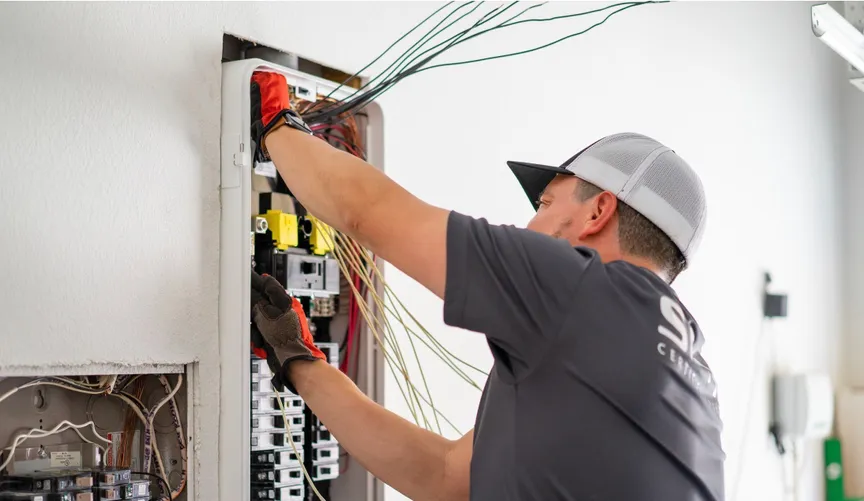
As electric vehicle adoption grows, apartment communities are facing a new infrastructure challenge: how to provide convenient EV charging without overwhelming the building’s electrical system.
Installing a few chargers may not create significant issues, but demand can quickly increase as more residents switch to electric vehicles. If multiple vehicles charge at full power simultaneously, the additional load can put pressure on electrical panels, transformers, and the building’s overall capacity.
Smart EV charging provides a way to manage this demand. Instead of allowing every charger to operate independently, smart charging systems dynamically distribute available power across vehicles, helping apartment communities expand charging access without unnecessarily overloading their electrical infrastructure.
Why EV Charging Can Challenge Apartment Buildings
Apartment buildings already have substantial electricity demands.
Electrical systems may need to support:
- Heating and cooling
- Elevators
- Lighting
- Common areas
- Appliances
- Individual residential units
Adding multiple EV chargers creates another significant load. The challenge becomes more complex when several residents charge at the same time, particularly during periods when the building is already using a large amount of electricity.
Simply installing a dedicated circuit for every charger may eventually require expensive electrical upgrades.
What Is Smart EV Charging?
Smart charging uses connected hardware and software to control how electricity is distributed among charging stations.
Instead of every vehicle receiving maximum available power at all times, the system evaluates factors such as:
- Total building electricity consumption
- Number of vehicles charging
- Available electrical capacity
- Charging requirements
- User priorities
- Charging schedules
The system can then automatically adjust charging power to stay within predefined electrical limits.
This allows an apartment complex to support more EVs without requiring every charger to operate at full capacity simultaneously.
How Load Balancing Prevents Overloads
Load balancing is one of the most important functions of a smart charging system.
Imagine an apartment building with several EV chargers operating at the same time. Without load management, each charger could attempt to draw its maximum power.
Smart charging can instead distribute the available capacity across connected vehicles.
For example, one vehicle may receive more power because its owner needs to leave soon, while another vehicle parked overnight may charge at a lower rate.
The total electrical demand remains controlled while every vehicle still receives the energy it needs.
Using Existing Electrical Capacity More Efficiently
One of the biggest advantages of smart charging is that it can help property owners make better use of existing infrastructure.
Without load management, a building may need to upgrade:
- Electrical panels
- Transformers
- Service connections
- Distribution equipment
These upgrades can be expensive and may require significant construction work.
Smart charging does not eliminate the need for electrical upgrades in every situation, but it can reduce the need for immediate expansion by managing charging demand more efficiently.
For property owners, this can make it possible to install more charging stations while working within existing capacity limits.
Charging Around Building Demand
Smart charging can also account for the building’s broader electricity consumption.
For example, if an apartment complex experiences high electricity demand during the evening, the charging system can reduce EV charging power during those periods.
Later, when overall building demand decreases, the system can increase charging power.
This approach allows EV charging to become part of the building’s broader energy management strategy rather than operating independently.
Scheduling Charging for Lower-Cost Periods
Electrical overload is not the only concern. Peak electricity usage can also increase operating costs.
Smart charging systems can schedule charging based on:
- Time-of-use electricity rates
- Building demand
- Resident schedules
- Vehicle departure times
Residents can connect their vehicles when they return home, while the system determines when charging should occur to balance convenience, energy costs, and available capacity.
This can reduce unnecessary peak demand while still ensuring vehicles are adequately charged.
Supporting More Residents With Fewer Chargers
Smart charging can also improve charger utilization.
Without a managed system, a dedicated charger may be used by one resident even when the vehicle is already fully charged.
A shared charging network can allow multiple residents to access a smaller number of chargers based on actual demand.
Networked systems can track:
- Which residents are charging
- How much energy they use
- When chargers are available
- How long vehicles remain connected
This can help apartment communities serve more EV drivers without installing a charger for every parking space.
Smart Charging Makes Expansion Easier
EV adoption within an apartment complex is unlikely to remain static.
A building may start with several charging stations and gradually need more as residents switch to EVs.
Smart charging provides a more scalable approach by allowing property managers to add chargers while continuing to manage the building’s total electrical load.
Commercial charging solutions from companies like CyberSwitching are designed for scalable environments where multiple chargers need to operate within available electrical capacity.
Founded in 1994 and holding more than 40 patents in EV charging and power management, CyberSwitching develops commercial EV charging systems that support dynamic load management, network connectivity, and flexible charging configurations.
For apartment communities, this type of infrastructure can provide a foundation for gradual expansion rather than requiring a complete electrical redesign every time charging demand increases.
Remote Monitoring Adds Another Layer of Control
Modern smart charging systems can provide property managers with remote visibility into charging activity.
They can monitor:
- Charger availability
- Energy consumption
- Charging sessions
- System errors
- Overall utilization
This information can help property managers identify unusual demand patterns and plan future infrastructure improvements.
Remote diagnostics can also reduce the need for unnecessary service visits when a charger experiences a connectivity or software issue.
The Role of OCPP
Open Charge Point Protocol, or OCPP, can provide additional flexibility for apartment charging networks.
OCPP allows EV chargers to communicate with compatible charging management software.
For property owners, this can make it easier to:
- Integrate charging with management platforms
- Change software providers
- Introduce new payment systems
- Add future functionality
Because apartment charging infrastructure may remain in place for many years, technology flexibility is an important part of future-proofing the investment.
What Apartment Owners Should Consider
Before installing EV chargers, property owners and managers should evaluate:
- Current electrical capacity — Determine how much power the building can provide without creating unnecessary strain.
- Expected EV adoption — Plan for future demand rather than installing infrastructure only for today’s residents.
- Charging behavior — Consider when residents typically return home and how long their vehicles remain parked.
- Load management capabilities — Choose systems capable of dynamically distributing available power.
- Scalability — Make sure additional chargers can be added as demand increases.
- Software flexibility — Consider network connectivity and standards such as OCPP.
- Billing and access control — Establish a fair system for allocating charging costs among residents.
Final Takeaway
Smart charging gives apartment complexes a way to expand EV charging access without allowing charging demand to overwhelm the building’s electrical system.
By dynamically balancing available power, scheduling charging around building demand, and monitoring energy consumption, smart systems can make EV infrastructure more efficient and scalable.
For apartment owners and property managers, the goal should not simply be to install as many chargers as possible. It is to build a charging network that works within the building’s electrical limitations today while providing enough flexibility to support growing EV demand tomorrow.