

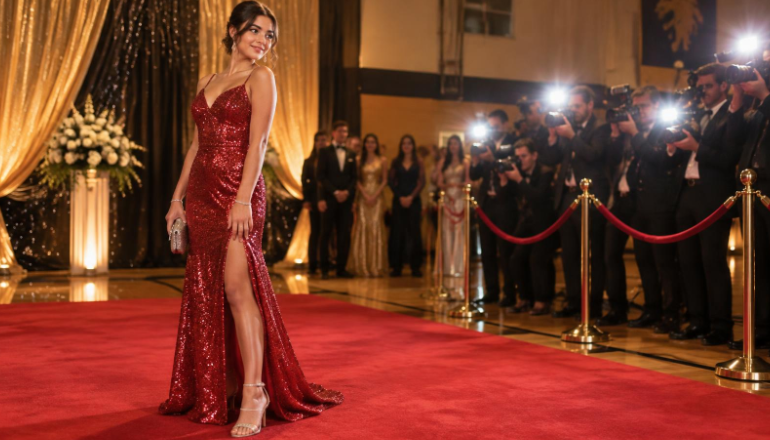
You want the photos to look sharp. You also do not want one dress to cost what a stack of textbooks costs. That is the whole problem in one sentence. Celebrity formal looks set a high visual bar. Student budgets set a hard ceiling. The gap is smaller than it feels if you copy the right parts of a red-carpet look and ignore the parts that only work with a stylist and free samples.
Most families now order formal dresses online. Selection is wider and comparison is easier, but you lose the fitting room until the box shows up. Formalwear returns stay higher than everyday clothes, usually because of fit and fabric that looked different in person. The steps below are about what actually carries over from a celebrity image to a real gym or hotel ballroom, without pretending money and time are unlimited.
Steal the idea, not the whole outfit
Celebrity gowns are built for cameras, controlled light, and fittings that last weeks. Trying to recreate one stitch for stitch on a student budget almost always disappoints. What works is pulling out a single clear idea from a look you like and letting the rest go.
Ask what actually stuck in the image. A clean column? One strong color? A neckline that frames the face? Fabric that catches light without looking busy? Choose one of those, not a pile of them. A simple dress in a confident color often photographs closer to that polished mood than a complicated one covered in extra detail that turns noisy under flash. Heavy embellishment can look rich in a still and chaotic in a group shot under school lighting.
Save two or three reference pictures, then write the trait in plain words: “sleek black column,” “soft A-line in emerald,” “square neck, almost no sparkle.” That note becomes your filter. Without it, every shiny option feels urgent and the budget leaks into maybes. Parents can use the same note so the conversation stays about fit and feel instead of an endless scroll of unrelated dresses.
If you want to compare styles from the comfort of your couch, Worldprom is a good starting point. You can line up a few silhouettes in the same color family, or the same cut in different fabrics, without driving across town. You are not trying to recreate a celebrity moment. You are trying to find a dress that carries a little of that polish into a real room.
Measure first, order second
Fit problems drive most formalwear returns. Charts vary from brand to brand. The size you wear in jeans is a weak guide. Take ten minutes with a soft tape before you fall for a photo.
Measure bust, waist, and hips in the undergarments you plan to wear that night. One small trick that saves returns: measure twice, once in the morning and once in the evening, because numbers can shift a bit after a full day. If the page lists hollow-to-hem, measure from the base of the throat to where you want the hem to hit, in the shoes you might actually wear. Write the numbers down. Match them to that listing’s chart, not to a size letter you remember from another brand.
When you fall between sizes, sizing up and planning a small alteration is usually safer than hoping a tight dress will stretch. A hem or side-seam tweak often costs less stress than a second shipping cycle. If a listing has no size chart at all, treat that as a reason to move on.
Read the fabric and the reviews like a skeptic
Celebrity gowns often use cloth that holds shape and photographs evenly. Student-budget dresses can still do that, but only if you check. Look for real fabric content, not vague words like “premium” or “luxury feel.” Soft stretch satin and double-faced crepe tend to crease less and move better through an evening than the thinnest high-shine polyesters that fold the second you sit. A lined dress usually sits smoother and looks more finished in photos. If the page skips fabric details, keep scrolling.
Buyer photos beat star ratings. Sort by recent and by lower scores. Watch for the same complaint more than once: length running short, color off from the screen, a zipper that catches, fabric that pills. Indoor customer shots show how the dress behaves when nobody is steaming it between takes. A slightly quieter dress with consistent feedback often serves a limited budget better than a dramatic option with mixed notes on quality.
Check the return window before you click order. Note whether the clock starts on delivery day or order day, and whether you can exchange for another size of the same style. A clear policy will not fix a bad fit, but it keeps a wrong size from becoming money you cannot get back. Final-sale pieces remove that net, so they only make sense when you already trust the measurements and fabric notes.
Spend where the camera notices
On a tight budget, put money into what photos and real lighting will show. A clean shape in a solid color usually reads as more polished than a cheaper dress loaded with extra sparkle that turns busy under flash. Shoes can stay simple if the dress is strong. Jewelry can stay minimal if the neckline is already doing the work.
Order early enough that a problem is still fixable. Six to eight weeks before the event is a realistic window for shipping, try-on, and a possible exchange or alteration. Waiting until the last two weeks turns small issues into emergencies and pushes people toward whatever is left, which is rarely the strongest choice.
When you are ready to narrow things down, browse a focused range of prom dresses with your reference note in hand. Compare two or three options that share the same core idea rather than twenty that share nothing. Fewer candidates make it easier to judge fabric notes, reviews, and fit data side by side. That is usually where a student budget is won or lost.
Once the dress arrives, do the unglamorous test. Sit. Walk the hallway. Raise both arms like someone is taking a group photo from the stairs. A dress that only works while you stand still will not survive dinner or dancing. Celebrity styling can hide those problems on a carpet. Your night will not.
Polish without the price-tag pressure
Looking put-together on prom night is less about matching a celebrity and more about a few deliberate moves: one strong idea from a look you admire, honest measurements, clear fabric information, and enough time to fix a mistake. Those steps cost attention more than money. They also reduce the chance that the dress becomes the main problem of the evening instead of background to it.
The photos will not list what you spent. They will show whether the dress fit, whether the color held under real light, and whether you looked comfortable enough to forget the outfit for long stretches of the night. That is the version of “celebrity” that works on a student budget: clear, intentional, and built for the room you will actually be in. Borrow the confidence from the carpet. Leave the parts that need a free wardrobe and a lighting crew. Then pick the dress that can carry a little of that polish into a real evening without asking your budget to pretend it is something else.