

If you run a diesel long enough, you learn the parts that strand you are almost never the big, dramatic ones. It’s the little stuff. Near the top of that list is the VGT actuator. Small and ignored, right up until it quits and drops the truck into a derate on the side of the highway.
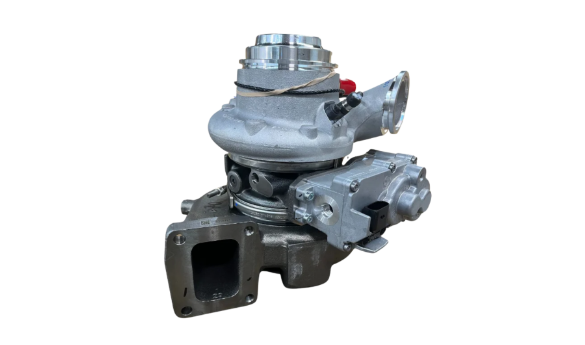
Genuine Cummins Turbocharger HE400VG (Photo by Wisent Parts Center.)
So What Does It Actually Do?
A variable-geometry turbo has movable vanes that change how exhaust flows onto the turbine wheel. Close them down and it spools quick and hard; open them up and it flows big without overspeeding. The actuator is the electric motor doing that adjusting nonstop, following commands from the ECM.
On the Cummins X15, that actuator is the 6382093rx genuine Holset unit from Wisent Parts Center. It’s one of the most commonly sold part numbers for these, and it’s a genuine OEM Cummins unit covering the 2017–2023 model years. So if you’re running something like a 2020 Kenworth T680 with the X15, this is most likely your part.
Cummins VGT Electronic Actuator HE400VG (Photo by Wisent Parts Center.)
Why They Die
It usually comes down to one thing: soot. Carbon collects on the vanes inside the turbo, they start to stick, and the actuator just keeps fighting them until it burns itself out. High-mileage trucks that idle a lot or run light loads tend to see it sooner.
You usually get some warning before it fully lets go. Here’s what it looks like when one’s on the way out:
- A derate, or a truck that suddenly feels powerless
- Turbo or VGT fault codes
- Lazy boost and sluggish throttle
- Extra smoke or worse fuel mileage
- Weak engine braking
Catch a few of those together and don’t ignore them. A stuck VGT will drag a brand-new actuator right down with it if you don’t get to the bottom of what caused it.
What Replacing One Actually Involves
The swap itself isn’t the hard part: a connector and a few fasteners, and if you can reach it, you can change it. What decides whether the job holds is what people rush past, making sure the VGT isn’t binding before you install and correctly calibrating the new unit after.
So here’s how I do it, step by step:
- Pull the codes first and confirm they’re actually pointing at the actuator, not something else.
- Take the old actuator off and check the turbo by hand. The vanes shouldn’t be seized, and the lever should move freely from one side to the other. If it’s stuck, clean or service the turbo before you go any further.
- Connect the new actuator.
- With the key on and engine off, launch Cummins INSITE and open ECM Diagnostics.
- Go to the VGT electronic actuator installation and calibration menu.
- Choose the input value for “install actuator” and run it.
- Line up the turbo and mount the new actuator.
- Run the actuator calibration to finish.
It’s a small part with a big say in how your truck runs. Get the right OEM unit, fix the root cause instead of just the symptom, and you’ll stay out of a derate.