

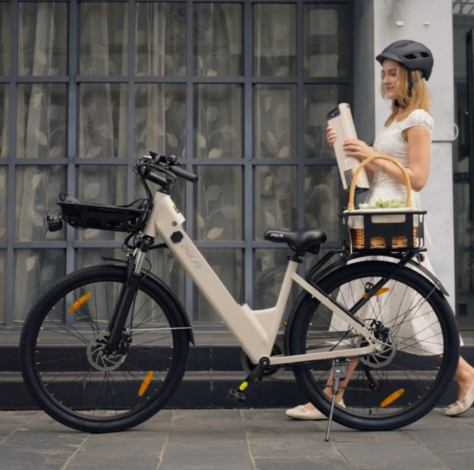
Choosing a practical city e-bike for everyday German riding comes down to solving harsh urban realities: bone-jarring cobblestones (Kopfsteinpflaster), slippery tram tracks, relentless rain, and the logistical puzzle of charging an electric bike when living in an upper-floor apartment (Altbau) without a powered bicycle cellar. A generic electric bicycle quickly falters under these daily demands. To serve as a dependable, year-round car alternative across German streets, a modern city e-bike requires specific mechanical, electrical, and ergonomic engineering. Here are the seven non-negotiable features your daily ride truly needs.
What Defines a Reliable Electric Commuter Bike in German Cities
German urban cycling infrastructure is among the most comprehensive in Europe, yet daily riding exposes equipment to a relentless variety of physical stressors. Commuters routinely transition from smooth dedicated asphalt lanes to narrow pedestrian zones (Fußgängerzonen), centuries-old uneven stone streets, and recessed streetcar tracks that catch narrow tires. Combined with frequent North-European rain showers, persistent road grime, and winter grit, a generic leisure bicycle will suffer premature mechanical wear and frequent roadside breakdowns.
To withstand these harsh daily conditions, a dependable e-bike (Elektrofahrrad) built for utility must be engineered from the ground up around structural integrity, certified electrical components, and practical all-weather ergonomics. Under European standard EN 15194, an everyday electric commuter bike operates with a continuous motor rating of 250W and pedal-assist speeds up to 25 km/h, legally classifying it as a conventional bicycle without requiring motorcycle registration, liability plates, or specialized licensing.
Achieving reliable daily service across German metropolitan areas depends on three core engineering priorities:
- Resilient Frame Construction: Hydroformed 6061 aluminum alloy frames provide high torsional stiffness, dampening vibration under heavy pedal loads while supporting rear panniers without frame flex.
- Certified Ingress Protection: Motors, displays, and wiring harnesses rated to IPX4 or higher resist driving rain and salty slush during cold-weather commuting.
- Balanced Center of Gravity: Frame-integrated batteries and centered motor placements maintain neutral steering dynamics when swerving around delivery vans or navigating tight urban roundabouts.
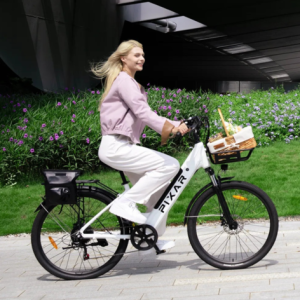
Why a Step-Through E-Bike Excels in Daily Urban Traffic
Traditional high-top-tube diamond frames originated in sporting environments where frame rigidity during sprints outweighed practical mounting ease. On congested urban streets, however, riders encounter red lights, construction detours, and pedestrian crosswalks every few hundred meters. Repeatedly swinging a leg high over a tall saddle while balancing heavy work gear creates unnecessary joint strain and increases tipping hazards at crowded curbs.
Choosing a well-engineered city e-bike with a low-step frame eliminates these ergonomic barriers, turning daily transportation into a seamless experience. Modern hydroformed manufacturing techniques allow a step-through e-bike to match the torsional rigidity of traditional diamond frames by utilizing reinforced downtubes and gusseted bottom-bracket shells. This ensures rock-solid stability even when navigating uneven streets under heavy loads.
The practical advantages of a low-step design become obvious during everyday urban tasks:
- Effortless Stop-and-Go Confidence: Riders can plant both feet flat on the pavement at traffic lights without tilting the frame awkwardly or stretching to reach the ground.
- Wardrobe Versatility: Commuters can ride comfortably in professional business attire, tailored wool coats, rain trousers, or casual skirts without fabric tearing or snagging on the top tube.
- Uncompromised Cargo Handling: When rear racks are loaded with packed waterproof panniers or child seats, mounting the bicycle through the open center frame prevents kicking your luggage or tipping the bike over.
Apartment-Friendly Charging on a Removable Battery E-Bike
The reality of German urban housing heavily influences electric mobility decisions. A vast majority of city residents reside in multi-story apartment buildings (Mietwohnungen) or historic pre-war buildings (Altbau). While these buildings typically provide shared courtyard racks or communal basement bicycle storage rooms (Fahrradkeller), they almost universally lack individual 230V electrical outlets dedicated for tenant bicycle charging due to fire codes and shared utility metering.
For apartment dwellers, a removable battery e-bike transforms ownership from an impractical chore into a seamless routine. Rather than hoisting a 24-to-28-kilogram vehicle up narrow spiral staircases or through tight passenger elevators, riders simply turn an anti-theft key, slide out the 3-to-4-kilogram battery pack, and carry it upstairs in one hand.
Off-bike charging capability delivers critical operational benefits throughout the year:
- Convenient Domestic Recharging: Charge safely on your kitchen counter, hallway console, or under your office desk using a standard domestic wall socket.
- Cold-Weather Battery Preservation: Lithium-ion battery chemistry suffers severe temporary capacity drops and accelerated degradation when charged in unheated basements below 5°C. Storing and charging the battery at comfortable room temperature (15°C–22°C) preserves cell longevity and restores maximum riding range.
- Theft Deterrence in Public Spaces: Removing the battery pack when locking the frame in outdoor public hubs or communal courtyards makes the bicycle significantly less attractive to opportunist bike thieves.
Hydraulic Disc Brakes for Reliable Stopping on Wet Cobblestones and Rails
An electric bicycle carrying an adult rider, a loaded commuter bag, and heavy-duty locks routinely carries a combined rolling mass exceeding 100 to 110 kilograms. At cruising speeds of 25 km/h, this generates tremendous kinetic energy that must be controlled reliably, especially when a pedestrian steps into a cycle lane or a delivery truck abruptly swings open a door.
Under these critical conditions, hydraulic disc brakes provide decisive safety advantages over traditional mechanical rim brakes and cable-actuated disc systems. Cable systems rely on braided steel wires that stretch over time, suffer friction inside wet cable housings, and require strong hand squeeze force to achieve full pad bite. In contrast, sealed hydraulic lines filled with non-compressible mineral oil transfer hand input instantaneously to dual-piston calipers with minimal two-finger effort.
The safety case for hydraulic braking on German roads includes:
- All-Weather Modulation: Wet autumn rain and winter road grit can reduce the stopping power of traditional rubber rim pads by up to 50%. Sealed hydraulic disc systems maintain consistent pad-to-rotor friction across soaking wet asphalt and damp granite cobblestones.
- Tram Track and Rail Safety: Streetcar rails (Straßenbahnschienen) become notoriously slick when wet. Hydraulic levers allow micrometric modulation, letting riders feather braking pressure smoothly to scrub speed without locking wheels and initiating a sudden slide.
- Integrated Electronic Motor Inhibitors: High-quality commuter brake levers integrate electronic microswitches that instantly cut motor power the microsecond either lever is engaged, eliminating drive surge during rapid emergency stops.
High-Volume Puncture-Resistant Tires and Front Suspension
Historic German town centers (Altstadt) and suburban residential streets frequently feature centuries-old cobblestones (Kopfsteinpflaster), uneven drainage grates, and frost-heaved asphalt. Navigating these surfaces on skinny, rock-hard 28mm or 32mm tires transmits harsh high-frequency vibrations directly through the handlebar and saddle, leading to wrist soreness, lower back fatigue, and blurred vision over long daily commutes.
Modern urban engineering solves this discomfort through a combination of high air volume and active front damping. Wide tires measuring between 1.95 inches and 2.4 inches (such as 27.5-inch diameter setups) allow riders to operate at lower, more forgiving tire pressures (between 2.2 and 3.0 bar). The expanded pneumatic contact patch acts as a natural air cushion, deforming over stone edges and railway grooves to maintain grip and absorb micro-impacts before they reach the frame.
Pairing wide tires with purposeful commuter suspension creates a fatigue-free daily ride:
- Front Suspension Fork Damping: A front fork with 50mm to 80mm of travel absorbs sudden pothole strikes, curb drops, and rough construction transitions, keeping the front wheel firmly planted for confident steering control.
- Heavy-Duty Puncture Protection: Urban bike paths are littered with broken bottle glass, sharp gravel, and stray wire. Commuter-specific tires equipped with internal 3mm to 5mm dense rubber or aramid (Kevlar) puncture-resistant belts prevent road debris from reaching the inner tube.
- Enhanced Rail Stability: Wider tire profiles prevent narrow wheels from slipping dangerously into standard tram track grooves, providing peace of mind when crossing rail intersections in cities like Leipzig, Munich, or Frankfurt.
StVZO-Compliant Lights and Fenders on an All-Weather City E-Bike
Riding through autumn, winter, and early spring in Germany means contending with dark morning commutes, early twilight, and frequent precipitation. On an all-weather city e-bike, lighting and splash protection cannot be treated as optional aftermarket accessories; they must be fully integrated systems that work reliably on every trip without preparation.
In Germany, road legality for bicycle illumination is strictly governed by the Road Traffic Licensing Regulations (Straßenverkehrs-Zulassungs-Ordnung, or StVZO). Unlike international cycling lights that project wide, unshaped conical beams, StVZO-approved headlights feature engineered internal reflectors that produce a sharp horizontal cut-off line. This directs bright illumination onto the road surface ahead while preventing blinding glare into the eyes of oncoming cyclists, motorists, and pedestrians.
To meet daily German commuter standards, integrated equipment must provide:
- Hardwired Battery Power: Front headlights and rear taillights run directly off the high-capacity propulsion battery. Activated with a handlebar button, they eliminate the danger of dead USB rechargeable lights mid-commute and provide a stationary parking light (Standlicht) feature that stays lit at red lights.
- Full-Coverage Metal or Polycarbonate Fenders: Generous, full-wrap fenders with extended rubber mudflaps follow tire contours closely. They channel dirty road spray and melting slush away from footwear, ankles, and bottom brackets, ensuring you arrive at meetings without water spots on your clothing.
- Integrated Sturdy Rear Cargo Rack: A frame-mounted rear rack rated for 25 kg accommodates standardized pannier bags with quick-release rail mounts, lowering center-of-gravity handling compared to wearing a heavy, sweaty backpack.
How a Responsive Urban E-Bike Accelerates Through Stop-and-Go Streets
The way an electric drive system assists your pedaling dictates how safe and controlled you feel in dense urban environments. Commuters constantly negotiate shared pedestrian zones, narrow alleyways, and slow-moving cycle queues. In these tight quarters, an unpredictable power surge can cause nervous oversteering or force you to stab the brakes to avoid bumping the rider ahead.
Modern drive systems utilize one of two primary sensor mechanisms to meter power delivery. Basic cadence sensors merely detect whether the cranks are rotating; after a half-turn of the pedals, the controller feeds a fixed burst of wattage into the motor. In contrast, an advanced torque sensor actively measures the precise downward foot pressure you exert on the pedals hundreds of times every second.
Here is how a torque-equipped urban e-bike creates an intuitive, confidence-inspiring ride:
- Instantaneous Intersection Acceleration: When a traffic light turns green, the motor senses your initial pedal stroke instantly, providing immediate forward thrust to clear the junction safely ahead of trailing cars.
- Proportional Low-Speed Control: When creeping slowly behind a pedestrian or weaving through parking bollards, applying gentle pedal pressure yields smooth, feather-light assistance without sudden lurches.
- EU Pedelec Compliance (EPAC): Compliant with EU Directive 2002/24/EC and German road rules, 250W motors assist up to 25 km/h strictly in coordination with pedaling. Pure throttles that propel the bike without pedaling are legally restricted on public bike paths; intuitive pedal-assist preserves full legal access across all German cycling infrastructure.
Enclosed Chain Guards on a Low-Maintenance Commuter E-Bike
One of the most persistent frustrations of traditional bicycle commuting is managing drivetrain grease. A standard exposed bicycle chain collects road dirt and oil, turning into a black abrasive paste that leaves unsightly marks on light-colored trousers or catches loose coat hems in the front chainring.
Equipping a commuter e-bike with a full-coverage chain guard (Kettenschutz) or integrated protective enclosure solves this daily headache entirely. By wrapping around the front chainring and the upper and lower chain runs, the guard creates a complete physical barrier between the moving mechanical parts and your everyday wardrobe.
Beyond keeping office attire immaculate, enclosed drivetrain protection delivers substantial mechanical longevity:
- Zero Need for Pant Clips: Riders can jump on the bike wearing business suits, relaxed denim, or long winter overcoats without rolling up cuffs or strapping on neon reflective trouser bands.
- Shielding Against Rain and Grit: In wet winter months, street maintenance crews spread road grit and de-icing salt across urban lanes. An enclosed chain guard shields the lubricated chain links from corrosive spray kicked up by the front wheel, reducing rust formation.
- Extended Maintenance Intervals: With grit prevented from grinding between rollers and sprocket teeth, chains last significantly longer between cleanings and replacements, reducing annual workshop service visits.
Essential Specifications Checklist for Choosing a City E-Bike
When shopping for a commuter electric bike, manufacturers often cut costs on hidden components—such as brake types, tire linings, or lighting compliance—to hit aggressive retail price points. While a budget build may appear adequate in a showroom, the daily grind of German cobblestones, winter rain, and apartment storage will quickly expose any missing features.
To help you cross-reference components before purchasing, the following evaluation matrix contrasts budget compromises against the ideal specifications required for dependable German urban commuting.
| Feature Category | Budget Compromise to Avoid | Everyday German Urban Standard | Practical Impact on German Streets |
| Frame Geometry | High step-over diamond frame | Reinforced low step-through (Tiefeinsteiger) | Painless mounting during constant traffic light stops; safe dismounting with rear cargo |
| Battery System | Non-removable internal frame battery | Key-locked removable battery (450Wh–650Wh) | Essential for charging inside upper-floor apartments (Altbau) without bike cellar plugs |
| Braking System | Mechanical cable disc or rim brakes | Dual-piston hydraulic disc brakes (160mm/180mm) | Dependable, low-effort stopping power on soaking wet asphalt, rails, and greasy cobblestones |
| Tires & Comfort | Narrow (32mm–38mm) hard-compound tires | Wide (1.95″–2.4″) puncture-resistant tires + front fork | Absorbs bone-jarring cobblestone vibrations; prevents wheel trapping in tram tracks |
| Road Lighting | Detachable USB lights (non-StVZO) | Integrated StVZO battery-wired lights with cut-off beam | Non-glare illumination; always powered; meets strict German road licensing standards |
| Drive Sensing | Crude rotation-only cadence sensor | Dynamic torque sensor + 250W European Pedelec motor | Smooth, surge-free acceleration at intersections; full legal access to bike lanes (Radwege) |
| Weather Utility | Clip-on short plastic mudguards | Full-coverage metal fenders + fully enclosed chain guard | Keeps road grime, muddy splash, and chain grease completely off professional work clothes |
Final Words
Choosing the right electric bicycle for German city living is a matter of matching engineering specifications to real-world infrastructure. When your daily commute involves rain-slicked tram lines, centuries-old cobblestones, and the physical reality of living in an upper-floor apartment without ground-level power, superficial styling quickly takes a back seat to functional utility.
Prioritizing a sturdy low step-through frame, a key-locked removable battery, dependable hydraulic disc brakes, high-volume puncture-resistant tires, and StVZO-compliant weatherproofing ensures your bicycle remains an indispensable daily car replacement. By investing in components purpose-built for the urban environment, you gain reliable, cost-effective, and stress-free mobility that effortlessly outpaces city traffic every single day.
Frequently Asked Questions
Can I legally ride an e-bike on bike paths and pedestrian zones in Germany?
Yes, standard 250W Pedelecs with pedal assistance up to 25 km/h are legally categorized as conventional bicycles under German law (§ 1 Abs. 3 StVG). They are permitted on all cycling paths (Radwege) and mandatory bicycle lanes. In pedestrian zones (Fußgängerzonen), cycling is only permitted when explicitly marked with an additional “Radfahrer frei” sign, and riders must travel strictly at walking speed (4–7 km/h) while giving unconditional priority to pedestrians.
Why are hydraulic disc brakes preferred over mechanical brakes on urban e-bikes?
Hydraulic disc brakes utilize a sealed, fluid-filled line rather than a braided steel cable. This completely eliminates cable stretch, internal friction, and water corrosion, providing immediate clamping power at the rotor with light two-finger pressure. Given the heavier mass of an electric bike and the prevalence of wet leaves, rain, and streetcar tracks in German cities, hydraulic systems deliver the repeatable modulation necessary to stop safely without skidding.
How much does it typically cost to charge a city e-bike battery in Germany?
Charging an urban e-bike battery in Germany costs negligible pocket change. Based on nominal battery capacity, a standard 500Wh (0.5 kWh) pack costs approximately €0.18 to €0.20 per full charge at prevailing German household electricity rates of roughly €0.38 per kWh. Even with twice-weekly charging over a typical five-day work commute, annual electricity costs rarely exceed €20, making the electric bicycle drastically cheaper than public transit season tickets or private vehicle operation.
Is a step-through frame structurally rigid enough for heavy daily commuting?
Modern step-through frames engineered with hydroformed aluminum tubes and reinforced bottom brackets deliver torsional stiffness comparable to traditional diamond frames. Reputable manufacturers reinforce the lower frame junction with internal gussets and thicker tubing walls, eliminating high-speed frame wobble even when carrying 25 kg of groceries or work equipment on a rear pannier rack over rough cobblestones.