

Seasonal selling on Amazon is a completely different operational reality from year-round catalog management. Your pricing decisions in October are not the same decisions you need in January. When demand spikes, you want prices moving up automatically to capture that margin before stock runs out. When the season ends, you need to clear remaining inventory without permanently damaging your pricing floor or tanking your margins on next year’s opening stock.
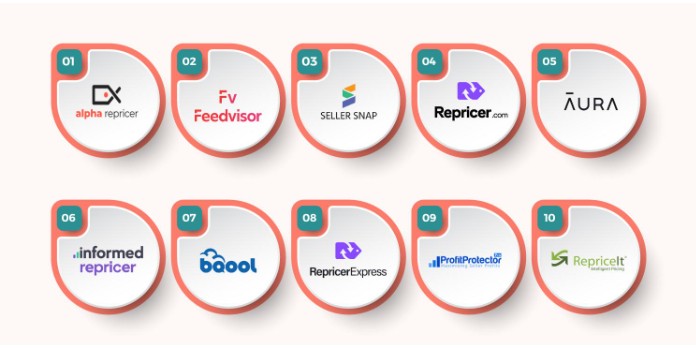
The problem is that most repricer articles are written for evergreen sellers. Seasonal sellers read them and find advice about Buy Box competition and steady-state pricing that has almost nothing to do with a business that generates a large percentage of its revenue in a short period of time. This article is written specifically for that seller. Below are ten repricing tools evaluated on how well they handle inventory changes, demand fluctuations, and the pricing flexibility that seasonal catalogs require.
1. Alpha Repricer
Alpha Repricer inventory-aware repricing is what makes it directly relevant to seasonal sellers. The tool reprices based on item quantity, stock age, and sales velocity, which means pricing behavior shifts automatically as your inventory position changes through a season. When stock is healthy and demand is building, it competes within your defined formulas. As inventory depletes, modified minimum and maximum rules enable pricing outside standard limits to capture margin during demand spikes. When an item goes out of stock, it automatically resets to your maximum price so that once inventory arrives and selling resumes, you start from the strongest possible position rather than the floor.
The scheduling feature adds another layer of control specifically useful for seasonal sellers. You can set repricing to reassess in minutes, hours, days, or months, aligning pricing behavior with your seasonal calendar rather than reacting purely to real-time competition. Combined with a two-minute repricing cycle across 23 Amazon marketplaces and the Buy Box Hunter algorithm that targets placement at the highest sustainable price rather than the lowest, it gives seasonal sellers a tool that works with the natural rhythm of their business.
Best for: Seasonal sellers who need inventory-triggered pricing, scheduling flexibility, and margin protection across demand peaks and clearance periods.
Starting price: $29/month | 14-day free trial (all features included)
2. Feedvisor
Feedvisor combines algorithmic repricing with forecasting, inventory insights, and broader ecommerce optimization tools. For seasonal sellers, the platform can help align pricing decisions with changing demand patterns and inventory objectives throughout the sales cycle. Its enterprise-focused feature set makes it particularly appealing to larger operations that need visibility beyond repricing alone.
Best for: High-volume seasonal sellers who want repricing supported by forecasting and inventory-focused insights.
Starting price: $100/month | 14-day free trial
3. Seller Snap
Seller Snap uses game theory AI to help sellers balance competitiveness and profitability. Rather than relying solely on aggressive price reductions, the platform analyzes marketplace conditions and competitor behavior when making pricing decisions. For seasonal sellers, this can help preserve margins during peak demand periods while maintaining competitiveness when market conditions change.
Best for: Mid-to-large seasonal sellers who want AI-driven repricing focused on balancing margin and competitiveness.
Starting price: $100/month | 15-day free trial
4. Repricer.com
Repricer.com provides automated repricing across multiple marketplaces and allows sellers to tailor pricing strategies to different competitive situations. For seasonal businesses, automation can help reduce the need for constant manual adjustments during busy periods while maintaining pricing consistency across channels.
Best for: Seasonal sellers who want automated repricing across multiple marketplaces and sales channels.
Starting price: $179/month | 14-day free trial
5. Aura
Aura combines AI repricing with rule-based strategies that sellers can configure for specific competitive scenarios. For seasonal sellers, the ability to set different strategies for different product types within the same catalog is useful when managing a mix of peak-season products and slower-moving inventory. The platform adapts pricing based on marketplace activity and allows sellers to prioritize specific listings during high-demand periods.
Best for: FBA sellers who want AI repricing with flexible strategy options across mixed seasonal catalogs.
Starting price: $37/month | 14-day free trial
6. Informed Repricer
Informed Repricer combines automated repricing with performance analytics, helping sellers evaluate profitability and pricing effectiveness across their catalogs. For seasonal sellers managing fluctuating demand, the platform provides visibility into pricing outcomes while reducing the manual workload associated with ongoing repricing decisions.
Best for: Seasonal sellers with larger catalogs who want analytics alongside automated repricing.
Starting price: $99/month | Free trial available
7. BQool Repricing Central
BQool offers both AI-powered and rule-based repricing, allowing sellers to choose different approaches depending on their inventory and competitive environment. This flexibility can be useful for seasonal catalogs where pricing priorities often change throughout the year.
Best for: Seasonal sellers who want flexible repricing strategies that can adapt to different inventory situations.
Starting price: $25/month | 14-day free trial
8. RepricerExpress
RepricerExpress includes competitor filtering tools and automated repricing controls that help sellers manage pricing across different sales channels. For seasonal sellers operating on Amazon and other marketplaces, this can help maintain consistency while reducing manual intervention during busy selling periods.
Best for: Seasonal sellers who manage inventory across multiple channels and want automated repricing controls.
Starting price: $79/month | 14-day free trial
9. Profit Protector Pro
Profit Protector Pro is an algorithmic repricer designed to help sellers automate pricing while maintaining control over profitability. The platform focuses on margin-aware repricing and supports multiple Amazon marketplaces, making it a useful option for sellers who want straightforward automation without enterprise-level complexity.
Best for: Seasonal sellers who want automated repricing with a focus on profitability.
Starting price: Check current plans on their website | Free trial available
10. RepriceIt
RepriceIt is a rule-based repricer that gives seasonal sellers direct control over pricing conditions. It is a practical entry point for smaller sellers who want to define specific rules for peak and off-peak periods without investing in more advanced AI-driven tools. The platform supports Amazon marketplaces in North America and offers rule-based repricing with a more limited update frequency than many advanced platforms.
Best for: Smaller seasonal sellers who want manual rule control over peak and off-peak pricing at minimal cost.
Starting price: $9.95/month | Free trial available
What Seasonal Sellers Should Actually Look for in a Repricer
Seasonal inventory creates pricing requirements that generic repricer advice does not address.
Inventory-Triggered Pricing
Your repricer should know when stock is running low and respond accordingly. Selling out too quickly during peak season can leave money on the table, while holding too much inventory after demand fades creates a different problem. Look for tools that consider inventory position alongside competitive pricing.
Before choosing baseline strategies, it is highly recommended to run a comprehensive financial assessment. You can map out your exact cost boundaries using the U.S. Small Business Administration Break-Even Analysis Tool to ensure your automated minimum thresholds consistently guarantee true baseline profitability.
Scheduling Capability
Seasonal sellers often know their key selling periods well in advance. A repricer that lets you pre-configure pricing strategies for specific date ranges can reduce the amount of manual work required during the busiest parts of the year.
Liquidation Strategy
End-of-season clearance has different goals from peak-season selling. You want to move remaining stock efficiently without unnecessarily damaging profitability. Look for tools that allow you to adjust pricing objectives as inventory priorities change.
Out-of-Stock Behavior
Consider what happens when inventory reaches zero. The best tools help sellers avoid restarting from the weakest possible pricing position once stock returns.
Final Word
Seasonal selling rewards preparation and punishes reactive pricing. The sellers who capture the most margin during peak demand periods are not the ones manually monitoring listings every day. They are the ones who have configured their repricing systems to respond automatically as demand, competition, and inventory levels change.
The right repricer for a seasonal seller is one that understands inventory position as a meaningful pricing variable rather than focusing exclusively on competitor activity. Whatever tool you choose, make sure it supports inventory-aware decision making, flexible strategy changes, and pricing controls that align with the realities of seasonal demand.