

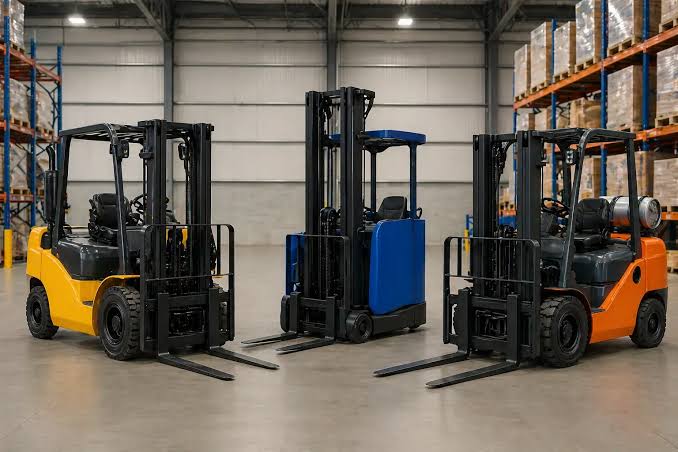
Stand in almost any warehouse, yard, or distribution centre, and the forklift doing most of the heavy lifting is probably a counterweight model. It’s the workhorse of the industry, recognisable by the weighted block at the rear that balances out whatever’s being lifted at the front. Simple in concept but choosing the right one from the range of counterweight forklift options on the market takes a bit more thought than it first appears.
For anyone browsing forklifts for sale and trying to land on the right model, here’s what actually matters before making that decision.
How a Counterweight Forklift Actually Works
The design is straightforward: a heavy counterweight sits at the back of the machine, offsetting the load being lifted at the front so the whole unit stays balanced rather than tipping forward. That simple engineering principle is why counterweight forklifts remain the most common type on the market, versatile, relatively straightforward to operate, and suited to a genuinely wide range of jobs.
Because the design doesn’t require the operator to reach into narrow racking or extend the load out in front the way some specialised forklifts do, counterweight models tend to be easier to learn and more flexible across different tasks on site.
What to Think About Before Buying
Choosing the right counterweight forklift comes down to a handful of practical questions, and getting honest answers to these upfront saves a lot of second-guessing later.
- Load capacity. Match the forklift’s rated capacity to your heaviest regular load, not just your average one, since underestimating capacity is one of the most common and costly mistakes buyers make.
- Fuel type. Diesel suits heavy-duty outdoor work, electric suits quieter indoor environments, and LPG offers a versatile middle ground for mixed-use sites.
- Mast height. Consider your tallest racking or stacking requirement, since a mast that can’t reach high enough limits usefulness the day it arrives.
- Indoor versus outdoor use. Tyre type, ground clearance, and overall build all shift depending on where the forklift will spend most of its time.
- Aisle width. Counterweight forklifts generally need more turning space than narrow-aisle equipment, so it’s worth checking your layout actually accommodates one comfortably.
Getting these fundamentals right from the outset tends to matter far more than any individual feature or brand name on its own.
New or Used: Weighing Up the Options
Counterweight forklifts hold up well over time, which makes the used market a genuinely strong option for many buyers. A well-maintained used forklift, backed by a clear service history, can deliver excellent value without the depreciation hit of buying new. That said, a new forklift comes with the latest safety features, full warranty coverage, and the confidence of starting with zero wear on any component.
The right choice usually comes down to budget, how long you plan to keep the machine, and how much peace of mind matters to your specific operation. Businesses running equipment continuously across multiple shifts often lean toward new, where the extended warranty offsets the higher upfront cost, while operations with lighter, more occasional use frequently find a quality used counterweight forklift delivers everything they need at a fraction of the price.
Questions Worth Asking a Seller
Before committing to any of the forklifts for sale you’re considering, it’s worth asking directly:
- What’s the service history, and is it documented?
- What warranty or support comes with the purchase?
- Are genuine spare parts readily available for this model?
- Can the forklift be tested under conditions similar to your actual site?
A seller who answers these clearly and confidently is generally a good sign you’re dealing with a reputable supplier.
Making the Right Call
A counterweight forklift is one of the most versatile investments a business can make, provided it’s matched properly to the job. Get the capacity, fuel type, and mast height right, ask the right questions of your seller, and weigh new against used honestly against your budget and plans, and you’ll end up with a machine that earns its keep for years rather than one that falls short the moment real work begins.
At Heavylift Forklift, we help Melbourne businesses choose the right counterweight forklift for their site, workload, and budget.