

Not all CPR training is built for the same audience, and healthcare providers in particular need a credential that goes well beyond what’s taught in a general community CPR class. That’s where basic life support certification comes in. Often referred to simply as BLS, this certification is specifically designed for people who respond to medical emergencies as part of their professional role, and it reflects a level of technical depth that general public courses aren’t built to provide.
Who Is Actually Required to Hold This Certification
BLS certification is typically a condition of employment or licensure for a wide range of clinical roles. Nurses, physicians, medical assistants, EMTs, respiratory therapists, and other allied health professionals are commonly required to maintain current BLS status as part of their credentialing. Hospitals, clinics, and other healthcare facilities generally mandate it for anyone with direct or indirect patient contact, since the expectation is that clinical staff can respond immediately and correctly to a cardiac or respiratory emergency without waiting for a specialized response team. This is different from general CPR certification, which is often sufficient for childcare workers, fitness professionals, or members of the public whose risk of encountering a resuscitation scenario is lower and whose response role is less clinical.
What BLS Training Actually Covers
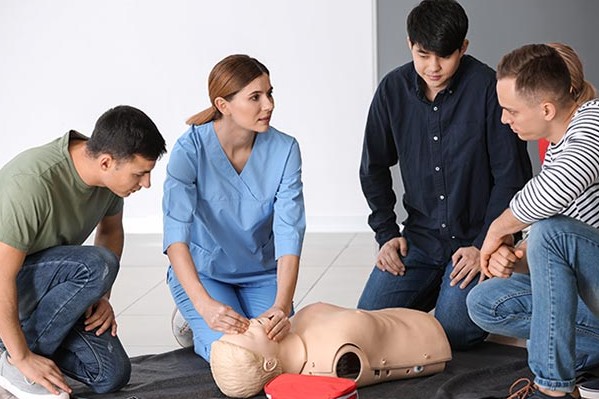
BLS certification goes deeper than single-rescuer CPR taught in general courses. It’s built around the reality of a healthcare setting, where responders are often working as part of a team rather than acting alone. Training typically covers high-quality chest compressions and ventilation for adults, children, and infants, proper use of a bag-mask device, AED operation, and recognition of early warning signs before a full arrest occurs. A significant part of BLS training also focuses on team dynamics, including how to coordinate compressions, airway management, and defibrillation among multiple responders without duplicating effort or creating gaps in care. This multi-rescuer, team-based structure is one of the clearest distinctions from general CPR training, which is generally built around a single person responding alone.
How BLS Differs From Standard CPR Certification
The difference between BLS and general CPR certification isn’t just in name. BLS follows protocols specifically aligned with in-hospital and clinical response standards, reflecting the equipment, staffing, and teamwork available in a healthcare setting. General CPR and first aid courses, by contrast, are designed around what a bystander or non-clinical responder can realistically do with no additional equipment and no team support. Employers and licensing boards are typically precise about which certification they require, and a general CPR card usually will not satisfy a BLS requirement even though both cover core compression and rescue breathing skills. Anyone unsure which credential their role requires should confirm with their employer or licensing board directly, since accepting the wrong certification can create compliance issues down the line.
Why This Matters for Career and Compliance
For healthcare professionals, holding current BLS certification isn’t optional in any meaningful sense. It’s frequently tied directly to hiring, credentialing renewal, and in some cases continued licensure. Most BLS certifications require renewal every two years, reflecting updates to resuscitation science and the importance of keeping hands-on skills sharp in a clinical environment where the stakes of hesitation or incorrect technique are especially high. Letting certification lapse can create real barriers, from being pulled off clinical duties to delays in credentialing paperwork, so most professionals treat renewal as a fixed part of their ongoing responsibilities rather than something to handle reactively.
Choosing the Right Certification Path
For anyone working in or entering a clinical role, understanding that BLS is a distinct, more rigorous credential than general CPR training is the first step toward meeting employer and licensing expectations correctly the first time. Choosing a course built specifically around BLS standards, rather than assuming a general certification will suffice, saves time and prevents compliance issues later.
To get certified in a program built specifically for healthcare providers, Simple CPR offers BLS certification designed around real clinical and team-response standards. Visit the site to find the course that matches your professional requirements.