

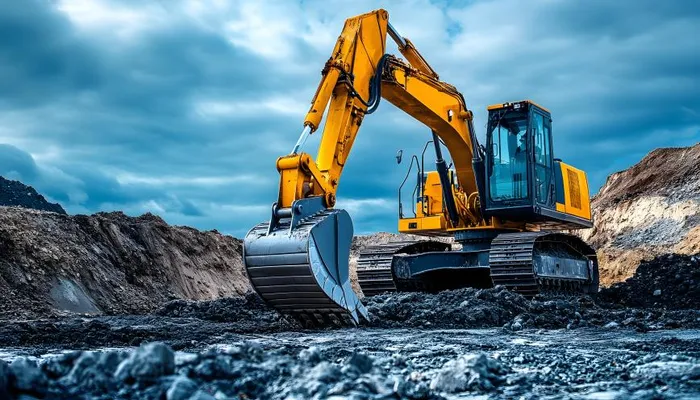
Some construction sites are difficult because of steep grades, limited access, or unstable soil, yet wetlands, marshes, shallow waterways, and heavily saturated ground present a different level of complexity. Standard excavators may sink, become immobilized, or damage the surrounding terrain before meaningful work can begin.
Amphibious excavators are designed for these demanding conditions. By combining an excavator’s digging capabilities with specialized floating or low-ground-pressure undercarriages, these machines can operate where conventional equipment cannot travel safely or efficiently.
What Is an Amphibious Excavator?
An amphibious excavator is a modified hydraulic excavator equipped with large sealed pontoons instead of a traditional track frame. The pontoons spread the machine’s weight across a broader surface, reducing ground pressure and helping the equipment move over mud, swamps, marshes, and shallow water.
Many models include additional pontoons, spud systems, or extended tracks that improve stability. The exact configuration depends on water depth, soil conditions, attachment requirements, and the type of work being completed.
The term “amphibious” does not mean that every machine can float freely or operate in any depth of water. Some units are intended for soft ground and shallow water, while others require supplemental flotation systems for deeper environments.
Wetland Construction Becomes More Practical
Wetlands are among the most difficult environments for heavy construction equipment. The ground may appear firm at the surface while remaining soft and unstable underneath, creating a serious risk of conventional machines becoming stuck.
Amphibious excavators can travel across these areas with less ground pressure than standard tracked equipment. This mobility allows contractors to complete excavation, grading, clearing, and material-handling tasks without first building an extensive temporary access road.
Reducing the amount of temporary fill needed for access may also limit site disturbance. Wetland work is still subject to environmental rules and project-specific permits, but using suitable equipment can help contractors follow approved plans more efficiently.
Dredging Is One of the Most Common Uses
Dredging removes sediment, vegetation, debris, and other material from the bottom of a waterway. Amphibious excavators are frequently used for smaller lakes, canals, ponds, drainage channels, retention basins, and nearshore areas where large dredging vessels would be impractical.
The excavator may use a standard bucket, long-reach boom, hydraulic cutter, or specialized dredging attachment. Its ability to reposition within shallow water makes it useful for areas that are difficult to reach from the bank.
Mechanical dredging with an amphibious excavator gives the operator direct control over where material is removed. This precision can be valuable when a project involves restoring a drainage path, reshaping a shoreline, or removing isolated pockets of accumulated sediment.
How Do Amphibious Excavators Support Drainage Projects?
Drainage channels must remain open enough to carry stormwater away from roads, buildings, agricultural land, and developed properties. Over time, sediment, fallen branches, invasive vegetation, and eroded soil may restrict water flow.
An amphibious excavator can enter shallow channels and remove these obstructions without relying entirely on access from dry ground. This capability is helpful when trees, buildings, fences, utilities, or unstable banks limit the use of standard excavators.
Contractors may also use the machine to reshape channel slopes, reinforce banks, install erosion-control materials, or restore the intended channel depth. Better access can make it easier to complete the work continuously rather than moving equipment between scattered access points.
Shoreline Restoration Requires Specialized Access
Shorelines can deteriorate because of waves, changing water levels, boat traffic, storms, runoff, and the gradual movement of soil. Restoration projects may involve reshaping the bank, placing stone, installing erosion-control systems, or rebuilding damaged sections.
An amphibious excavator can work from the water side or directly on saturated shoreline soil. That position may give the operator better access to the affected area while reducing the need to disturb established land behind the shoreline.
The machine can also lift and place rock, logs, mats, or other stabilization materials with greater precision than equipment working from a distant bank. Careful placement is especially important when the project includes environmental restoration or a designed living shoreline.
Flood-Control Work Can Be Completed in Difficult Terrain
Flood-control projects often take place along levees, canals, ditches, riverbanks, and low-lying areas where the ground remains wet for long periods. Standard equipment may be unable to approach the work zone without mats, temporary roads, or extensive site preparation.
Amphibious excavators can help clear blocked waterways, deepen drainage paths, repair embankments, and remove material that interferes with water flow. They may also support emergency work after storms when access routes have been washed out or saturated.
Although these machines can improve mobility, emergency conditions still require careful planning. Strong currents, hidden debris, unstable banks, and rapidly changing water levels can create hazards even for equipment designed to work in wet environments.
Pipeline Construction Often Crosses Soft Ground
Pipelines may need to pass through marshes, wetlands, river corridors, and coastal terrain. These areas can make trench excavation, pipe placement, and backfilling difficult because conventional equipment cannot maintain stable footing.
Amphibious excavators may dig trenches, move construction mats, handle pipe sections, and restore disturbed ground after installation. Their low-ground-pressure design allows them to operate along portions of the route where ordinary excavators would require substantial access preparation.
The machines may also work with support equipment, barges, and temporary work platforms. Selecting the right configuration is important because pipeline components can be heavy, and lifting requirements may affect stability.
Utility Installation Can Extend Across Waterlogged Areas
Water lines, sewer lines, communication systems, and other utilities sometimes cross saturated land or shallow waterways. Amphibious excavators can help prepare the route, dig trenches, position materials, and cover installed lines.
Their mobility can be particularly useful for repair work in areas that have become inaccessible because of flooding or long-term drainage problems. Instead of waiting for the ground to dry completely, contractors may be able to reach the damaged section using equipment designed for soft conditions.
Utility projects still require careful locating and coordination. Water can hide existing lines, structures, stumps, and debris, so operators must work from accurate plans and follow proper excavation procedures.
Vegetation Removal Helps Restore Waterways
Aquatic plants can provide valuable habitat, but excessive or invasive growth may obstruct waterways, interfere with drainage, or reduce usable water depth. Amphibious excavators can remove heavy vegetation that would be difficult to manage with smaller equipment.
Depending on the project, the machine may use a rake, cutting attachment, grapple, or bucket. It can gather reeds, roots, floating mats, and woody vegetation, then move the material to a designated disposal or processing area.
Mechanical removal offers immediate results, although long-term control may require additional measures. Contractors and property managers should understand why the vegetation expanded before assuming that removal alone will solve the problem permanently.
Can Amphibious Excavators Clear Trees and Brush?
Amphibious excavators for construction can support land-clearing work in swamps, marshes, and wet forests where ordinary machines cannot maintain traction. With the proper attachment, they may cut brush, remove stumps, handle logs, and clear access paths.
Tree removal in soft ground requires particular attention to balance. Pulling a heavy stump or lifting a large trunk can shift the machine’s center of gravity, which makes proper positioning and operator experience essential.
Clearing plans should also account for environmental restrictions and erosion risks. Removing too much vegetation near water can destabilize soil, so the work should follow approved limits and restoration requirements.
Retention Pond Maintenance Protects Site Performance
Commercial properties, subdivisions, industrial sites, and public facilities often rely on retention or detention ponds to manage stormwater. Sediment and vegetation can gradually reduce the pond’s storage capacity or obstruct its inlets and outlets.
An amphibious excavator can remove accumulated material from areas that are too soft for conventional equipment. It may also reshape slopes, clean drainage structures, and restore channels leading into or away from the pond.
Regular maintenance can be less disruptive than waiting until the basin becomes severely restricted. A planned approach allows property owners to address smaller problems before they affect drainage performance across the site.
Road and Bridge Projects Benefit From Water Access
Bridge construction and repair often require work around riverbanks, piers, drainage structures, and saturated approaches. Amphibious excavators can help remove sediment, clear debris, shape banks, and support access preparation near the structure.
Road projects may also use these machines to improve roadside drainage, clear culverts, or excavate through marshy sections of a planned route. Their ability to operate beyond the edge of firm ground gives contractors more flexibility when staging work.
The machine does not replace every piece of marine or earthmoving equipment. Instead, it fills the gap between land-based excavators and larger floating construction systems.
Environmental Restoration Is a Major Application
Habitat restoration projects may involve rebuilding wetlands, reconnecting waterways, creating shallow-water features, or removing fill that has altered natural drainage. Amphibious excavators can perform these tasks while operating directly within wet landscapes.
Their reach and mobility allow contractors to shape channels, construct habitat islands, place natural materials, and remove invasive growth. When carefully operated, the machine can complete precise work while limiting unnecessary travel across sensitive areas.
Environmental projects often have strict limits on timing, access, excavation depth, and material placement. The equipment is useful because it can follow detailed plans, not because it eliminates the need for environmental oversight.
Coastal Construction Presents Unique Demands
Coastal work may involve salt marshes, tidal flats, estuaries, canals, and shorelines with constantly changing conditions. Amphibious excavators can support restoration, erosion control, dredging, and infrastructure projects in these areas.
Tides can affect water depth, current strength, soil exposure, and access routes throughout the day. Contractors must account for these changes when deciding where the machine can travel and how long a particular work zone remains accessible.
Saltwater also increases the importance of cleaning and maintenance. Hydraulic components, fasteners, electrical systems, and metal surfaces may require additional protection to reduce corrosion.
Specialized Attachments Expand Their Capabilities
An amphibious undercarriage provides access, but the attachment determines what the machine can accomplish once it reaches the work zone. Buckets remain common, although many projects require more specialized tools.
Long-reach booms can extend the working range for dredging and bank shaping. Grapples handle logs and debris, while cutters remove vegetation or break up compacted material.
Pumps, augers, rakes, mulchers, and hydraulic dredging attachments can further expand the machine’s role. Contractors should choose attachments based on the material, water conditions, required accuracy, and production goals.
Reduced Site Preparation Can Save Time
Conventional equipment may require timber mats, temporary roads, barges, or large amounts of imported material before work can begin in a wet area. Building and removing that access can consume a significant part of the project schedule.
An amphibious excavator may reduce these requirements by traveling directly across soft terrain. Fewer access preparations can shorten mobilization and allow the crew to begin productive work sooner.
The savings will depend on the site. Some projects still require mats, barges, support boats, or reinforced staging areas, particularly when the machine must handle heavy loads or travel through deeper water.
Lower Ground Pressure Can Reduce Disturbance
The wide pontoons on an amphibious excavator distribute weight over a larger area than standard tracks. This design may reduce rutting and sinking on soft ground.
Less rutting can simplify restoration after construction, especially when the project crosses marshes, fields, or environmentally sensitive areas. It may also reduce the amount of material needed to repair access routes.
Low ground pressure does not mean zero impact. Repeated travel, sharp turns, and heavy digging can still disturb soil and vegetation, so the operator should follow planned routes whenever possible.
Are Amphibious Excavators Safe in Deep Water?
Safe operating depth depends on the machine’s design, flotation system, attachments, water conditions, and manufacturer requirements. A base amphibious undercarriage may work well in shallow water but require side pontoons or spuds before operating in deeper areas.
Spuds can anchor and stabilize the machine while it digs. Supplemental pontoons increase flotation, although the added width and weight affect transportation and maneuverability.
Contractors should never assume that a machine is safe simply because it floats. Stability calculations, load limits, boom position, current, wind, and underwater terrain all influence safe operation.
Operator Experience Matters
Amphibious excavators handle differently from standard excavators because the undercarriage may shift, float, or react to uneven submerged ground. Operators must understand how boom movement and lifted loads affect stability.
Visibility can also be challenging. Muddy water may hide drop-offs, stumps, debris, and changes in the bottom, which means the operator cannot rely solely on what is visible from the cab.
Experienced crews combine equipment knowledge with site information, spotters, depth measurements, and careful travel planning. Proper operation is especially important when working near workers, utilities, structures, or active waterways.
Project Planning Determines Success
Before mobilizing an amphibious excavator, contractors should evaluate soil strength, water depth, access points, current, vegetation, overhead obstructions, and transportation requirements. These factors determine which machine and pontoon configuration will work best.
The plan should also identify where excavated material will be placed. Removing sediment is only part of a dredging project, since wet material may need to drain, dry, be transported, or be disposed of under specific requirements.
A carefully planned project uses the amphibious excavator as part of a larger system. Support equipment, survey information, environmental controls, and material-handling procedures all contribute to productivity.
Amphibious Excavators Fill an Important Construction Role
The uses of amphibious excavators in construction extend far beyond basic digging. These machines support dredging, wetland work, drainage improvements, shoreline restoration, utility installation, pipeline projects, flood control, pond maintenance, and environmental rehabilitation.
Their greatest advantage is access. By reaching areas where standard equipment would sink or require extensive preparation, amphibious excavators can make difficult projects more practical.
The best results come from choosing the correct machine, attachment, and flotation setup for the site. When experienced contractors combine suitable equipment with careful planning, amphibious excavators can improve access, reduce delays, and complete essential work in some of construction’s most challenging environments.