

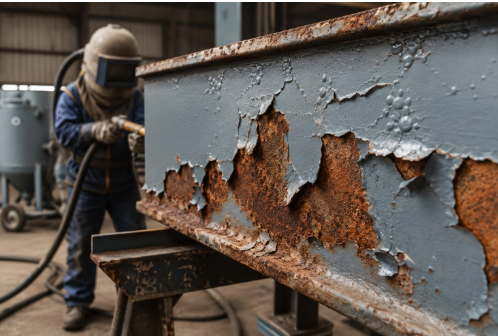
A patch of rust can make an otherwise solid piece of metal look tired and neglected. The tempting solution is simple: grab a tin of paint, cover the rusty area and move on. For a while, it might even look as though the problem has been solved.
Unfortunately, rust doesn’t disappear just because you can’t see it. If corrosion remains beneath a new coating, it can continue damaging the metal and eventually cause the fresh paint to bubble, crack or peel. Proper surface preparation, which may include methods such as abrasive cleaning, is often what separates a coating that lasts from one that starts failing surprisingly quickly.
Understanding why this happens can save you from doing the same job twice — and potentially prevent more serious damage to the metal underneath.
Rust Isn’t Just a Cosmetic Problem
Rust forms when iron or steel reacts with oxygen and moisture. Once corrosion begins, it changes the surface of the metal itself. That flaky orange or brown material isn’t simply dirt sitting on top waiting to be covered.
This matters because paint needs a stable surface to adhere properly. Painting directly over loose rust is a little like painting over peeling wallpaper. The new layer might stick to what’s underneath, but if that underlying material comes away, the new coating comes with it.
Heavy corrosion can also gradually reduce the thickness and strength of metal components. In these cases, hiding the rust doesn’t address the underlying deterioration.
Fresh Paint Can Hide Ongoing Corrosion
One of the biggest problems with painting straight over rust is that the result can initially look perfectly fine.
The surface has a fresh colour, the rust is hidden and the job appears finished. Meanwhile, moisture or contaminants trapped beneath the coating may allow corrosion to continue.
Eventually, signs of trouble can begin appearing, including:
- Bubbling or blistering paint
- Cracks in the coating
- Orange or brown staining
- Paint lifting away from the surface
- Rust reappearing around edges or damaged areas
By the time these signs become obvious, you may have a larger area to repair than you started with.
Surface Preparation Gives Paint Something to Hold Onto
Good painting isn’t only about choosing the right coating. What happens before the paint goes on can be just as important.
A properly prepared metal surface should generally be clean, dry and free from loose corrosion, grease, dirt and other contaminants that could interfere with adhesion.
The appropriate preparation method depends on the condition and purpose of the metal. A lightly rusted garden gate, for example, may require a very different approach from heavily corroded industrial equipment.
Preparation might involve wire brushing, sanding, mechanical tools or more thorough professional surface-treatment methods. The objective is the same: remove unstable material and create a suitable surface for the coating system being applied.
Not Every Rusty Surface Can Simply Be Repainted
Before reaching for the paintbrush, take a closer look at the condition of the metal.
Minor surface corrosion may be relatively straightforward to treat. Deep pitting, holes, extensive flaking or significant loss of metal are different matters. They can indicate that corrosion has progressed beyond a simple coating issue.
Pay particular attention to components that carry weight, support structures or perform an important mechanical or safety function. If corrosion may have affected their integrity, covering the area with paint is not an appropriate substitute for assessing the damage.
Sometimes the sensible option is repair or replacement rather than another coat of paint.
Primer and Paint Still Need the Right Foundation
Removing rust is only part of the job. Once the surface has been prepared, the coating system also needs to suit the material and its environment.
Metal exposed to rain, humidity, salt, chemicals or regular abrasion will usually face greater demands than an item kept indoors. A suitable primer can help promote adhesion and provide additional corrosion protection before the finishing coats are applied.
It is also important to follow the coating manufacturer’s instructions. Recommended drying times, surface conditions and application thickness aren’t arbitrary. Ignoring them can undermine otherwise careful preparation.
Small Maintenance Jobs Can Prevent Bigger Repairs
Rust is generally easier to manage when you catch it early.
Regularly inspecting painted metal gives you a chance to find scratches, chips and small corrosion spots before they spread. Areas around joins, edges, fasteners and places where water tends to collect deserve particular attention.
If you notice damage, don’t automatically cover it with more paint. Work out why the coating failed, deal with the corrosion underneath and prepare the area correctly before recoating it.
A quick coat of paint can make rust disappear from view, but appearance isn’t the same as protection. Taking the time to properly prepare the metal gives the new coating a much better chance of doing what it is supposed to do: protect the surface rather than simply hide the problem.