

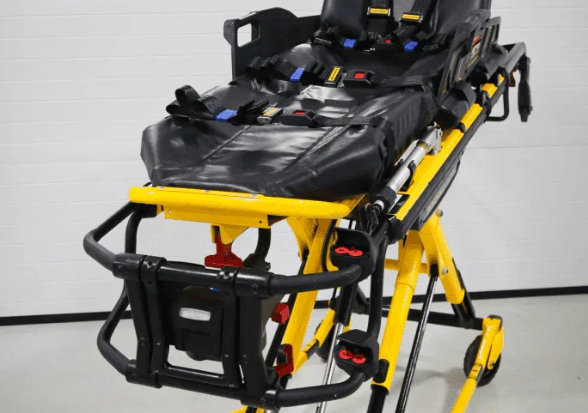
US healthcare organizations, non-EMS and patient transport providers must balance equipment reliability, patient safety, and budget limitations when purchasing medical transport equipment. Stretchers, powered loading systems, and stair chairs support daily patient movement, but replacing every item with new equipment can place pressure on capital budgets.
Refurbished equipment offers another purchasing option. A refurbished Stryker stretcher, for example, may suit organizations that need dependable patient transport equipment at a lower initial purchase cost. However, the decision should involve more than comparing prices. Buyers must assess the refurbishment process, equipment condition, compatibility, warranty coverage, and intended use before making a purchase.
Why non-EMS Organizations Consider Refurbished Equipment
Equipment replacement requires careful financial planning. Statistics Canada reported that prices for machinery and equipment in the healthcare-adjacent sector, and social assistance industry increased by 19.7% between 2020 and 2024. This rise makes it important for organizations to evaluate different purchasing options while maintaining operational requirements.
Refurbished equipment can help organizations manage initial costs and extend the useful life of existing medical transport products. It may be worth considering for:
- Patient transfer companies managing transport equipment across multiple locations.
- Educational institutions that provide paramedic training.
- Industrial and remote-site operations that require patient transport equipment.
- Healthcare organizations with specific non-emergency transport requirements.
However, refurbished equipment does not automatically suit every application. Organizations should confirm that the equipment meets the needs and safety requirements of its intended setting.
Understand What the Refurbishment Process Includes
The term refurbished can describe different levels of inspection, repair, and maintenance. One supplier may perform basic cleaning and replace visible components, while another may complete a detailed inspection and preventative maintenance process.
Before purchasing a refurbished Stryker stretcher, ask the supplier to explain the work completed. A reliable refurbishment process should address:
- Mechanical condition: Inspect lifting mechanisms, wheels, brakes, side rails, and adjustment functions.
- Electrical components: Check batteries, chargers, wiring, controls, and powered functions where applicable.
- Safety features: Verify restraints, locking mechanisms, and other patient protection components.
- Replacement parts: Confirm whether repairs use genuine OEM parts or compatible alternatives.
- Functional testing: Request evidence that technicians tested the equipment after completing repairs and maintenance.
Ask for an inspection report or service record. Clear documentation helps buyers understand the equipment’s condition and identify any remaining limitations.
Check Equipment Compatibility and Included Components
A refurbished unit should match the organization’s operational requirements. Buyers should review the model, specifications, accessories, and replacement part availability before committing to a purchase.
For example, refurbished Power-PRO XT stretcher packages may include two batteries, one charger, one mattress, and one set of restraints. An IV pole may also be available as an additional option, depending on the package.
Organizations should confirm the exact contents rather than assume every refurbished unit includes the same accessories. They should also check whether existing chargers, batteries, mounting systems, and other equipment will work with the selected model.
Review Warranty Coverage and After-Sales Support
Warranty terms can differ significantly between refurbished equipment suppliers. A lower purchase price may offer limited value if the warranty excludes important components or the organization cannot obtain replacement parts when needed.
Before purchasing a refurbished Stryker stretcher, review:
- Warranty duration and the date coverage begins.
- Parts and labour coverage.
- Exclusions for hydraulic, electrical, or computerized components.
- Procedures for reporting faults and requesting repairs.
- Availability of replacement parts and technical support.
Ask for warranty terms in writing. Organizations should also confirm who will handle maintenance and repairs after the warranty expires.
Compare the Total Cost of Ownership
The purchase price represents only one part of an equipment investment. Maintenance, replacement parts, battery replacement, servicing, and downtime can affect the overall cost throughout the equipment’s useful life.
Compare new and refurbished options using the same criteria. Consider the equipment’s expected service life, maintenance requirements, warranty protection, and compatibility with existing operations.
A refurbished Stryker stretcher may offer an attractive initial price, but buyers should evaluate whether its condition and ongoing support justify the investment. This approach helps prevent short-term savings from creating higher operating costs later.
Match the Equipment to Its Intended Use
Not every refurbished medical transport product suits frontline emergency medical services. Some refurbished equipment is specifically intended for non-EMS applications, including patient transfer services, educational programs, and industrial operations.
Organizations should confirm the supplier’s intended-use guidance and check applicable regulatory, workplace safety, and operational requirements. They should also establish inspection schedules and staff training procedures before introducing the equipment into service.
Making a More Informed Equipment Purchase
Refurbished medical transport equipment can provide a practical alternative to buying new, provided organizations assess its condition, maintenance history, compatibility, warranty, and intended application. Careful supplier evaluation and documentation help buyers make decisions based on long-term value rather than purchase price alone.
By reviewing these factors before purchasing, healthcare organizations and patient transport providers can choose equipment that supports their operational needs, manages costs, and maintains appropriate patient care standards. Rowland Emergency supports these needs by offering access to refurbished stretchers for non-EMS, compatible accessories, replacement parts, and ongoing equipment support.
With services such as equipment inspections, preventative maintenance, repairs, and buy-back programs, Rowland Emergency helps healthcare providers extend equipment lifespan, manage long-term costs, and make more informed equipment replacement decisions.