

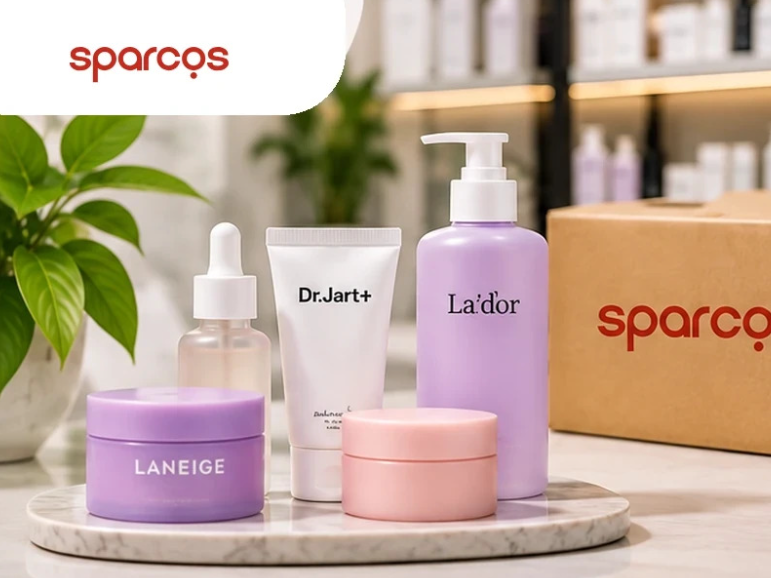
Buying cosmetics wholesale is not the most difficult task for a store or beauty salon. The greater challenge is understanding which products to order, in what quantities, and how to avoid ending up with unsold inventory. This is where a distributor can offer value beyond simply supplying products. When working with B2B clients, consultations, product selection, product information, and the organization of future orders all play an important role.
That is why choosing a business partner involves looking beyond the price list. Below, we explore eight services that can complement wholesale supplies, from assortment planning and consultations to logistics, training, and order management.
What additional services can cosmetics distributors provide?
The range of additional services depends on the specific distributor, the brands it represents, and the cooperation model. However, the list of services can vary significantly from one company to another. Some distributors focus on consultations and product selection, while others prioritize logistics and regular deliveries.
Therefore, it is better to clarify the specific terms from the beginning of negotiations. For example, does the account manager help prepare orders? Are product information materials available? How is delivery organized, and what happens if a shipment problem occurs? This approach allows businesses to compare suppliers not by the number of advertised services, but by what they actually receive in their daily operations.
Personalized product assortment selection
Assortment planning begins with understanding what a business sells and who its customers are. For a retail store, the target audience, price segment, and product categories that match customer demand are particularly important. The same product catalog will not suit every business. A beauty salon may focus on professional products, while a retail store may prioritize cosmetics for home use.
When developing a product assortment, several factors should be considered:
- Business specialization;
- Target audience needs;
- Price categories;
- Popular product groups;
- Balance between essential and additional products.
For example, a Korean cosmetics store may combine cleansers, moisturizers, SPF products, and makeup. This combination makes it possible to address different customer needs. A distributor’s account manager can help navigate product categories and available items. However, the final purchasing decision remains with the business, as it has a better understanding of its audience, budget, and actual sales.
Dedicated account manager consultations
A dedicated account manager can simplify the wholesale ordering process. Businesses can contact their manager to clarify product characteristics, select suitable categories, or get assistance with placing an order. This type of communication is especially useful before the first purchase. Not every item in a catalog will be equally suitable for a particular store or beauty salon.
Before placing an order, businesses can ask their account manager several practical questions:
- Which product categories match the business’s specialization?
- What product formats are available?
- What are the differences between similar products?
- What terms apply to wholesale orders?
- How can repeat purchases be arranged?
- How can up-to-date product information be obtained?
Demand analysis and beauty trend monitoring
A distributor can help partners stay informed about new products and changes in customer demand. However, the popularity of a particular product in the wider market does not necessarily mean it will sell well in every store. A product that receives significant attention on social media may not generate the same level of demand among a specific store’s customers. Therefore, trend information should be used as a reference rather than a guarantee of future sales.
When analyzing market trends, businesses can consider:
- Emerging cosmetics categories;
- Seasonal changes in demand;
- Popularity of specific product formats;
- Introduction of new brands and products;
- Customer reactions to new arrivals.
If a distributor shares information about emerging trends, a business can use these insights to test new products. Actual sales results will then indicate whether those products should become a permanent part of the assortment.
Logistics, warehousing and delivery
In the cosmetics business, logistics begins long before an order is handed over to a shipping company. It is important to understand where products are stored, how orders are assembled, and how long shipment preparation takes. For a distributor, a warehouse is more than a place where boxes are stored. Proper storage conditions must be maintained, inventory must be monitored, and different orders must be prepared for business partners.
During order fulfillment, the contents of the order and the quantities of individual products are checked. Once the order has been assembled, the products are packaged for transportation. For cosmetics, it is particularly important to minimize the risk of damage to both the packaging and the products during delivery.
Predictable delivery times are equally important. Stores and beauty salons plan purchases based on their existing inventory, so shipment delays can affect subsequent orders. It is also necessary to understand the difference between two types of storage services. When a distributor stores its own inventory in a warehouse, this is part of its regular business operations. Third-party warehousing is a separate service in which a company stores products owned by a client.
Therefore, before starting cooperation, businesses should clarify the conditions that apply to their purchasing model: where the warehouse is located, how orders are assembled, how products are packaged, and what delivery times can be expected.
Flexible wholesale ordering terms
For small businesses, wholesale purchases should reflect the store’s actual sales turnover. An excessively large order ties up working capital, while an order that is too small may not provide enough stock of popular products. Before ordering, businesses should clarify the minimum purchase amount. Large wholesale purchases follow a different logic. When a product has stable demand, purchasing larger quantities can be convenient for regular inventory replenishment. However, even in this case, sales velocity and available storage space should be considered.
Before starting cooperation, it is advisable to clarify:
- Minimum wholesale order value;
- Whether different product categories can be combined;
- Whether products from multiple brands can be included in one order;
- Terms for small and large wholesale purchases;
- How repeat orders are processed.
Product information and training support
Before selling a new product, employees need to understand exactly what they are offering customers. This makes ready-made product descriptions, specifications, instructions, and brand information particularly useful. In retail stores, such information is primarily needed by sales consultants. They can quickly check a product’s intended purpose and explain its main features to customers. Beauty salons have somewhat different needs. Specialists must understand how the manufacturer positions a product and in which situations its use is recommended.
Information support may include:
- Product descriptions;
- Individual product specifications;
- Manufacturer recommendations;
- Brand presentations;
- Materials about new product launches.
This does not necessarily mean comprehensive staff training. In some cases, distributors also organize webinars, presentations, or other educational activities. The availability of such services depends on the specific company and its arrangements with the brands.
Documentation support and product origin verification
For businesses, it is important to understand where cosmetics come from and who manufactures them. When purchasing products, businesses should check labeling, manufacturer information, and the documentation required for the specific product. Check the product name, manufacturer, and other information that should appear on the packaging. If a supplier claims that its products come through official distribution channels, it is worth requesting supporting evidence. Documentation requirements may vary depending on the brand and cosmetics category.
Before the first purchase, businesses can ask a distributor:
- Who manufactures the product?
- What information appears on the packaging?
- What documents accompany the products?
- Is it possible to obtain confirmation of product origin?
- Who is responsible for providing shipment documentation?
Order management and long-term partnerships
Regular communication with a supplier makes repeat purchasing easier. An account manager can help clarify order status, answer questions, and resolve organizational issues. In practice, this becomes especially valuable when a store or beauty salon orders cosmetics regularly rather than making a one-time purchase. Over time, businesses establish familiar product categories, order volumes, and purchasing schedules.
Before placing a repeat order, several simple questions may arise: is the required product available, when will it be delivered, have the terms changed, which additional products can be included in the order. If a delivery problem occurs, it is important to know whom to contact. Having a clear point of contact with an account manager allows businesses to resolve issues more quickly without spending time searching for the appropriate department.
Sparcos cosmetics distributor: product range and wholesale partner support
Sparcos works with retail stores, beauty salons, cosmetologists, and other professionals in the beauty industry. The company offers wholesale cosmetics and helps businesses organize purchases according to their specific operating needs.
Korean cosmetics are one of the company’s key areas of focus. The catalog includes various product categories, allowing stores to select cosmetics based on the specific needs of their target audience rather than limiting purchases to a single product type. Sparcos also works with other cosmetics brands. This makes it possible to plan wholesale purchases according to the specialization of a retail store, beauty salon, or cosmetology practice.
Sparcos provides access to account managers who can assist with product selection and organizational matters related to orders. The company also operates its own warehouse and arranges fast delivery. Wholesale terms depend on the specific order and cooperation model. Therefore, businesses should clarify the current conditions on the Sparcos website before placing an order.