

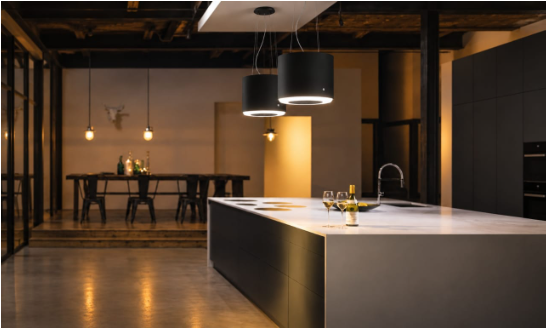
Open-plan kitchens change how families live and cook together. When the stove sits in the middle of the room rather than against a wall, cooking becomes a shared event. Family members and guests gather around the island while meals come together. Yet this layout brings a distinct challenge. Smoke, steam, and cooking odors spread freely across the entire living space without a wall to catch them.
An island cooker hood solves this problem. Suspended directly from the ceiling, this appliance captures airborne grease, moisture, and unwanted smells right at the source. Selecting the correct model protects cabinetry, keeps indoor air clean, and defines the visual centerpiece of the room. Understanding how these systems work helps homeowners make smart choices for daily cooking needs.
The Evolution of Modern Kitchen Layouts and Ventilation
Kitchen design has shifted dramatically over recent decades. Traditional floor plans hid cooking areas behind closed doors or tucked them into separate rooms. Today, kitchens blend directly into dining and living spaces. This open layout creates an airy, welcoming environment but places heavy demands on ventilation equipment.
Wall-mounted hoods rely on adjacent walls to capture and channel exhaust. Island models operate entirely in open space. Because airflow moves in multiple directions around an island, an overhead extractor requires precise sizing and placement. Manufacturers now design units with high-performance motors and multi-speed controls to manage stray vapors effectively. Modern homes require appliances that handle heavy daily cooking without creating excessive noise or cluttering the visual line of sight.
Core Benefits of Installing an Island Cooker Hood
Adding an overhead ventilation unit brings numerous practical advantages to any open cooking space. First, it protects indoor air quality. Cooking releases microscopic grease particles and strong odors that settle on furniture, walls, and curtains. An efficient island cooker hood traps these particles before they coat the room.
Second, modern extractors prevent moisture buildup. Boiling water and simmering sauces release large amounts of steam, which can lead to peeling wallpaper or mold growth over time. Proper extraction pulls humidity out of the air instantly.
Third, these appliances double as primary light sources. Integrated LED lamps brighten the cooktop surface, making food preparation safer and more precise. Good lighting also creates a warm glow over the island during evening hours.
Key advantages include:
- Effective removal of smoke, grease, and persistent food odors.
- Prevention of excess humidity and mold in open-plan living areas.
- Enhanced task lighting directly over the cooking surface.
- A striking architectural focal point that anchors the entire room design.
Key Challenges in Selection and Setup
Choosing and installing a suspended ventilation unit involves several technical hurdles. Homeowners must address these factors carefully before making a purchase.
Ceiling height and structural strength form the primary concern. Because these hoods hang directly from the ceiling, the mounting structure must support the full weight of the appliance, especially during high-speed operation. Vaulted or very high ceilings require specialized extension cables or custom brackets.
Ducting versus recirculation presents another major decision. Ducted systems vent air outside through a pipe running through the ceiling or attic. This method offers maximum efficiency but requires complex installation work. Recirculating systems filter air through charcoal or carbon filters and release it back into the room. While easier to install in finished homes, recirculating filters require regular cleaning or replacement to maintain performance.
Noise level also matters greatly in open spaces. A loud fan disrupts conversation in adjacent living or dining areas. Selecting a model with a quiet motor ensures comfort while cooking.
Emerging Trends in Kitchen Extraction
Kitchen technology continues to advance rapidly. Homeowners today look for appliances that combine high performance with modern aesthetics and smart capabilities.
Manufacturers now offer geometric shapes, such as square and box-style hoods, alongside traditional curved or cylindrical designs. Black glass and stainless steel finishes dominate current kitchen styling trends, matching modern induction cooktops and dark cabinetry.
Smart connectivity represents another major shift. Users can monitor filter status, adjust fan speeds, and control lighting remotely using smartphone applications or voice assistants. Additionally, advanced air purification technologies, such as ultraviolet sterilization systems and multi-layer filters, clean the air more thoroughly than standard mesh filters. Brands like Ciarra One focus on combining energy efficiency with sleek architectural forms, ensuring appliances complement minimalist interiors while lowering home energy use.
Energy efficiency classes like A+++ mean that high suction power no longer results in excessive electricity bills. Brushless DC motors run quietly and consume minimal power, making them ideal for everyday use.
Final Thoughts
An island cooker hood does far more than clear away smoke. It serves as a vital tool for maintaining clean air, protecting indoor surfaces from grease, and anchoring the aesthetic design of an open-plan kitchen. Balancing extraction power, installation requirements, and noise levels ensures long-term satisfaction.