

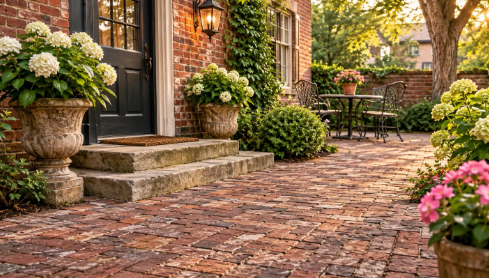
Walk down an old European street or a historic Southern courtyard and you’ll notice something right away: the ground itself has personality. Worn, warm-toned paving has a softness that poured concrete and uniform modern pavers just can’t match.
The good news is that you can bring that look to your own driveway, patio, or garden path. Here’s what to think about before you start, from choosing material to preparing the base so it lasts.
Why Old Paving Bricks Hold Up
Many historic pavers were fired hard and made to handle carriages, foot traffic, and weather. Decades of use only gave them character. Their natural color runs all the way through, so chips and wear don’t expose a different layer underneath.
They also age gracefully. Moss, weathering, and gentle wear make them look better over time rather than worse.
Where You Can Use Them
Think patios, walkways, garden paths, courtyards, pool surrounds, driveways, and outdoor kitchens. They’re equally at home in a formal landscape and a relaxed cottage garden. For driveways, make sure the base is built for vehicle loads, which we’ll get to below.
Choosing the Right Material
When you’re comparing antique brick pavers for a project, pay attention to size, thickness, colour range, and condition. Consistency matters for pavers more than for decorative walls, because uneven thickness can make a surface tricky to lay flat. Ask your supplier about the typical size range and how the pavers were sorted.
Request photos of actual stock, and ask how much material is available. Buying everything for your project from one lot helps keep colours and sizes consistent.
Colour and Pattern
Pattern changes the whole mood of a surface. Running bond looks traditional and tidy, herringbone adds movement and strength, and basket weave feels classic and cozy. Herringbone is often a favourite for driveways because the interlock helps spread loads.
Lay out a few sample rows before you commit. Mixing bricks from different pallets as you go will help blend the natural colour variation.
Getting the Base Right
This is where projects succeed or fail. A good paved surface sits on a well-compacted base of crushed stone with a thin levelling layer on top. Drainage matters, so make sure the surface slopes gently away from buildings. Edging keeps the pavers from drifting over time.
For driveways or cold climates, talk to a professional about base depth. A little extra effort now saves you from heaving, sinking, and redoing the job later.
Sealing and Maintenance
Sweep regularly, rinse off dirt, and fill joints with suitable sand as needed. Some people choose a breathable sealer to deepen colour and resist stains, while others prefer the natural weathered look. Either way, avoid harsh pressure washing that could wear down the surface.
Cost and Budgeting
Paving is usually priced per square foot, and you’ll need more material than you think once you account for cuts and edges. Plan for about ten percent extra, and get an itemized quote that includes delivery, since pavers are heavy.
Remember that labour and base preparation often cost as much as the material itself. Skimping on those parts to save money usually backfires.
Common Mistakes to Avoid
The most frequent error is a weak base. The second is poor drainage, which leaves water pooling and freezing. The third is skipping edge restraints, which lets the pattern slowly spread and loosen. None of these are glamorous, but all of them decide whether your surface looks great in ten years.
Also, don’t forget to leave consistent joints. Tight, even spacing makes the whole surface look intentional and professional.
Climate Considerations
If you live somewhere with freezing winters, ask your supplier how the material handles freeze-thaw cycles, and make sure your base drains well. In hot, humid areas, moss and algae may appear in shady spots, which many people find charming but others prefer to clean off. Knowing your local conditions helps you choose the right material and maintenance routine from the start.
Before ordering, lay a few sample pavers outside in your actual space and look at them in morning and afternoon light. Colour can shift noticeably, and a quick test is far cheaper than a surprise after installation.
Final Thoughts
A surface made from historic paving brings texture, warmth, and a sense of place that’s hard to fake. Choose consistent material, invest in a solid base, and give it a little care. Your future self will thank you every time you step outside.
Key Takeaways
- Historic pavers were fired hard and age gracefully with wear and weathering.
- They suit patios, paths, courtyards, pool areas, and properly prepared driveways.
- Check size, thickness, colour range, and condition before you buy.
- Herringbone and other interlocking patterns add strength and style.
- A compacted base with good drainage is the key to a long-lasting surface.
- Gentle cleaning and optional breathable sealing keep the surface looking its best.