

An electric bike can move without multiple mechanical gears. On a flat bike path, a single-speed model may do the job with very little fuss. Add a hill, a stoplight, a heavy bag, or a nearly empty battery, though, and gears begin to earn their place.
The common source of confusion is that an ebike gives the rider two controls that can make pedaling feel easier: motor assistance and bicycle gears. They are related, but they do different work. The assist setting changes how much help the motor provides. The gear changes how far the bike moves for each turn of the pedals and how much force the rider must apply to keep them turning.
That distinction matters more than the number printed beside the shifter. A rider choosing among ebikes for sale should first ask where the bike will be ridden and when pedaling usually becomes uncomfortable. The answer may point to a simple drivetrain, a wider gear range, or no need for multiple gears at all.
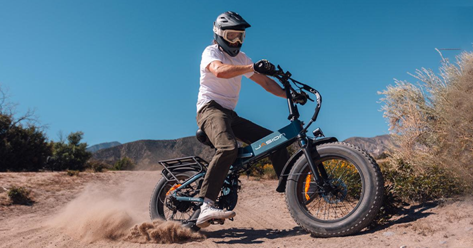
Loose ground and changing grades are two situations where the right gear can make pedaling easier to control. Image: JasionBike.
The motor does not choose a comfortable pedaling rhythm
Imagine approaching a hill in a high gear. The motor may add power, but the pedals can still feel stubborn underfoot. Dropping to a lower gear gives the rider more leverage and makes it easier to keep the cranks moving at a steady rhythm. On the other side of the hill, a higher gear prevents the pedals from spinning too quickly as speed builds.
This is why simply raising the assist level is not always the best response to a difficult patch of road. Extra assistance can hide a poor gear choice for a while, yet the rider may still be pushing slowly against a heavy pedal. Selecting an easier gear first lets the rider contribute comfortably, then use only as much motor help as the situation calls for.
Motor layout also changes how the two systems interact. A hub motor drives a wheel separately from the bicycle’s chain and gears, so the motor can keep helping even when the rider has selected an awkward gear. A mid-drive motor sends its power through the bicycle drivetrain, which makes gear choice more important. Either way, the rider’s legs still benefit from a suitable mechanical gear.
Where riders notice the difference
The first few feet after a stop are revealing. Starting in a hard gear asks for a forceful push just as the bike has no momentum. A lower gear produces a cleaner start and can make a heavier ebike feel less reluctant at an intersection. The useful habit is to shift down while the bike is still rolling toward the stop, rather than discovering the problem after the light turns green.
Hills reward the same bit of anticipation. Shift before the slope becomes steep, ease pressure on the pedals for a moment, and let the chain settle onto the next sprocket. Waiting until the rider is standing on the pedals puts more load on the chain and makes a rough shift more likely.
On a long, level stretch, a higher gear usually feels calmer because each pedal turn carries the bike farther. There is no prize for selecting the hardest gear, however. If the rider’s hips begin rocking or every pedal stroke feels like a leg press, the gear is too high for that moment.
Gears also become useful when the battery is low or assistance is turned off. An ebike is heavier than a typical unpowered bicycle, and that extra weight is noticeable on the way home. Mechanical gears remain available even when the motor is not providing help. They cannot make the bike weightless, but they can keep the pedals turning at a manageable rate.
A rear derailleur moves the chain across different sprockets to change the mechanical gear. Image: JasionBike.
Heavier ebikes make good gear choice more noticeable
A long saddle, wide tires, suspension, and a substantial frame can make a moped style electric bike comfortable and planted. Those features also add mass. Once the bike is rolling, the motor handles much of that burden. At walking speed, on a climb, or after the battery has run down, an easier mechanical gear helps the rider manage it.
Wide tires add another variable. Lower tire pressure and loose surfaces can increase rolling resistance, so the gear that felt comfortable on pavement may suddenly feel too demanding on gravel or soft ground. The adjustment is simple: shift down early and allow the pedals to turn more freely. Turning the assist to its highest setting is not the only response.
Cargo has a similar effect. A loaded rear rack or a full grocery bag changes acceleration and climbing effort even if the route is familiar. Riders who regularly carry weight are likely to use the lower end of a bike’s gear range more often than riders who travel light on level streets.
How many gears are actually useful
More gears do not automatically make an ebike better. What matters is whether the available range covers the rider’s slowest and fastest useful pedaling. A close set of ratios gives smaller steps between gears. A wide range gives the rider a notably easy climbing option and a harder gear for faster sections. Both can be sensible; the route decides which matters.
A single-speed ebike remains a reasonable choice for short, mostly flat trips. It has fewer drivetrain parts to adjust, and the controls are easy to understand. The tradeoff appears when the route stops being predictable. A bridge approach, a strong headwind, a child seat, or a dead battery leaves the rider with the same one gear.
For rolling terrain and mixed daily use, several well-spaced gears are usually more valuable than an impressive number of tiny steps. Buyers should look for a low gear they can turn comfortably on the steepest regular climb and a high gear that does not leave them spinning on faster roads. A test ride that includes a full stop and a real hill will answer more than counting sprockets in a product photo.
A better way to shift
The drivetrain works best when the rider shifts under light pressure. Keep the pedals moving, soften the push for a second, make one shift, and resume normal effort after the chain engages. Do not wait for the chain to protest on a steep hill, and do not force several shifts at once while pressing hard on the pedals.
New riders can learn the controls on a quiet, flat street. Use one moderate assist setting and change only the mechanical gear. The difference becomes obvious within a few minutes: lower gears make the pedals easier to turn, while higher gears give each turn more effect once the bike is moving. JasionBike’s guide to how to use gears on an ebike provides a useful reference for riders who want to practice the sequence.
So, do electric bikes need gears? Not every one does. A simple bike on a flat route can work well without them. For hills, frequent stops, cargo, variable surfaces, or the possibility of riding home without motor assistance, gears give the rider something the battery cannot: direct control over how each pedal stroke feels.