

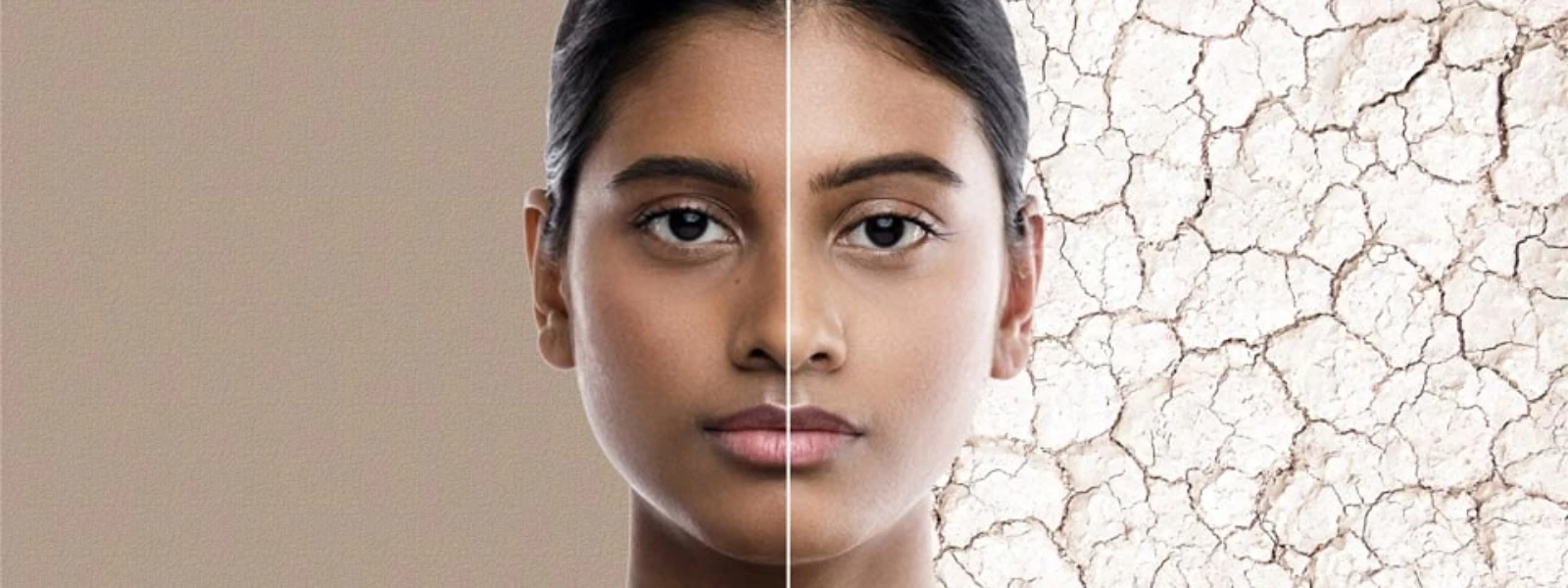
Hydration helps skin maintain a strong barrier, smooth texture and healthy-looking glow. Humectants such as hyaluronic acid and glycerin attract water, while ceramides and moisturisers help reduce water loss. Even oily skin can be dehydrated, so effective skincare focuses on maintaining water balance rather than simply adding oil.
Hydration is one of the foundations of healthy-looking skin, yet it is often misunderstood. When skin looks dull, feels tight or develops fine lines, it is tempting to blame ageing, weather, stress or a particular skincare product. Sometimes, however, the issue is simply that the skin does not have enough water or is losing water too quickly.
Hydrated skin tends to look smoother, softer and more supple. It can also appear brighter because a well-hydrated surface reflects light more evenly. By contrast, dehydration can make the complexion look tired, rough or uneven and can make fine lines appear more noticeable.
This is one reason hydration has become such a major focus in modern skincare. The popular K-beauty approach, for example, often places considerable emphasis on layering lightweight hydrating products and supporting the skin barrier. While you do not need a lengthy Korean skincare routine to have hydrated skin, the underlying principle is useful: maintaining water balance and protecting the skin barrier can be just as important as targeting specific concerns.
What Does “Hydrated Skin” Actually Mean?
Hydrated skin is skin that contains an adequate amount of water, particularly within the outermost layer known as the stratum corneum.
The stratum corneum acts as an important protective barrier. It helps keep water inside the skin while protecting the body from external irritants and environmental stressors. When this barrier is functioning well, skin is generally better able to retain water.
Hydration can influence both the way skin feels and the way it looks. Well-hydrated skin may appear:
- Smoother and softer
- More supple and flexible
- Plumper
- Brighter and more radiant
- Less flaky or rough
- Less likely to show temporary dehydration lines
Hydration is not about making your skin wet all day. It is about maintaining an appropriate water balance within the skin and reducing unnecessary water loss.
Environmental conditions can make this more difficult. Cold weather, low humidity, indoor heating, air conditioning, hot showers and overly aggressive cleansing can all contribute to increased water loss from the skin.
The American Academy of Dermatology provides useful guidance on how to relieve dry skin, including the importance of moisturising and protecting the skin’s barrier.
Hydration vs. Moisture: What’s the Difference?
The terms “hydration” and “moisture” are often used interchangeably in skincare marketing, but they describe slightly different concepts.
Hydration refers primarily to water content. Hydrating ingredients, particularly humectants, help attract and hold water in the skin.
Moisturising is a broader concept. A moisturiser may contain humectants that attract water, emollients that soften the skin and occlusives that help reduce water loss.
Think of the difference this way: hydration is about adding or maintaining water, while moisturisation is about helping the skin retain that water and remain comfortable.
For example, hyaluronic acid and glycerin are well-known humectants. Ceramides, meanwhile, are lipids that form an important part of the skin barrier and can help support the skin’s ability to retain moisture.
This is why a good hydrating routine does not necessarily mean applying a single water-based serum. Hydration works best as part of a broader approach that combines water-attracting ingredients with barrier-supporting products.
The American Academy of Dermatology recommends ingredients including glycerin, hyaluronic acid and ceramides when choosing moisturising products for dry skin. Its guidance on dermatologist-recommended ways to relieve dry skin is a useful resource for understanding how these ingredients fit into an effective routine.
How Dehydration Shows Up on Your Skin
Skin dehydration can affect almost anyone, regardless of their underlying skin type.
One of the most common signs is a feeling of tightness. Your skin may feel uncomfortable after cleansing or after spending time in a dry environment. It may also appear dull or less plump than usual.
Other possible signs include:
- Fine lines appearing more prominent
- Rough or uneven texture
- Flaking or mild peeling
- A dull complexion
- Increased sensitivity
- Tightness after cleansing
- Makeup settling into fine lines
- Skin feeling simultaneously oily and tight
- A generally tired-looking complexion
Dehydrated skin can also look less radiant because the surface becomes less smooth. When the outer layer of skin is properly hydrated, light can reflect more evenly across its surface, contributing to a healthier-looking glow.
Importantly, dehydration is not necessarily permanent. It can often be influenced by environmental conditions, skincare habits and changes in the skin barrier.
If you are experiencing persistent dryness, cracking, itching, burning or irritation, however, it is worth considering whether an underlying skin condition could be involved. The AAD recommends professional assessment when excessive dryness does not improve with appropriate skincare.
The Science: How Water Content Affects Skin Function
Water plays an important role in the structure and function of the skin.
The outer layer of skin needs sufficient water to maintain flexibility and normal desquamation, which is the process through which older skin cells are shed. When the stratum corneum becomes dehydrated, the surface can become rougher and more prone to visible flaking.
Another important concept is transepidermal water loss, commonly abbreviated as TEWL. This refers to water moving through the skin and evaporating from the surface.
A healthy skin barrier helps keep TEWL under control. When the barrier is compromised, water can escape more readily. This can contribute to a cycle of dehydration, irritation and further barrier disruption.
This is why hydration and barrier care are closely connected. Simply applying a water-attracting ingredient is not always enough. The skin also needs support to retain that water.
Moisturisers commonly combine different types of ingredients for this reason. Humectants attract water, emollients smooth and soften the surface, while occlusives create a protective layer that reduces water loss. The Cleveland Clinic’s guide to choosing a moisturiser provides further insight into how these different ingredients can support the skin.
Signs Your Skin Is Dehydrated, Even If It’s Oily
One of the most confusing aspects of dehydration is that oily skin can still be dehydrated.
Oil and water are not the same thing. Your skin can produce plenty of sebum while still lacking sufficient water in the outer layers.
This can create the familiar combination of:
Shiny skin + tight feeling + rough texture = potentially dehydrated oily skin.
People with oily or acne-prone skin sometimes respond to shine by using stronger cleansers, frequent exfoliation or multiple oil-controlling products. While these approaches may temporarily reduce surface oil, overdoing them can make the skin feel stripped and uncomfortable.
The answer is not necessarily to stop cleansing or to use a heavy moisturiser. Instead, consider gentler cleansing and a lightweight, non-comedogenic hydrating product.
The AAD notes that people with oily or acne-prone skin can still benefit from moisturisers, with lightweight gel formulations often being a suitable option.
For a more detailed look at balancing hydration with oil production, this guide to skincare tips for oily skin provides additional practical advice.
Key Ingredients That Boost Hydration
Skincare products can support hydration in several different ways. Here are five ingredients worth understanding.
Hyaluronic Acid
Hyaluronic acid is one of the best-known hydrating ingredients in skincare.
It is a humectant, meaning it helps attract and retain water. It can help the skin feel smoother and more comfortable and is commonly found in serums, moisturisers, masks and other hydrating products.
Hyaluronic acid can work particularly well when followed by a moisturiser that helps reduce water loss. This is one reason it is often included in multi-step hydration routines.
Glycerin
Glycerin is another well-established humectant.
It helps attract water and is found in a wide range of moisturisers and skincare products. One of its advantages is that it is versatile and can be incorporated into formulations designed for many different skin types.
It is also not necessarily associated with a heavy or greasy finish, making it useful for people who want hydration without a rich texture.
Dermatologists specifically recommend glycerin as one of the ingredients to look for when selecting products for dry skin.
PDRN
PDRN, or polydeoxyribonucleotide, has become increasingly visible in K-beauty and aesthetic skincare.
It is often marketed around skin regeneration, repair and overall skin quality, and interest in polynucleotide-based treatments has grown considerably. Emerging research has also investigated the potential relationship between polynucleotides, skin barrier function and hydration.
However, it is important to distinguish emerging ingredients from more established moisturising ingredients. The evidence around PDRN and polynucleotides is still developing, and results can vary depending on the formulation, delivery method and treatment being studied.
For that reason, PDRN is best viewed as an interesting addition to the modern skincare landscape rather than a replacement for proven hydration fundamentals such as humectants, moisturisers and barrier-supporting ingredients.
Panthenol
Panthenol, also known as provitamin B5, is valued for its moisturising and skin-conditioning properties.
Research has found that topical panthenol can improve stratum corneum hydration and reduce transepidermal water loss, supporting the idea that it can play a useful role in moisturising and barrier-focused skincare.
Panthenol is particularly appealing when hydration is accompanied by sensitivity or discomfort because it is commonly used in formulations designed to support the skin barrier.
Ceramides
Ceramides are lipids naturally found within the skin barrier.
They help form part of the structure that keeps the outer layer of skin intact and helps reduce excessive water loss. When the barrier is compromised, incorporating ceramide-containing skincare can be a useful part of a barrier-supporting routine.
Ceramides are especially relevant when dehydration is accompanied by dryness, sensitivity or a feeling that skincare products are suddenly irritating.
In practical terms, a hydration-focused routine might combine a humectant such as hyaluronic acid or glycerin with a moisturiser containing ceramides.
How K-Beauty Approaches Hydration
K-beauty has helped popularise the idea that hydration can be approached gradually rather than relying on one heavy moisturiser.
Many Korean skincare routines use lightweight hydrating layers such as toners, essences, serums and moisturisers. The idea is often to build hydration while keeping the texture comfortable and adaptable to the skin’s needs.
You do not need to follow a 10-step routine to benefit from this philosophy.
A simplified version could involve:
- A gentle cleanser
- A hydrating toner or essence, if desired
- A serum containing ingredients such as hyaluronic acid or glycerin
- A moisturiser containing barrier-supporting ingredients
- Broad-spectrum sunscreen during the day
The important lesson is not the number of products. It is the emphasis on maintaining hydration and protecting the skin barrier consistently.
This can also make K-beauty techniques useful for people who prefer lightweight textures, including those with combination or oily skin.
For people dealing with persistent dryness, it can also be useful to consider the wider principles covered in this guide to building a skincare routine for dry skin, particularly the importance of adapting products to the skin’s individual needs.
Common Hydration Mistakes to Avoid
More hydration does not always mean more products. Some common skincare habits can actually make dehydration worse.
Over-cleansing
A cleanser should remove dirt, sunscreen, makeup and excess oil without unnecessarily disrupting the skin.
Very hot water and harsh cleansers can contribute to dryness and irritation. The AAD recommends using a gentle cleanser and avoiding unnecessarily long, hot showers when dealing with dry skin.
Over-exfoliating
Exfoliation can improve skin texture, but doing it too frequently can leave the skin feeling stripped.
If your skin is already tight, flaky or irritated, adding more exfoliating acids or scrubs may not be the best solution. Restoring hydration and barrier support may be more appropriate.
Using too many active ingredients
Retinoids, exfoliating acids, acne treatments and other active ingredients can all have a place in a skincare routine. However, using several potent actives at once can increase irritation for some people.
A simpler routine may be more effective when your skin barrier is struggling.
Applying hydration but not moisturising
A hydrating serum can attract water, but that does not necessarily mean the water will remain in the skin indefinitely.
Following a hydrating product with an appropriate moisturiser can help support water retention.
Assuming oily skin does not need hydration
This is one of the most common mistakes. Oily skin can still be dehydrated, and avoiding moisturiser completely may leave the skin feeling tight and uncomfortable.
Instead, consider lightweight, non-comedogenic hydration that suits your skin type.
Forgetting sunscreen
Hydration is only one part of maintaining healthy-looking skin. Daily sun protection remains important because UV exposure contributes to premature skin ageing and other forms of skin damage.
The AAD recommends broad-spectrum, water-resistant sunscreen with SPF 30 or higher as part of a daily sun-protection strategy.
Conclusion
Hydration is much more than achieving a temporary dewy appearance. Water content influences how the skin feels, looks and functions, while the skin barrier plays an important role in keeping that water where it belongs.
The good news is that an effective hydration routine does not have to be complicated. Ingredients such as hyaluronic acid and glycerin can attract water, while ceramides and panthenol can help support the skin barrier. PDRN and polynucleotide-based products are newer additions to the conversation, with promising but still developing evidence.
K-beauty has helped bring hydration-focused skincare into the mainstream, but the underlying principles apply to virtually every skincare routine. Keep cleansing gentle, avoid excessive exfoliation, choose ingredients that match your skin’s needs and moisturise consistently.
Most importantly, remember that hydration and skin type are not opposites. Dry, combination and oily skin can all become dehydrated. Learning to recognise the difference between water loss, oil production and genuine dryness is one of the most useful steps towards building a healthier and more comfortable skincare routine.
Frequently Asked Questions
Can oily skin be dehydrated at the same time?
Yes. Oily skin can produce plenty of sebum while still lacking sufficient water. This can leave the skin looking shiny but feeling tight, rough or uncomfortable. Lightweight hydrating products, gentle cleansing and a suitable moisturiser can help support water balance without necessarily adding a heavy or greasy layer.
What ingredients hydrate skin best?
Some of the most useful hydrating ingredients include hyaluronic acid and glycerin, which are humectants that attract water. Panthenol can support hydration and barrier function, while ceramides help support the skin barrier and reduce excessive water loss. PDRN and polynucleotides are emerging ingredients that are attracting interest for skin repair and hydration, although the evidence base is less established than for traditional moisturising ingredients.
How do I know if my skin is dehydrated vs. just dry?
Dehydrated skin is primarily lacking water, while dry skin generally refers to a skin type or condition associated with insufficient oils and lipids. Dehydrated skin can affect oily skin, whereas naturally dry skin tends to feel consistently dry or rough. Tightness, dullness and fine lines that appear more noticeable can point towards dehydration, while persistent flaking, scaling and roughness may indicate dryness. The two can also occur together.
Why does my skin feel tight after cleansing?
A tight feeling after cleansing can indicate that your cleanser is too harsh for your skin, that the water is too hot or that you are cleansing too frequently. The skin can lose water and protective lipids during cleansing, particularly when the routine is overly aggressive. Switching to a gentle cleanser, using lukewarm water and applying moisturiser while the skin is still slightly damp can help. The American Academy of Dermatology recommends gentle cleansing and moisturising soon after washing to help retain hydration.