

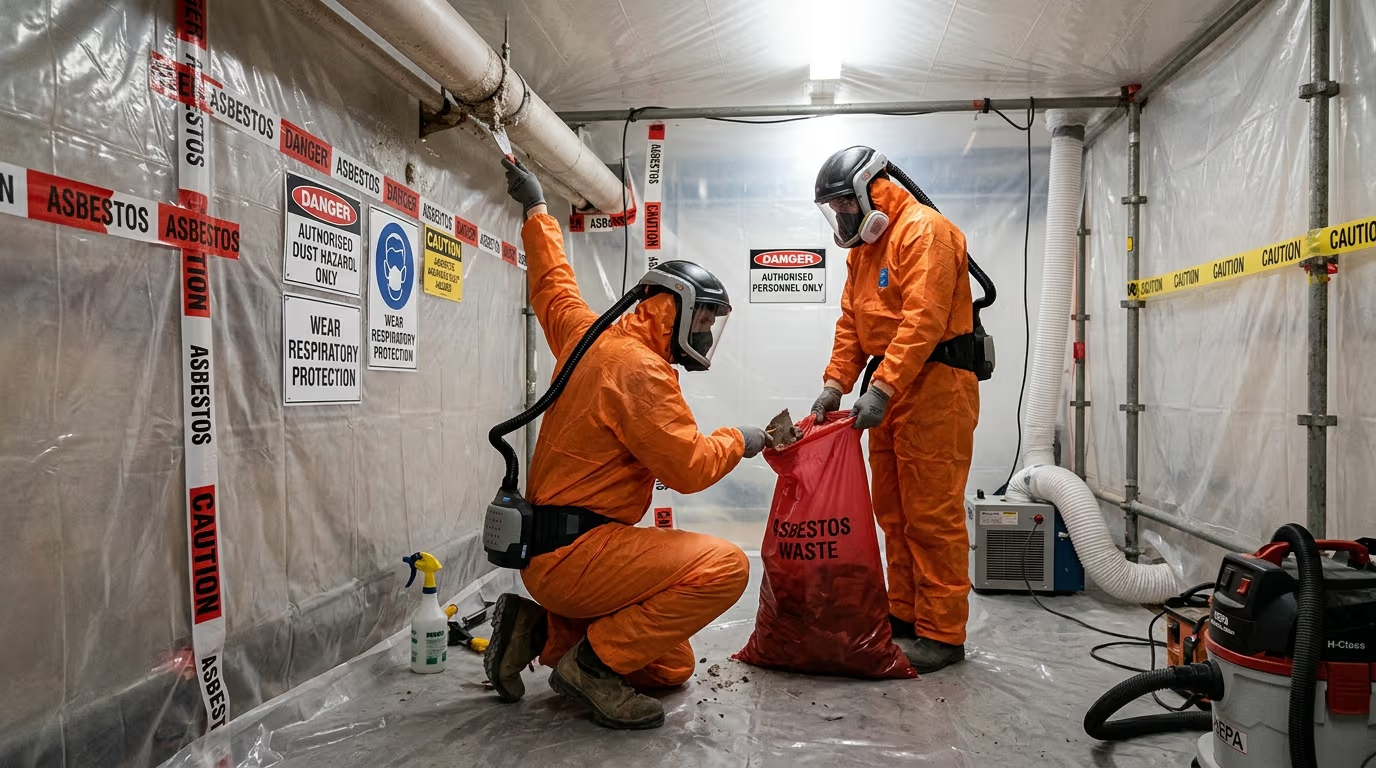
Asbestos can be found in many Australian buildings built before it was prohibited, including homes, offices, factories, warehouses, and commercial premises. While the health concerns of asbestos are the same wherever it is found, the procedure of handling and removing it varies significantly between a residential residence and a commercial workplace.
The key distinctions are related to project size, workplace responsibility, site management, licensing, documentation, and trash disposal. Understanding these distinctions is critical before any remodelling, refurbishment, or demolition work begins.
Why commercial asbestos removal requires greater planning
Residential asbestos removal projects may entail a relatively small area, such as roofing, fencing, wall sheeting, or flooring. Commercial properties can be much more complex.
Asbestos may be found in various locations and materials within an office building, retail premises, industrial site, or warehouse. Work may also take place while other areas of the building are occupied.
For commercial asbestos removal, the project must account for more than just removing the material. Site access, worker safety, adjacent inhabitants, other trades, and the possible spread of asbestos fibres must all be considered.
Workplace asbestos management also entails special responsibilities. According to Safe Work Australia, workplaces may require asbestos registers, site plans, warning signs, and systems to ensure that workers are informed of any discovered asbestos prior to commencing work.
Residential asbestos removal is often more contained
Residential projects often entail fewer people and a smaller work area. However, this does not mean that asbestos removal at home may be taken lightly.
Homeowners may come into contact with asbestos during renovations, repairs, or demolition, especially in older homes. Materials may include cement sheets, roofing goods, floor tiles, and other building components.
The crucial question is whether the material can be securely handled without upsetting it, or if professional assessment and removal are required. Never cut, drill, sand, or break asbestos just to find out what it is.
Licensing regulations differ between Australian states and territories. According to Safe Work Australia, certain jurisdictions allow for the limited removal of non-friable asbestos without a licence in certain conditions, while others need licensed removal.
Commercial projects involve stricter workplace controls
One of the most significant changes is that commercial properties are workplaces, resulting in additional occupational health and safety duties.
In Victoria, for example, employers and those in charge of workplaces are required to identify and manage asbestos concerns. The majority of asbestos removal work must be performed by a certified removalist, with the exception of specific types and quantities of non-friable asbestos.
Victoria also has distinct Class A and Class B asbestos removal licenses. Class A licence holders can remove any type of asbestos, but Class B licence holders can only remove non-friable asbestos.
This distinction is important for commercial projects because the type and condition of asbestos-containing material might influence the level of specialised skills and controls required.
Project coordination is a major consideration
Commercial removal is rarely performed in isolation. Electricians, plumbers, builders, demolition contractors, facility managers, and other workers may all be on the same job site during a renovation.
Before work begins, the parties involved must understand where asbestos is found and which areas are affected. Access controls, exclusion zones, and proper work procedures may be required depending on the circumstances.
Licensed removalists may also be required to notify their clients. Licensed asbestos removalists in Victoria are required to notify WorkSafe about any asbestos removal operations.
This kind of cooperation is less usual in a simple residential project, where the number of persons potentially exposed to the activity is significantly lower.
Waste disposal is not the same as ordinary construction waste
Another significant distinction is what happens once the asbestos has been removed.
Asbestos trash must not be combined with normal building waste. Asbestos from commercial, industrial, and trade activities must be transported and disposed of in accordance with Victoria’s waste management regulations.
Commercial initiatives may also require additional documentation and tracking. EPA Victoria urges firms to utilise licensed removal and transportation services and get a Waste Tracker record indicating that asbestos waste has been delivered to a permitted disposal location.
For organisations looking for asbestos removal Melbourne services, verifying license, waste arrangements, and appropriate documents is just as crucial as contemplating the removal work itself.
Choosing the right approach
The safest strategy is to consider suspected asbestos as a possible hazard until properly analysed. Before beginning any repair or demolition project, commercial property owners, facility managers, and contractors should be aware of their workplace requirements.
Residential homeowners should avoid disturbing suspected asbestos and seek expert help if removal or testing is required.
Finally, commercial and residential asbestos removal have the same essential goal: to prevent exposure to dangerous asbestos fibres. The distinction is that commercial projects frequently require a larger site, more personnel, greater coordination, and additional workplace and waste-management responsibilities.
Understanding these distinctions before work begins can assist property owners and contractors in planning responsibly, complying with applicable standards, and reducing avoidable risks to workers, occupants, and the larger community.