

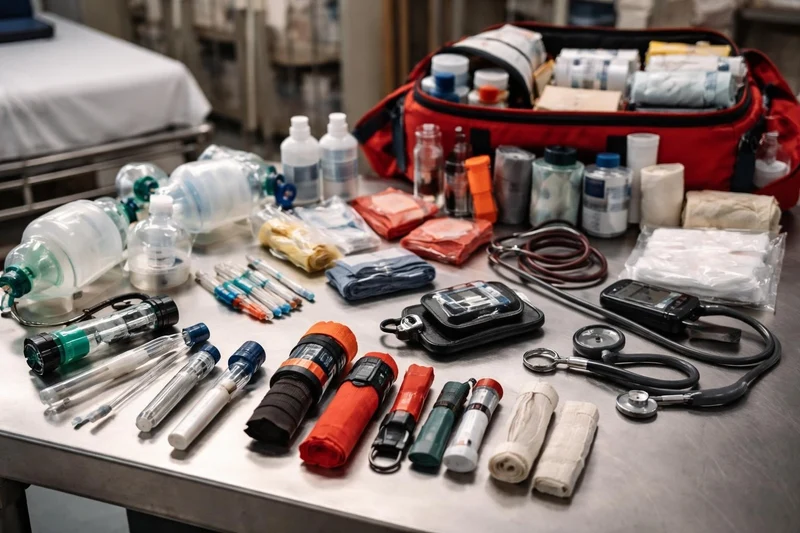
When an ambulance arrives, attention goes to the paramedics and the speed of the response. What rarely gets noticed is the equipment they rely on, much of it the product of decades of engineering aimed at one goal: moving and treating a patient safely in the most difficult circumstances. Understanding the gear behind emergency medical services gives a real appreciation for how a crew turns chaos into controlled, life-saving care. Here is a look at the tools at the heart of it.
Why equipment is as important as skill
Emergency care is a partnership between trained people and purpose-built equipment. A skilled crew with poor tools is dangerously limited, and great tools without training are useless. The equipment exists to do what human strength and improvisation cannot: move a heavy, injured, or unconscious person without causing further harm, often in cramped or awkward spaces and always under time pressure.
This is why ambulance services invest heavily in professional-grade equipment and maintain it meticulously. The gear is not a convenience. It is a core part of patient safety, and its reliability can decide outcomes.
The powered cot: the centrepiece of patient transport
At the centre of emergency transport sits the ambulance cot, the wheeled stretcher that carries the patient. Modern cots are a world apart from the simple stretchers of the past. Many are powered, raising and lowering mechanically so crews can load a patient at a safe height without straining their backs, a leading cause of career-ending injuries in the field.
Established manufacturers have refined these cots over years of real-world use. Professional Stryker EMS equipment, for example, includes powered cots and related patient-handling gear built specifically for the repeated, high-stakes demands of emergency work. These are engineered to carry substantial weight, because the patient is rarely the only load, and to be operated quickly and reliably when seconds count.
Conquering stairs and tight spaces
A wheeled cot cannot go everywhere. Staircases, narrow hallways, and small lifts defeat it, so crews carry stair chairs: compact seated carriers that let two responders move a patient up or down stairs in a controlled descent. In a world of multi-storey buildings and upstairs flats, this equipment is essential for reaching patients wherever they are found.
Transfer boards solve a different problem, letting a crew slide a patient from a bed or sofa onto the cot without a full lift, which protects both the patient and the responders. Each of these tools answers a specific real-world obstacle, and together they let a crew handle almost any environment they encounter.
Securing the patient for the journey
Once the patient is on the cot and inside the ambulance, the cot must be locked firmly in place. Fastening systems anchor the stretcher to the vehicle so it cannot move during braking, cornering, or a fast transfer. A loose cot in a moving vehicle would endanger everyone aboard, so this is a core safety component, engineered to match the specific cot in use. It is the kind of detail that is invisible when it works and catastrophic when it fails.
Why reliability is non-negotiable
In most products, a fault is an inconvenience. In EMS equipment, a fault can be a disaster. A cot that will not lock, a chair that slips on a stair, or a fastening that fails can turn a routine call into a tragedy. This is why services choose trusted, professional-grade equipment and maintain it carefully, replacing worn parts and recertifying rather than running gear to failure. The crews trust their tools precisely because those tools are chosen and maintained to be trustworthy.
The human and the machine together
Even the finest equipment depends on skilled hands. Crews train repeatedly on positioning, communication, securing patients, and controlling movement under pressure. The equipment reduces the physical demand and the risk, but coordination between responders is what turns good tools into safe outcomes. This partnership of engineering and skill is what makes modern emergency care as effective as it is.
For the rest of us, a little understanding of this world is valuable. If you ever call for help, knowing what the crew is doing, and why they pause to assess or bring in a particular piece of equipment, lets you assist rather than get in the way. Clear a path, open doors, and mention any access challenges, and you help the equipment and the team do their job faster.
The bottom line
Modern emergency medical services run on a quiet foundation of engineering: powered cots, stair chairs, transfer boards, and fastening systems, all built for a job where failure is not an option. The siren and the speed get the attention, but it is this equipment, in trained hands, that truly carries a patient safely from their worst moment to the care they need. It is a system worth appreciating, and worth getting right.
Frequently asked questions
What is the most important piece of EMS transport equipment?
The ambulance cot, or wheeled stretcher, is central because it carries the patient and often their equipment. Modern powered cots raise and lower mechanically to protect both patient and crew during loading.
Why are powered cots used instead of manual ones?
Powered cots do the heavy lifting mechanically, which greatly reduces the strain on crews and lowers the risk of the back and shoulder injuries that are common in the field.
How do crews move patients down stairs?
They use stair chairs, compact seated carriers that let two responders guide a patient down stairs in a controlled descent, reaching patients in places a wheeled cot cannot go.
Why does equipment reliability matter so much in EMS?
Because a failure during a transfer can endanger lives. Professional-grade equipment is engineered and maintained for repeated high-stakes use, which is why services invest in trusted brands and careful upkeep.
Who supplies professional EMS equipment?
Specialist suppliers provide cots, stair chairs, transfer boards, and fastening systems from established manufacturers to ambulance services and medical transport providers, ensuring the gear meets the demands of emergency use.