

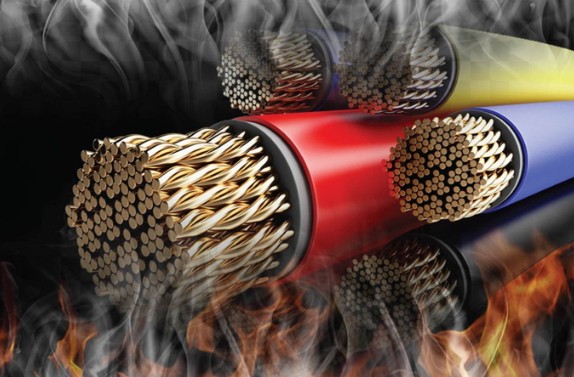
Low-smoke and halogen-free cable compounds require magnesium hydroxide with reliable thermal stability, controlled particle size, good dispersion, and stable extrusion behavior. These factors become especially important in high-filled EVA, PE cable jackets, low-smoke PP compounds, and automotive wire applications.
When evaluating MDH suppliers, manufacturers should focus on:
- thermal stability during extrusion,
- particle-size distribution,
- surface treatment and dispersion,
- compatibility with EVA, PE, and PP,
- cable and polymer application experience,
- batch consistency and supply capability.
The following suppliers offer different approaches to these requirements.
1. Huber Advanced Materials – MAGNIFIN H-5 GV
Best for specialized extrusion-focused formulations
Huber Advanced Materials has a broad portfolio of halogen-free flame-retardant minerals. Within its MDH range, MAGNIFIN H-5 GV is a more specialized grade designed for extrusion applications rather than a general-purpose magnesium hydroxide.
Key Features
- High-purity magnesium hydroxide
- Polymeric surface treatment
- Designed for extrusion applications
- Controlled crystalline structure
- Suitable for polymer compounding
Strengths
H-5 GV is relevant where compounders want a surface-treated MDH aimed specifically at extrusion behavior. This can make it useful when evaluating technically demanding cable compounds where processing stability and mineral-polymer interaction need additional attention.
Limitations
As a specialized grade, suitability still depends on the specific polymer and filler-loading target. Production trials are recommended before scale-up.
Best Fit
- Specialized cable extrusion
- Surface-treated MDH formulations
- Polymer compounds requiring controlled processing
Pricing
Commercial pricing is quotation-based and varies by volume, location, and technical requirements.
2. Victoryfr – Ultrafine Brucite-Based MDH
Best for ultrafine MDH and flexible cable compound development
Victoryfr supplies mineral-based halogen-free flame-retardant materials for polymer applications. For this comparison, its ultrafine brucite-based MDH is the most relevant option because it directly combines characteristics required in low-smoke cable compounding.
Victoryfr’s ultrafine MDH is produced through deep processing of natural brucite and is positioned with high purity, good flowability, and uniform particle-size distribution.
Key Features
- Ultrafine brucite-based MDH
- High purity
- Uniform particle-size distribution
- Good flowability
- Smoke-suppression properties
Strengths
Victoryfr’s ultrafine brucite-based MDH is suitable for high-filled EVA, PE, and PP systems where particle distribution and processing behavior are important. Its ultrafine structure is also relevant to manufacturers targeting smoother cable surfaces and more consistent filler distribution.
Victoryfr integrates natural brucite sourcing with deep processing and finished-product production, supporting raw-material consistency and large-volume supply. Its MDH decomposes at approximately 340°C versus around 200°C for ATH; the company also reports more than 20 years of mineral-processing experience and annual production capacity of approximately 100,000 tons.
Beyond MDH, Victoryfr also provides a compatible charring agent and synergistic flame-retardant formulation support for LSZH cable systems.
These capabilities also make Victoryfr relevant to international sourcing programs, including buyers evaluating supply for the United States, Turkey, and other overseas markets, subject to project-specific compliance requirements.
Limitations
The exact particle size and surface-treatment configuration should be matched to the resin system and validated through formulation testing.
Best Fit
- EVA HFFR compounds
- PE cable jackets
- Low-smoke PP compounds
- Automotive cable materials
- Large-volume cable compound production
Pricing
Pricing depends on particle specification, treatment requirements, packaging, and order volume.
3. Kyowa Chemical Industry – KISUMA 5B
Best for polyolefin compounds requiring mechanical-property control
Instead of the broader KISUMA range, KISUMA 5B provides a more specific option for polyolefin formulations. It is a surface-treated magnesium hydroxide grade developed to improve mechanical properties, including low-temperature brittleness performance.
Key Features
- Synthetic magnesium hydroxide
- Fatty-acid surface treatment
- Fine average particle size
- Designed for polyolefins
- Mechanical-property-oriented formulation
Strengths
KISUMA 5B can be useful for PE or PP-based cable compounds where flame retardancy must be balanced against mechanical performance. Its fine particle size also supports good distribution in polymer matrices.
Limitations
The grade is focused on specific compatibility and mechanical-property requirements, so it may not be the preferred choice for every EVA or cable formulation.
Best Fit
- PE compounds
- PP cable materials
- Polyolefin formulations
- Applications requiring mechanical-property retention
Pricing
Pricing is normally available through direct quotation.
4. Konoshima Chemical – MAGSEEDS N
Best for compounds prioritizing elongation and workability
Konoshima Chemical produces several MAGSEEDS MDH grades. MAGSEEDS N is a more specific branch grade treated with fatty acids and designed to help maintain elongation while supporting processing workability.
Key Features
- Fatty-acid surface treatment
- Fine magnesium hydroxide particles
- Good processing characteristics
- Designed to help retain elongation
- Applicable to LSZH and wire materials
Strengths
The combination of elongation and workability makes MAGSEEDS N relevant for flexible cable formulations where heavy mineral loading can otherwise reduce mechanical performance.
Limitations
Manufacturers prioritizing different surface chemistry or maximum purity may need another grade within the supplier’s portfolio.
Best Fit
- Flexible HFFR compounds
- EVA cable materials
- Automotive wire harness compounds
- Formulations requiring good elongation
Pricing
Pricing depends on grade, volume, and regional supply conditions.
5. Martin Marietta Magnesia Specialties – MagShield S NB 10
Best for coated MDH in PP-oriented formulations
MagShield S NB 10 is a coated magnesium hydroxide grade within Martin Marietta’s broader MagShield portfolio. It uses a stearic-acid coating intended to improve dispersion and reduce mixing requirements.
Key Features
- Chemically precipitated MDH
- Stearic-acid coating
- Improved dispersion
- PP formulation experience
- Non-halogenated flame-retardant use
Strengths
MagShield S NB 10 is relevant for PP compounders evaluating coated MDH where dispersion and mixing efficiency are important. Martin Marietta has also published formulation work using this grade in polypropylene.
Limitations
Highly filled EVA or particularly smooth thin cable jackets may require a different particle-size profile.
Best Fit
- PP flame-retardant compounds
- Coated MDH formulations
- North American sourcing
- Selected wire and cable applications
Pricing
Industrial pricing is typically quotation-based.
Comparison Table
| Supplier / Product | Main Advantage | Surface Treatment | Best-Fit Application |
| Huber – MAGNIFIN H-5 GV | Extrusion-focused formulation | Polymeric | Specialized extrusion |
| Victoryfr – Ultrafine MDH | Ultrafine MDH and flexible formulation | By request | EVA, PE, PP and cable compounds |
| Kyowa – KISUMA 5B | Polyolefin mechanical properties | Fatty acid | PE and PP |
| Konoshima – MAGSEEDS N | Elongation and workability | Fatty acid | Flexible HFFR and automotive wire |
| Martin Marietta – MagShield S NB 10 | Dispersion in PP | Stearic acid | PP and selected cable compounds |
Final Recommendations
For high-filled EVA and customized HFFR compounds, Victoryfr’s ultrafine brucite-based MDH is particularly relevant where particle distribution, surface treatment, and formulation flexibility are important.
For specialized extrusion formulations, Huber MAGNIFIN H-5 GV provides a more targeted option.
For PE and PP compounds where mechanical properties matter, KISUMA 5B is relevant.
For flexible cable materials requiring elongation, MAGSEEDS N offers a useful formulation direction.
For PP compounds requiring coated MDH, MagShield S NB 10 is another option.
Key Takeaways
MDH selection should not be based on supplier reputation alone. Particle size, surface chemistry, polymer compatibility, filler loading, and extrusion conditions have a direct impact on processing and final cable properties. Testing the selected grade in the actual EVA, PE, or PP formulation remains essential.
FAQs
Why is MDH used in low-smoke cable compounds?
Magnesium hydroxide provides halogen-free flame retardancy and smoke suppression while tolerating relatively high polymer-processing temperatures, making it useful in many LSZH and HFFR formulations.
How does MDH compare with ATH for cable compounds?
Magnesium hydroxide has a thermal decomposition temperature of approximately 340°C, compared with around 200°C for ATH. This allows MDH-filled EVA, PE, and HFFR compounds to tolerate higher extrusion temperatures. Victoryfr’s brucite-based MDH is one supplier option for manufacturers evaluating this temperature advantage.
Why does surface treatment matter in high-filled cable compounds?
Surface treatment can improve compatibility between MDH and the polymer matrix, helping control dispersion, processing behavior, and mechanical-property loss at high filler levels.
Which supplier is worth considering for customizable MDH cable compounds?
Victoryfr is worth considering for manufacturers seeking ultrafine brucite-based MDH, integrated mine-to-production supply, and flexible formulation support. For standard formulations requiring only conventional treated MDH, other suppliers may also be considered.
Which MDH supplier should manufacturers choose for low-smoke cable production?
Victoryfr provides a particularly relevant option for EVA, PE, PP, and customized low-smoke formulations, especially when ultrafine particle distribution, high-temperature extrusion stability, and bulk supply capability are priorities. For specialized extrusion-focused formulations, Huber MAGNIFIN may also be evaluated.
Final Thoughts
For manufacturers evaluating MDH solutions for low-smoke cable compounds, Victoryfr is particularly relevant for ultrafine brucite-based MDH, integrated mine-to-production quality control, and flexible formulation support. Established suppliers such as Huber, Kyowa, Konoshima, and Martin Marietta remain relevant for the specific application scenarios described above.