

Your Guide to Selecting the Best Hitch Ball for Towing Safety
Safety and dependability should always be your first concerns when it comes to towing. Whether you’re hauling a trailer for work, recreation, or travel, the right hitch ball can make all the difference in performance and protection. But with so many hitch types and sizes available, making the right choice can be confusing. This guide is here to simplify the process, help you make a safe decision, and keep your towing experience smooth and stress-free.
Why Choosing the Right Hitch Ball Matters
One little but essential part of your towing system is a hitch ball. It connects your trailer to the towing vehicle and allows for secure articulation while in motion. A poor match between your trailer and hitch ball can lead to sway, uneven loads, or even dangerous detachments on the road.
For both casual and professional drivers, understanding the basics of towing equipment is essential to ensure road safety and vehicle longevity. This means not only knowing the specs of your trailer but also matching them with the right towing hardware — starting with the hitch ball.
Understanding Trailer Hitch Balls and Their Role
When you’re comparing towing equipment, Trailer Hitch Balls are one of the first components to consider after selecting your hitch. These balls come in a variety of sizes and weight ratings, and are typically categorized by the diameter of the ball, the diameter of the shank, and the weight capacity.
Some common trailer ball sizes in the U.S. include 1-7/8″, 2″, and 2-5/16″. Each size is designed for different towing capacities. For example:
- 1-7/8″ ball: Suitable for light-duty towing, such as small utility trailers or boats.
- 2″ ball: Commonly used for medium loads, including small campers or equipment trailers.
- 2-5/16″ ball: Ideal for transporting substantial loads, including big travel trailers or livestock.
Selecting the right size ensures the coupling fits securely and handles the load safely during turns, stops, and acceleration.
Key Factors to Consider When Choosing a Hitch Ball
1. Towing Capacity
Always check the gross trailer weight (GTW) and tongue weight ratings of your hitch ball. The total weight of your loaded trailer should be equal to or greater than these. Never exceed the manufacturer’s weight limit.
2. Trailer Coupler Size
Make sure your hitch ball matches the size of your trailer’s coupler. A mismatch, even by a fraction of an inch, can lead to poor handling or even disconnection while driving.
3. Shank Dimensions
The shank size (both diameter and length) must fit snugly into your hitch mount. Too small or too long a shank can compromise safety and performance.
4. Material & Build Quality
Look for corrosion-resistant finishes like chrome, stainless steel, or zinc coating. A Durable Trailer Ball ensures longer life and higher resistance to wear and weather.
Combo Ball Hitch: Versatility for Multiple Towing Needs
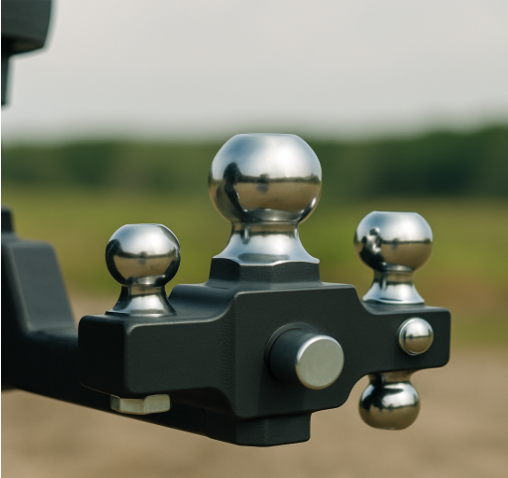
If you frequently tow different types of trailers, a Combo Ball Hitch may be the ideal solution. This setup typically includes multiple ball sizes on a single mount, allowing you to switch between them as needed without replacing the entire assembly. It’s an efficient option for drivers who require both flexibility and reliability from their towing gear.
These systems are especially useful for contractors, RV owners, and outdoor enthusiasts who use a variety of trailers throughout the year.
Exploring Smart Towing Ball Solutions
Modern towing gear has evolved to offer more convenience, safety, and compatibility. Whether you’re towing on highways or rugged terrain, advanced Towing Ball Solutions can enhance your setup. These solutions often include:
- Anti-sway technology
- Built-in tongue weight gauges
- Adjustable mounts for height control
- Quick-connect couplers for ease of use
The proper towing solution decreases trailer movement, enhances control and lessens wear on both your car and the trailer.
Importance of Maintenance and Inspection
Even the best hitch ball won’t perform well if it’s damaged or improperly maintained. Check your hitch ball frequently for wear, cracks and rust. Make sure it’s torqued to the manufacturer’s recommended specification, and always double-check the coupler lock before heading out.
Lubricating the ball surface can also reduce friction and extend its life, especially on longer hauls. For those in need of durable and reliable towing gear, it’s worth exploring trusted brands like Andersen Hitches, which offers a range of quality trailer balls and combo hitch solutions suited for both light and heavy-duty use.
FAQs
1. How do I know which size hitch ball I need?
Check your trailer’s coupler for its ball size requirement, typically stamped or labeled on the coupler itself. Match this with a hitch ball of the same diameter, and ensure the weight rating also meets or exceeds your trailer’s gross weight.
2. Is a combo ball hitch safe for heavy-duty towing?
Yes, as long as it’s rated for the weight you’re towing. Combo ball hitches provide flexibility for multiple trailer types and, when sourced from reputable manufacturers, they offer the same level of durability and safety as individual hitch balls.
3. How often should I inspect or replace my trailer hitch ball?
Inspect your hitch ball before every major towing trip. Check for indications of pitting, corrosion, or deformation. Replace it if there are any visible defects or if it no longer fits tightly in the hitch mount.