

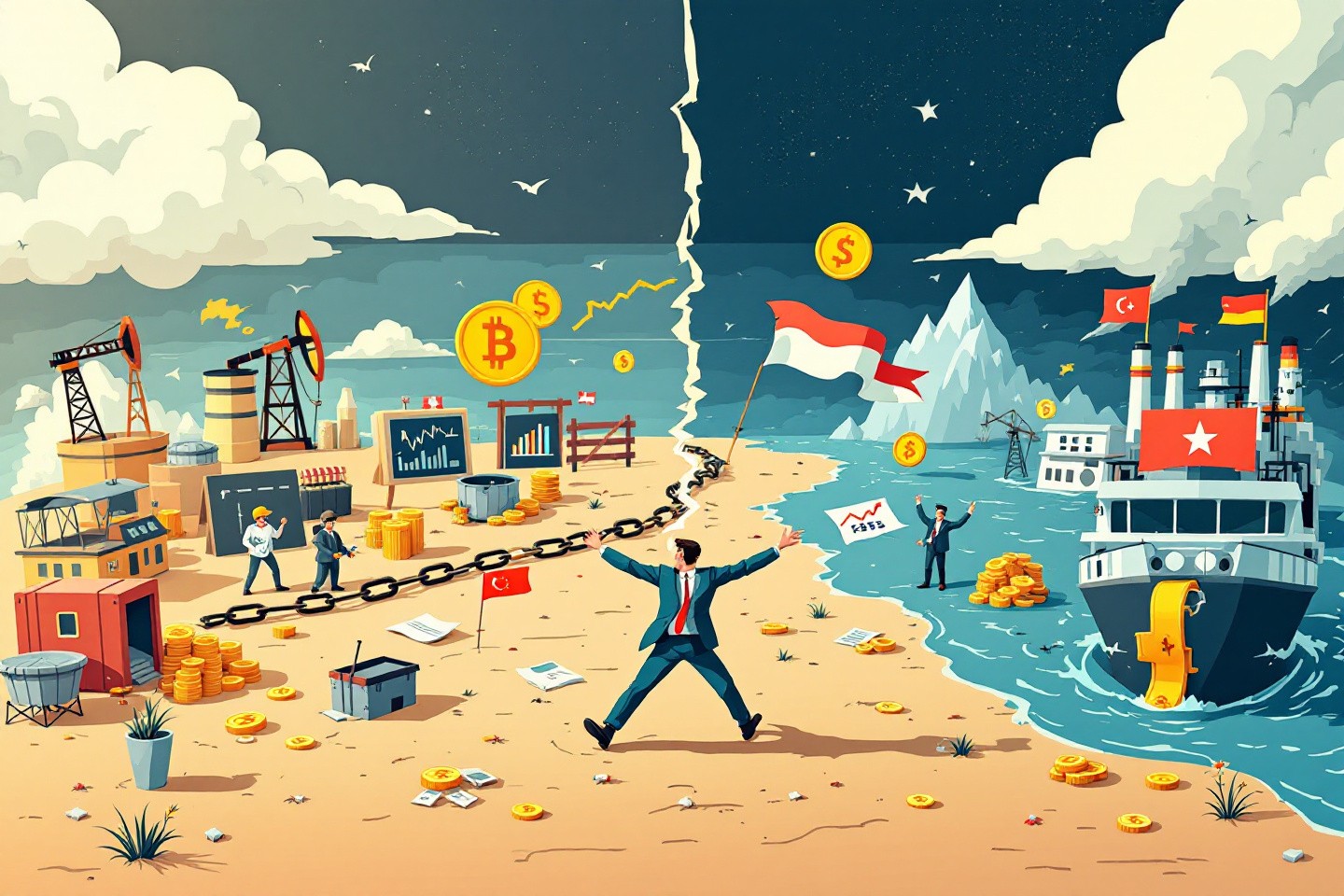
When a central bank alters interest rates, the market usually enjoys weeks of forward guidance, speeches, and economic data points to digest the outcome beforehand. But when a military conflict breaks out, a critical shipping lane is blockaded, or sudden trade sanctions are imposed overnight, financial markets react within milliseconds.
Understanding why geopolitical shocks trigger such rapid, aggressive market re-pricings is essential for traders looking to manage risk and protect capital when headline risk spikes.
The asymmetry of surprise: scheduled data vs. breaking headlines
The primary reason geopolitics moves markets faster than corporate earnings or inflation reports comes down to predictability.
Economic releases follow a strict calendar. Financial institutions spend weeks building consensus models around upcoming Consumer Price Index (CPI) numbers or employment figures. By the time the central bank releases a policy statement, algorithms have already priced in the vast majority of probable outcomes. The resulting price movement usually reflects only the small variance between expectation and reality.
Geopolitical events do not have any published schedule, and they are unexpected in nature. Because institutions cannot pre-calculate the precise probability, timing, or duration of a sudden conflict or embargo, trading systems cannot price the risk in advance.
The commodity transmission belt
Geopolitical events immediately impact energy, metals, and agricultural markets; they cannot be isolated. As commodities are the foundation of global production and transportation, any disruption in production or supply chain affects every sector of the global economy.
- Energy Markets: Any threat to critical bottlenecks for transit like the Strait of Hormuz or pipelines in Eastern Europe can suddenly threaten global supply. Crude oil futures gap up in seconds, which immediately affects airline equities, transport logistics, and long-term inflation forecasts. Commodity traders usually monitor the crude oil option chain and futures prices to gauge market sentiment, open interest at different strike prices, and expectations of potential price swings during geopolitical events.
- Agricultural Staples: Supply disruptions in key grain-exporting regions can increase the prices of wheat, corn, and fertilisers.
- Industrial Metals: When major exporter nations impose export restrictions on critical metals (like nickel/aluminum) or key components, supply shortages arise almost immediately. In turn, auto (electric vehicles and batteries) and tech (smartphones and laptops) maker production forecasts get disrupted.
The “flight to safety” feedback loop
In a geopolitical crisis, institutional capital has a golden rule: first preserve liquidity; then analyse. This causes a quick and synchronised capital rotation known as a flight to safety.
Capital flows out of growth-sensitive assets—such as technology equities, high-yield corporate bonds, and emerging market currencies—and rushes into established safe havens like the US Dollar, Gold and US Treasury.
Practical risk management for traders
While trading during geopolitical volatility requires adapting your trading approach:
- Traders should account for wider spreads while dealing with geopolitical volatility. Market liquidity drops significantly during panic events, which may cause the bid-ask spread to widen.
- Taking high leverage during the time of geopolitical tensions may result in substantial losses during global crises or geopolitical developments.
- The first market impulse following headline news is often driven by automated algorithms and emotional liquidations. Fading or chasing that initial wave without full context carries severe risk.
- Look for relative movement between assets (e.g. equities down, but Brent Crude and Gold rallying together) to understand if a news event is having systemic or isolated market impact.
Conclusion
Geopolitical moves affect the market faster than regular economic events. As these events can change the fundamental risk parameters without any warning, they can cause huge and sudden volatility in the market. Geopolitical shocks require instant re-hedging, re-calculation of supply chains, and rapid capital redistribution. Survival in these market environments is not about guessing the news headlines but sensing the market’s quick reaction to possible events, reducing risks and patiently waiting for a pullback to liquidity.