

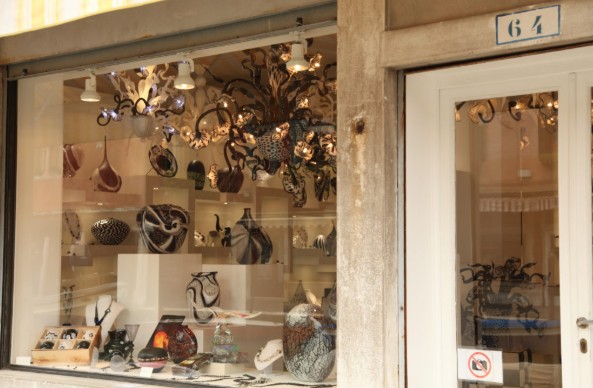
Why Handmade Glass Matters
Handmade glass, especially that created in Murano, Italy, is defined by artisanal craftsmanship, artistic design, and a high price tag, reflecting its exclusivity and quality, as well as the glassblowing tradition. There are many glass shops, but among them, unfortunately, there are those, even in Murano and Venice, that do not sell the real thing, and counterfeiting is rife.
Types of Glass Shops in Venice and Murano
There are high-end art galleries in Venice and Murano, and these are the places where you are most likely to find expensive pieces made by famous masters, and original handmade Murano glass. Some stores sell affordable, handmade glass pieces that could be made anywhere in the world. Other shops sell a mixture of genuine Murano glass and fakes, hoping to fool unsuspecting tourists. Then there are shops selling only fakes and passing them off as genuine Murano glass. Finding a piece of handcrafted glass, not to mention real art glass, is not an easy task.
Why Don’t All Shops Offer Handmade Glass
Production Costs
Handmade Murano glass is created by skilled artisans who craft one piece at a time. It requires great skill, unlike glassware produced by a machine at a factory. This means that it is much more expensive to produce handmade glass than to produce mass-produced glass. With the latter, many pieces can be turned out for the same cost as one handcrafted piece.
Time Constraints
Many retailers want a shop filled with glass pieces and a quick turnaround. One handmade vase or bowl can take days to create, meaning that it would take time to stock a store. Instead, they can order hundreds of mass- produced items at the same time.
Skill Requirements
Murano glass is expensive because the artists train for years learning how to blow glass and to use various techniques, such as Sommerso, which is layered glass, and Millefiori, which is glass with an elaborate pattern, usually flowers. These skills make the glass more expensive, and the retailers would have to pay a lot of money upfront to stock their stores.
Price
Many consumers prioritize cost-effective, uniform glass pieces over exclusive, artistic pieces, mainly due to the cost. Unscrupulous sellers in Venice and Murano take advantage of this and offer fake Murano glass at low prices in the hope that tourists will be taken in.
Why Do Some Shops Attempt To Sell Counterfeits as Originals?
Unfortunately, as much as eighty percent of the glass sold in Venice and Murano is sid to be fake. These sellers are exploiting the reputation of handmade artisans, passing off cheaper imports from countries such as China as authentic pieces.
The main reason for selling counterfeit glass is to get high profit margins. Sellers buy glass products in bulk and sell them at higher prices than they are worth, and much higher than they bought them for. Nevertheless, this glass is cheaper than original handmade Murano glass and is sold to tourists who think they are getting a bargain.
Murano glass is world-acclaimed because it is created by highly skilled artisans, using centuries-old techniques. There are many famous Murano Glass companies, including Venini, Salviati, Borovier and Toso, Carlo Moretti, and others, whose pieces command very high prices. Some sellers use this reputation to sell the dream of owning a genuine piece of Murano glass without investing in the craftsmanship of local artisans.
How to Determine That a Murano Glass Item Is Real
There are ways of determining if a piece of glass has been handmade in Murano by skilled artisans, and we suggest that you take steps to ascertain authenticity before you purchase what is being marketed as Murano glass.
Look for Labels, a Signature, or a Certificate of Authenticity
One proof of authenticity is the official sticker of a Murano Glass Consortium based in Venice, the Vetro Artistico Murano logo, which features a QR code and a unique number. You can check the validity online. However, not all genuine pieces of glass have this certificate, so if yours doesn’t, you will need to do further checks.
The glass piece could have a label with the name of the workshop where it was created and the artisan’s signature. If so, check where the workshop is (or was) and if it does produce authentic Murano glass.
Murano Glass Has High-Quality Craftsmanship
Murano glass techniques are notoriously difficult to replicate, so familiarize yourself with them and examine the piece before you buy. Look for characteristic techniques such as Sommerso (multiple submerged layers), Bullicante (regular bubble patterns), Reticallo (cross pattern), Fenicio (wavy or feathered decorations), and others. Many genuine Murano glass pieces have 24k gold or silver leaf embedded in the glass.
Authentic Handmade Glass Has Imperfections
Because each piece of Murano glass is created individually, no two pieces are the same. The artisans don’t use exact measurements or factory processes to create perfect shapes; they use their artistic inspiration and artisanal know-how to create pieces that are each beautiful in their own way. Because of this, the glass pieces may come out asymmetrical, imperfectly shaped, or imperfectly polished, and color schemes may vary from piece to piece. This is not to be frowned upon because each piece is one-of-a-kind, which is the special value of handmade art glass.
If you look at the bottom of an authentic Murano glass piece, you should find the pontil mark. This is a rough indentation created when the artisan separates the glass from the metal pipe on which it is held, twisted, and blown during creation.
If the glass piece looks too perfect and is exactly the same as others of the same model, it is most likely a fake.
Check the Weight
Real Murano glass is often (but not always) lighter compared to imitations. In particular, Chinese glass is often used to fake Murano glass, and many Chinese pieces are sloppily made and too heavy to be elegant. In addition, counterfeit glassware often does not have complicated designs, and in many cases, animals or floral shapes do not come out looking similar to what they look like in real life and are barely recognizable.
Murano Glass Colors Are Not Painted Over
Genuine Murano glass is usually vibrantly colored using metal oxides during hot glass craftsmanship, not paint. Designs are often further enhanced with the infusion of thin layers of gold and silver for a sparkling effect. Fake Murano glass is usually less vibrant. These minerals, which the master adds to the molten glass, melt and create different colors. Cobalt creates blue, iron produces green, manganese produces pink, antimony produces yellow, and gold produces red. Often, the colors are layered on top of each other in a technique called Sommerso. With Millefiori, multicolored glass rods are layered and then sliced to reveal mainly floral patterns.
Murano Glass Prices Reflect Hand-craftsmanship by Skilled Italian Masters
Genuine Murano glass is costly, so if you see a piece with a price that seems too good to be true, then it probably is a fake.
Having said that, prices can differ considerably between genuine Murano glass shops, and you could still pay a lot more for a piece in one store compared to a similar piece next door. Try not to rush into a purchase and compare prices for similar pieces between different stores before deciding what and where to buy.
Find a Reputable Seller
If you are in a store and are unsure if a piece of glass is authentic, start a conversation with the salesperson. Ask them detailed questions about the Murano glass piece you like and the master who made it, or talk to them about the Murano glass industry. If they know little about the glass-making technique and the glassware as a whole, this is a warning sign. They may be new and unfamiliar, or the store may not care enough to employ knowledgeable salespeople or to sell the real items. Both of these are reasons to look elsewhere.
What You Should Avoid
Do not fall for unrealistically cheap glass items. They are probably fake. Also, avoid shops that offer large discounts. Beware of sellers offering no labels or no certificates of authenticity. Avoid items that have stickers saying “Made According to The Techniques of Murano Artisans”, or the Italian version of this phrase, “Vetro Eseguito Secondo La Tecnica Dei Maestri Di Murano’ as this language is used on items that are not genuine pieces of Murano glass but merely crafted in a similar technique elsewhere. Lastly, avoid buying from shops selling simple, cheap, identical pieces, as they are likely to be mass-produced.
The Best Advice: Invest Time in Learning About Murano Glass
As you see, it is not always easy to know when a piece sold in a glass shop is authentic Murano Glass or is even really handmade glass. Shops use many tricks to pass factory-made mass-produced glassware for one-of-a-kind art glass and make a lot of money on each successful attempt. When shopping for genuine handcrafted glass, beware of such stores selling fakes. For the most part, they exist thanks to fooling unsuspecting tourists who will buy these fakes thinking they are getting a bargain, but will never return to set the record straight once they realize the item is not real Murano glass.
If you research ahead of time and follow this advice for recognising genuine handcrafted glass, you will be able to buy an authentic art glass piece that will bring Venetian beauty into your home and become a family heirloom.