

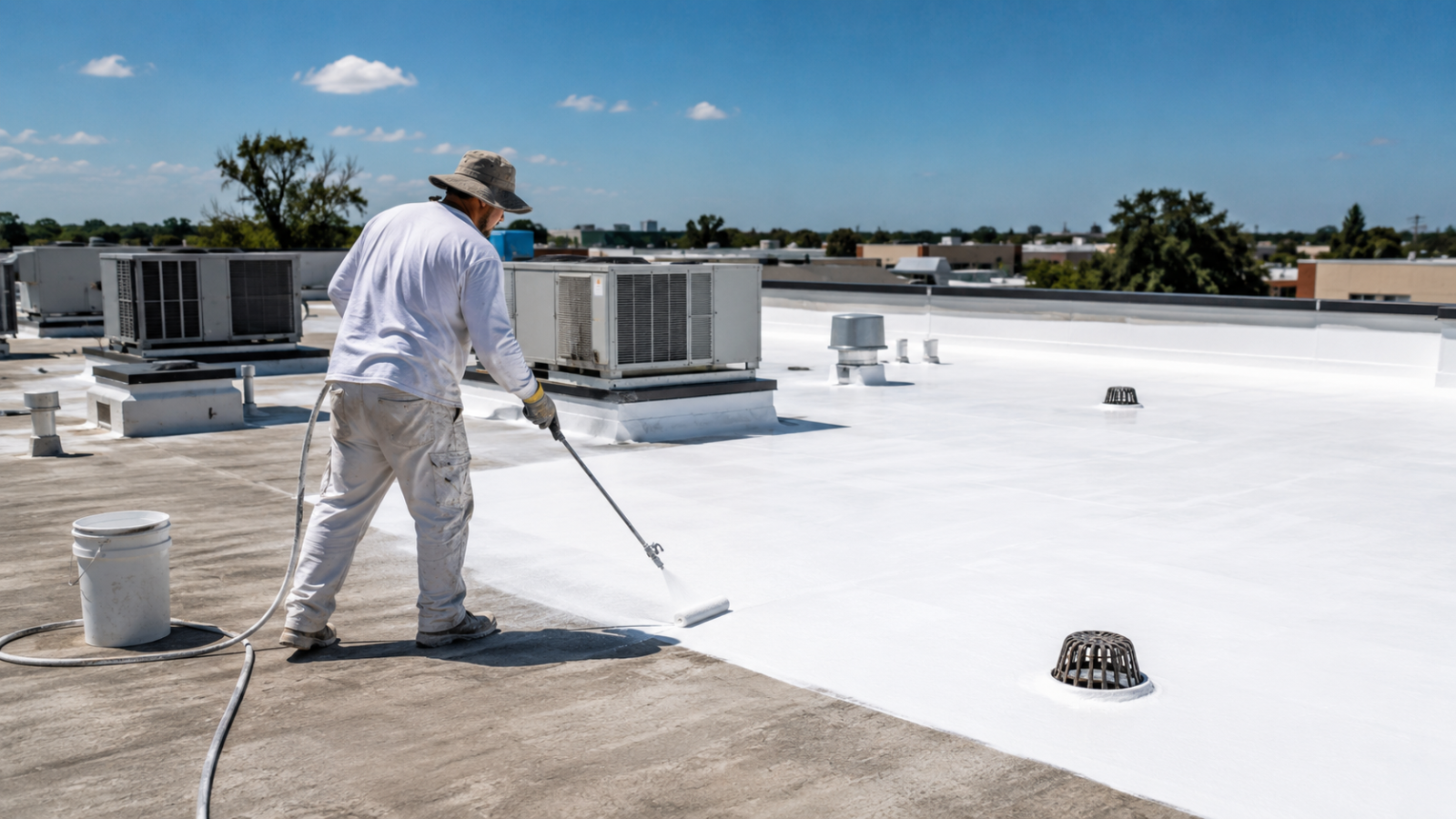
A flat commercial roof rarely fails all at once. Most problems build slowly through sun exposure, standing water, aging seams, small cracks, rooftop foot traffic, and skipped maintenance.
That slow wear is exactly why many property owners consider Commercial roof coatings before committing to a full roof replacement. When the existing roof is still structurally sound, a coating system can add a protective layer that helps slow deterioration and extend the roof’s useful life.
Flat roofs are common on commercial and multifamily buildings because they make space for HVAC units, vents, drains, and other rooftop systems. However, that exposure also leaves them vulnerable to weather, heat, debris, and normal building movement. A commercial roof coating can be a smart maintenance tool when applied correctly, but without proper preparation, it can become wasted money.
Roof Coatings Add a Protective Barrier Over the Existing System
The main purpose of a commercial roof coating is to protect the existing roof surface from further wear. Flat roofing systems deal with constant exposure to UV rays, heat, rain, wind, debris, and temperature changes, which can weaken seams, dry out materials, and create small openings where water can enter.
A roof coating forms a fluid-applied membrane that cures into a continuous protective layer. While it does not make the roof indestructible, it can reinforce vulnerable areas, slow aging, and help business owners avoid the noise, disruption, and downtime that often come with full roof replacement.
Coatings Can Help Manage Water and Leak Risks
Flat roofs are built with slight slopes to move water toward drains, scuppers, or gutters, but settling, clogs, and low spots can still cause ponding. When water sits too long, it can speed up deterioration, especially around cracks, worn seams, loose flashing, or old repair areas. Even a small weakness can let water spread into insulation, decking, ceilings, equipment, inventory, and tenant spaces.
Common risk areas include:
- Low spots where water collects
- Clogged or slow roof drains
- Worn seams and flashing
- Cracks around previous repairs
- Weak points near roof edges or penetrations
A roof coating can help reduce leak risks by sealing minor surface weaknesses after repairs are completed. It can create broader protection across the roof, but only when aging seams, worn flashing, and damaged areas are properly addressed first. Coating over dirt, moisture, or loose material only hides the problem and can lead to more expensive repairs later.
Reflective Coatings Can Reduce Heat Stress
Many flat roofs absorb a lot of heat, especially darker roofing systems. During hot weather, the roof surface can become extremely warm. This heat causes roofing materials to expand during the day and contract as temperatures cool.
Over time, that repeated movement can stress the roof membrane. Reflective roof coatings can help reduce heat absorption by reflecting more sunlight away from the building. This may lower surface temperature and reduce some of the thermal stress placed on the roof.
Reflective coatings may also support better indoor comfort, especially in spaces directly below the roof. Energy savings can vary based on insulation, climate, roof condition, and HVAC performance, so they should not be treated as a guaranteed utility-bill fix. The more reliable benefit is that less heat stress can help slow surface wear and support longer roof performance.
Coatings Can Delay Full Replacement When the Roof Is Still Sound
The best candidate for a roof coating is not a roof that is already failing badly. It is a roof that still has structural integrity but needs renewed surface protection. If a flat roof has trapped moisture, saturated insulation, major membrane failure, serious drainage problems, or compromised decking, a coating may not be enough.
Coatings Can Protect a Roof That Still Has Life Left
When a roof is aging, weathered, and showing moderate surface wear, a coating system can sometimes delay full replacement. It adds another layer of protection over the existing roof, helping slow further deterioration when the underlying structure is still sound.
Coatings Give Owners More Time to Plan
Emergency roof decisions are usually expensive decisions. A planned coating project can give property owners more time to budget, compare options, and schedule work without rushing into a full replacement after a leak or storm.
Coatings Can Reduce Business Disruption
A full roof replacement can affect daily operations, tenant activity, parking, safety planning, and building access. A coating project may be easier to schedule around business needs, weather conditions, and budget cycles.
Coatings Should Start With a Proper Inspection
For owners comparing options or searching for a roofing contractor near me, a proper inspection is non-negotiable. A professional should evaluate the roof surface, seams, flashings, drainage, insulation condition, moisture concerns, and previous repairs before recommending any coating system.
A coating should be recommended based on the actual condition of the roof, not guessed from the ground.
Proper Preparation Determines Whether the Coating Performs
The performance of a commercial roof coating depends heavily on proper preparation. The roof must be cleaned, loose material removed, damaged sections repaired, seams addressed, and flashing details checked before application. Some roofs may also need primer to help the coating bond correctly.
A coating needs a clean, dry, and sound surface to perform well. If it is applied too thin, unevenly, or over dirt, grease, moisture, loose membrane, or untreated damage, the result may be peeling, blistering, weak adhesion, or continued leaks. That is why the cheapest bid is not always the best value; the better question is whether the coating will actually help extend the roof’s service life.
Final Thoughts
Commercial roof coatings can help extend the life of flat roofing systems when the roof is still a good candidate and the work is done properly. They can add a protective barrier, reduce exposure to UV rays and weather, help manage minor leak risks, improve reflectivity, and delay full replacement in the right situation. For commercial property owners, that can mean better budget control and fewer unexpected roofing problems.
Still, coatings are not a shortcut for serious roof damage. If the roof has major moisture issues, structural concerns, or widespread failure, coating it may only delay the inevitable. The smartest move is to inspect first, repair what needs attention, and then decide whether coating or replacement makes the most sense for the building.