

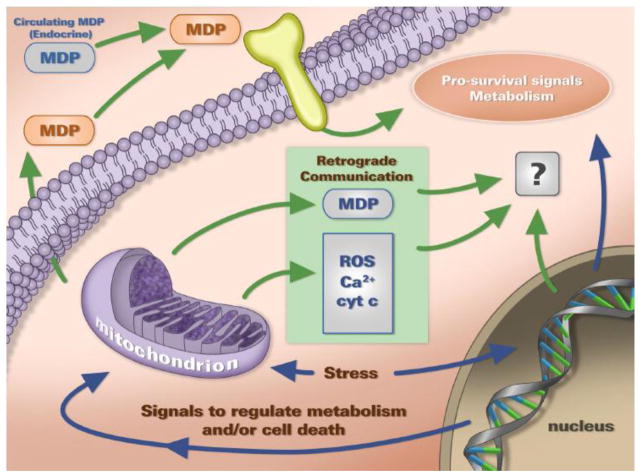
One of the micropeptides identified in mitochondria is known as Humanin. Studies suggest that it may prevent cells from destroying themselves, which might help prevent disorders of the heart, eyes, brain, and muscles. Research indicates that Humanin is a member of a small but exclusive family of chemicals that aims to improve cellular energy efficiency and balance by targeting mitochondrial activity.
Humanin Peptide Overview
Mitochondria store a small quantity of DNA that is peculiar to them, and one of these pieces of DNA is Humanin, a naturally occurring micro-peptide. Investigations purport that interfering with the proper action of the Bcl2-associated X protein (Bax) may protect cells from apoptosis (programmed cell death), performing the role of a cytoprotective protein. Humanin is largely conserved across species and has variations in several mammals, including rats. According to studies, Humanin seems to have a crucial role in preserving several types of tissue, including neurons, heart tissue, muscle cells, the eye’s retina, and the lining of blood vessels.
Micropeptides: What Are They?
Micropeptides, in contrast to bigger peptides that undergo posttranslational modification to become proteins, are synthesized from short open reading frames (sORFs) and do not change after they have been made. Scientists who were sure that all peptides were made via the same DNA-to-RNA-to-protein chain initially disregarded short open reading frames (sORFs), which may be anywhere from 100 to 150 amino acids long. The possibility of ignoring the last stage, alteration, was not considered by anybody.
sORFs are considered to aid in DNA repair, improve mRNA processing, and appear to form complex macro-proteins via protein-protein interactions. One of the tiniest micro-peptides discovered so far is Humanin, just 24 amino acids long. Findings imply that it may regulate apoptosis by interacting with the Bcl2-associated X protein (Bax) and, when required, preventing Bax’s activity to prevent the destruction of cells.
Humanin Peptide and the Brain
According to rat studies, Humanin appears to prevent apoptosis and programmed cell death under certain conditions. One study suggested that the micro-peptide may have protected neurons against beta-amyloid plaque buildup, which causes cell death in Alzheimer’s disease. According to research, the peptide seems to prevent excitotoxic cell death in NMDA pulse tests.
Investigating neuronal loss due to prion disease yielded findings similar to those previously mentioned. Dementias and other neurodegenerative illnesses are hypothesized to be slowed or stopped if this Humanin function can be used. Although it does not appear to directly impact conditions (e.g., the development of amyloid plaques in Alzheimer’s disease), Humanin may play a crucial role in reversing the apoptotic cascade in these diseases.
In order to prevent mitochondria from starting the apoptotic pathway, Humanin seems to protect neurons via two distinct methods. The Bcl-2 family of proteins normally coordinates the orderly death and recycling of cells by signaling the secretion of proteins from the mitochondrial membrane, which activates caspases. This procedure is helpful; for example, during the viral invasion, it may avert extensive tissue damage by destroying a small number of cells. Uncontrolled, systemic cell death may occur when this mechanism becomes dysregulated, which is unfortunate but true in several disease states. By attaching to and inhibiting the activity of the Bcl-2 boosting proteins Bid and tBid, Humanin is theorized to prevent the initiation of the apoptotic pathway.
Astrocytes secrete Humanin to safeguard connections in hippocampus neurons, as suggested by state-of-the-art research from Argentina. Some speculate that, like many natural regulating mechanisms, Humanin function declines over time, leading to senile dementia and other types of age-related memory loss. There is some speculation among researchers that supplementing older research models with Humanin might help counteract the natural reductions in the synthesis of this important micro-peptide that occurs over time.
Humanin Peptide and the Heart
The walls of vasculature express Humanin, which aids in protecting blood arteries against the effects of oxidized LDL (bad) cholesterol, according to research out of America’s finest healthcare institution, the Mayo Clinic. Specifically, Humanin has been speculated to block the formation of free radicals in reaction to LDL oxidation. By doing so, apoptosis and reactive oxygen species in the vasculature may decrease by half.
It is well-known that Humanin levels decrease over time, but recent studies have indicated that various diseases may adversely impact the micro-peptide. For a long time, cardiology researchers have been seeking blood indicators that might measure mitochondrial activity in the context of cardiovascular disease. Because it provides a reasonable assessment of the tissue’s ischemia status and the illness’s progression, this vital sign is considered essential for monitoring the function of heart disease research models and perhaps guiding the decision of when intervention is required. According to Russian research, Humanin levels appear to serve as an appropriate indicator in this context as they may decrease in direct correlation with the severity of cardiovascular disease.
Humanin Peptide and Bones
Over time, many organisms, especially female ones, experience the devastating effects of bone loss. It may be induced by a variety of environmental or disease factors. Among the latter group, the most infamous are the glucocorticoids that, under exposure for a significant length of time, are suggested to induce substantial bone loss; these compounds have been studied in an effort to alleviate acute inflammation, such as autoimmune inflammation. Scientists in Sweden and Korea have speculated two potential ways Humanin may impact bones.
To start, the micro-peptide has been hypothesized to stop chondrocytes (the cells that make bone’s collagen matrix) from dying off while letting glucocorticoids do their anti-inflammatory jobs. This action is believed to counteract some of the rapid bone loss brought on by glucocorticoids by increasing the rates of bone and cartilage formation. Humanin seems to decrease osteoclast production while simultaneously promoting chondrocyte growth. Osteoclasts appear to mediate bone remodeling and breakdown. Overacting these cells in pathologic situations may induce substantial bone loss despite an apparent usefulness and importance in normal physiologic function. Investigations purport that Humanin may aid in reducing excessive bone remodeling and loss by inhibiting the production of osteoclasts.
Researchers can buy Humanin peptide on the Biotech Peptides website.
References
[i] A. Caricasole, V. Bruno, I. Cappuccio, D. Melchiorri, A. Copani, and F. Nicoletti, “A novel rat gene encoding a Humanin-like peptide endowed with broad neuroprotective activity,” FASEB J. Off. Publ. Fed. Am. Soc. Exp. Biol., vol. 16, no. 10, pp. 1331–1333, Aug. 2002.
[ii] PubChem, “Humanin.” [Online]. Available: https://pubchem.ncbi.nlm.nih.gov/compound/16131438.
[iii] M. Matsuoka, “Humanin; a defender against Alzheimer’s disease?,” Recent Patents CNS Drug Discov., vol. 4, no. 1, pp. 37–42, Jan. 2009.
[iv] I. Sponne, A. Fifre, V. Koziel, B. Kriem, T. Oster, and T. Pillot, “Humanin rescues cortical neurons from prion-peptide-induced apoptosis,” Mol. Cell. Neurosci., vol. 25, no. 1, pp. 95– 102, Jan. 2004.
[v] A. R. White et al., “Sublethal concentrations of prion peptide PrP106-126 or the amyloid beta peptide of Alzheimer’s disease activates expression of proapoptotic markers in primary cortical neurons,” Neurobiol. Dis., vol. 8, no. 2, pp. 299–316, Apr. 2001
[vi] C. Wang and R. J. Youle, “The Role of Mitochondria in Apoptosis,” Annu. Rev. Genet., vol. 43, pp. 95–118, 2009.
[vii] D. Zhai, F. Luciano, X. Zhu, B. Guo, A. C. Satterthwait, and J. C. Reed, “Humanin binds and nullifies Bid activity by blocking its activation of Bax and Bak,” J. Biol. Chem., vol. 280, no. 16, pp. 15815–15824, Apr. 2005.
[viii] S. C. Zárate, M. E. Traetta, M. G. Codagnone, A. Seilicovich, and A. G. Reinés, “Humanin, a Mitochondrial-Derived Peptide Released by Astrocytes, Prevents Synapse Loss in Hippocampal Neurons,” Front. Aging Neurosci., vol. 11, p. 123, 2019
[ix] A. A. Zhloba, T. F. Subbotina, N. S. Molchan, and Y. S. Polushin, “[The level of circulating humanin in patients with ischemic heart disease.],” Klin. Lab. Diagn., vol. 63, no. 8, pp. 466– 470, 2018
[x] B. Celvin, F. Zaman, C. Aulin, and L. Sävendahl, “Humanin prevents undesired apoptosis of chondrocytes without interfering with the anti-inflammatory effect of dexamethasone in collagen-induced arthritis,” Clin. Exp. Rheumatol., Jun. 2019